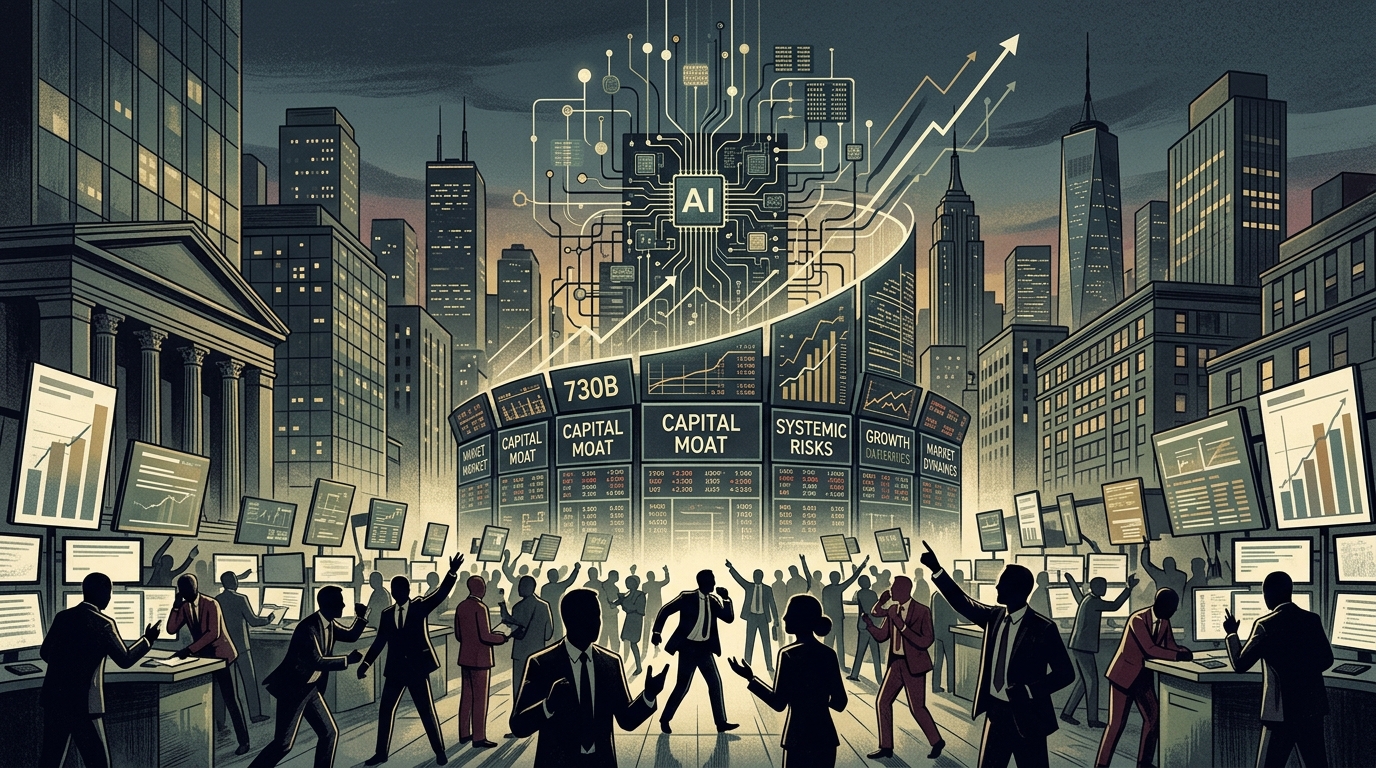
Asia’s energy security depends heavily on the Strait of Hormuz, a waterway it does not control, but the fallout from any potential conflict would now extend far beyond fuel pumps. If the region does not build deeper, more liquid electricity networks, it risks losing its slice of the AI value chain.
The Gap Between Ambition and Reality
Nearly every major Asian economy now has a formal national AI masterplan. Japan recently announced a 370 trillion yen ($2.3 trillion) budget, with more than a quarter earmarked for AI and chips over the next 15 years. However, data center power demand across Asia-Pacific is expected to increase by an estimated 165% between 2023 and 2030.
Despite impressive figures, much of the region's capacity exists as “bragawatts”—announcements that look good on paper but are slow to materialize. In 2024, Asia delivered only about 38% of its announced data center capacity, one of the widest plan-to-delivery gaps globally. This issue is particularly acute in Malaysia and India, countries banking on a digital infrastructure boom.
Infrastructure and Market Constraints
According to the International Energy Agency, grid and storage investment in Southeast Asia was just $13 billion in 2025, far lower than the $50 billion needed annually through 2050. Without major upgrades to transmission and storage, server racks will struggle to operate at full capacity. Furthermore, local opposition and infrastructure strains—such as water concerns in Johor, Malaysia—are already causing delays.
Most Asian electricity systems still rely on traditional, vertically integrated, state-owned utilities. This lack of transparency prevents investors from receiving the future pricing signals needed to fund long-term renewable projects, which are essential for sustainable AI growth.
The Path to Liberalization
A more liberal approach to distributed energy generation and electricity trading is necessary to attract investment and reduce dependence on imported fuels. Some progress is being made: Japan’s power futures market is the fastest-growing globally, and India’s power exchange (IEX) now runs day-ahead markets. For the AI build-out to succeed, electricity needs to be traded with the same rigor and transparency as crude oil.