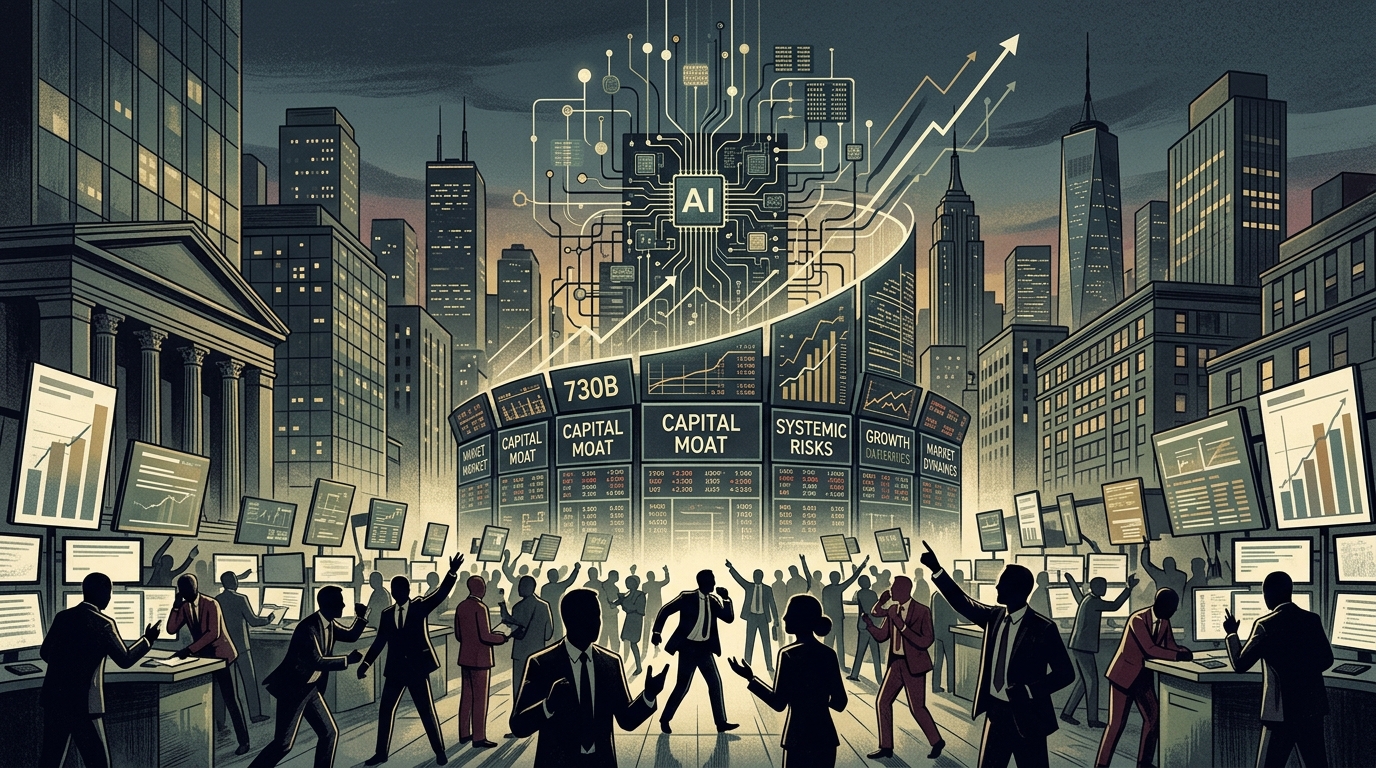
The era of "cheap money" is fading, forcing the artificial intelligence industry to adapt to a stark new financial reality. On September 25, the yield on the US 10-year Treasury note reached 5.17%, a critical benchmark that dictates corporate borrowing costs worldwide. For a sector that requires billions in infrastructure investment before generating significant revenue, this spike is fundamentally altering the math of expansion.
The Burden of Debt and Future Projections
The financing requirements for AI development are unprecedented. According to JPMorgan Chase estimates, AI-linked debt could surge to $4.1 trillion by 2030. This massive volume leaves companies highly sensitive to interest rate fluctuations. CoreWeave, for instance, noted that a mere one-percentage-point increase in rates could add $30 million to its interest expenses, based on its debt levels as of June.
A Two-Tier Market Emerges
The financial pressure is not felt equally across the board. Tech giants such as Microsoft, Google, Meta, and Amazon possess the credit strength to secure capital on relatively favorable terms. In contrast, smaller infrastructure providers and high-risk ventures face much steeper hurdles. SoftBank recently raised $11.1 billion through high-risk bond issuances, with yields on seven-year notes reaching as high as 9.75%.
- Investors are becoming increasingly selective, prioritizing projects with clear paths to revenue.
- Long-term service contracts remain a vital tool for securing funding under tighter conditions.
- Innovation continues despite costs, with Google set to launch its first space-based data center experiment on October 1.
While the rising cost of capital has not halted AI infrastructure construction, it has made lenders far more cautious. The viability of future data centers now hinges on the ability to generate sufficient returns to cover increasingly expensive debt.