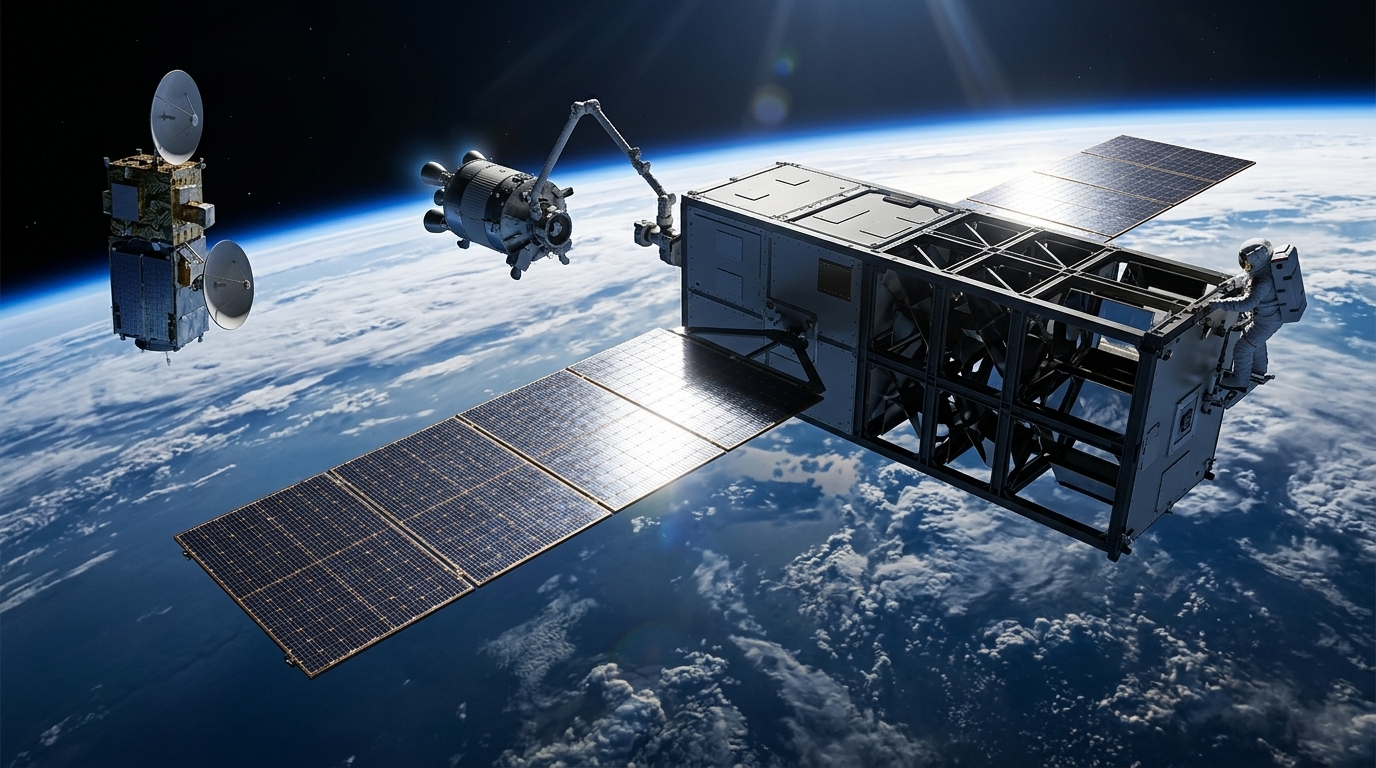
The concept of operating artificial intelligence systems in orbit is moving from the drawing board to practical application. On Thursday, October 1, Google is scheduled to launch its first experimental satellite under Project Suncatcher as part of SpaceX's Transporter-18 mission.
Technical Specifications and Mission Objectives
The satellite, named MVP, was developed in collaboration with Planet Labs. It carries four Google AI chips, with computational power comparable to a single terrestrial server, while its solar panels provide approximately one kilowatt of electrical power. The mission, expected to last about one year, does not aim to serve end-users immediately but rather to test hardware durability.
Google researchers seek to answer critical questions, including:
- Chip reliability under the influence of space radiation.
- The effectiveness of cooling systems in vacuum conditions.
- Communication stability with Earth and between future satellites.
The Vision of Project Suncatcher
Project Suncatcher, announced in November 2025, envisions satellite constellations equipped with TPU processors and optical data links. The goal is to harness solar energy in space to reduce the pressure terrestrial data centers place on Earth's natural resources and electrical grids.
However, James Manyika, Google’s VP of Research, clarified that the technology is still in the research phase, comparing its trajectory to the multi-year development of autonomous vehicles. The company plans to launch two more prototype satellites by early 2027.
The Competition for Orbital Computing
Google is not alone in looking toward the stars. SpaceX and Blue Origin have already filed plans for large-scale satellite infrastructures, with the latter's Project Sunrise proposing up to 51,600 satellites. Meanwhile, startups like Cowboy Space are exploring the possibility of energy transmission from space to Earth, intensifying the race for dominance in extraterrestrial AI infrastructure.