
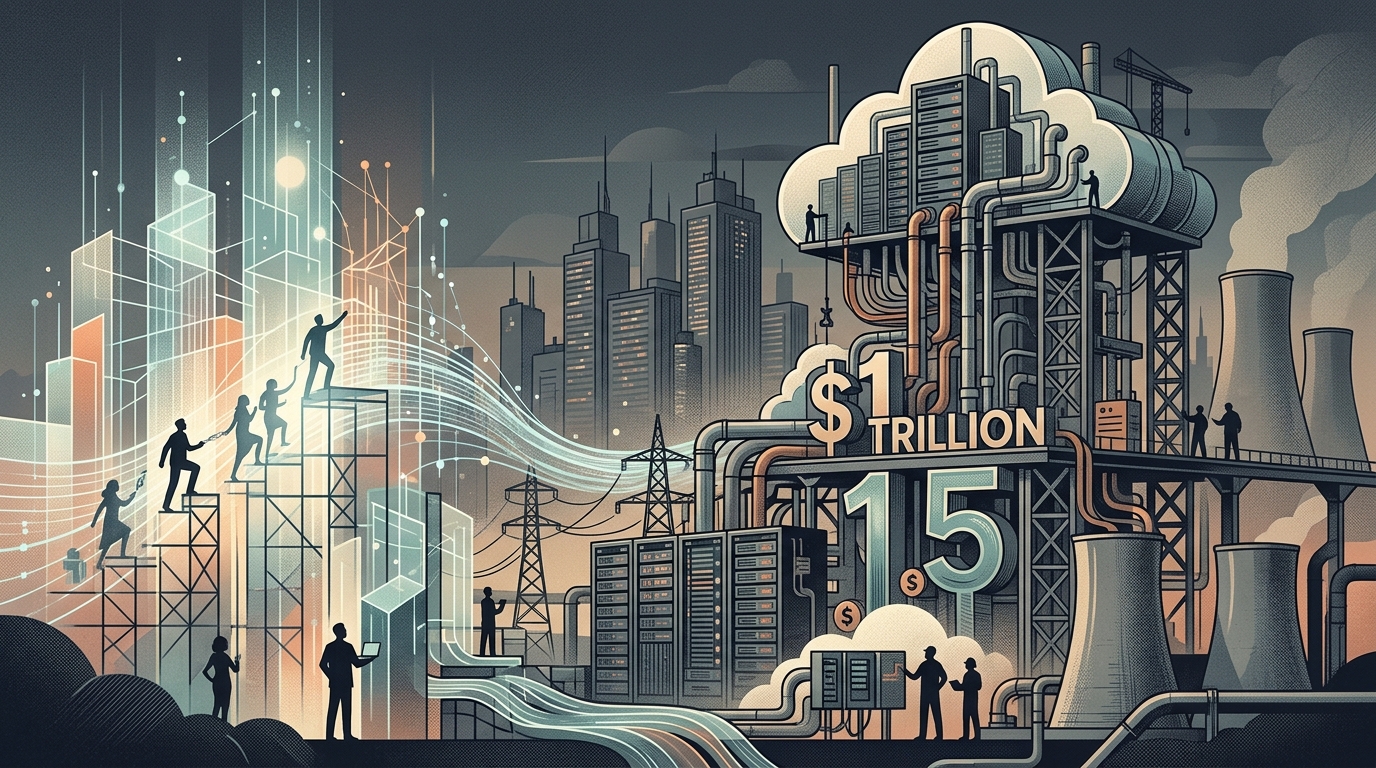
In the current market landscape, we are witnessing a profound shift in the AI narrative. The initial euphoria surrounding chatbots and 'interaction layers' is giving way to a hard-nosed focus on the physical foundations of the industry. Spending on physical AI infrastructure is projected to exceed $1.5 trillion by 2027. However, this capital-intensive phase is colliding with two significant headwinds: soaring hardware costs and a persistent productivity paradox.
The Rising Cost of Entry and the Memory Leverage
Market indicators suggest that the cost of staying in the AI race is increasing. Nvidia has reportedly notified major customers—including Alphabet, Microsoft, and Oracle—that prices for servers featuring its flagship Vera Rubin and Grace Blackwell chips will rise by more than 15% early next year. Interestingly, this hike is not driven by Nvidia's own margins, which remain at a robust 75%, but by the leverage held by memory manufacturers like Samsung, SK Hynix, and Micron. As demand for DRAM outstrips supply, the physical components of AI are becoming increasingly expensive, adding complexity to the global data center build-out.
The Productivity Paradox and the Sovereignty Discount
Perhaps more concerning for investors is the 'productivity paradox.' According to an Atlanta Federal Reserve study, nearly 90% of business leaders report that AI has yet to enhance productivity within their organizations. This disconnect between management optimism and operational reality suggests a volatile environment ahead. Furthermore, a new economic reality—the 'sovereignty discount'—is emerging. Organizations using third-party APIs face a 'control tax,' where safety and monitoring protocols consume an estimated 20% of total compute power. This is driving giants like Alibaba and ByteDance to own their physical foundations rather than renting compute.
Strategic Winners and the European Outlook
In this capital-heavy environment, the winners are those providing essential physical infrastructure. Vertiv, for instance, has seen its market value surge from $11 billion to $109 billion by focusing on liquid direct-to-chip cooling for hyperscalers. Meanwhile, SpaceX is entering natural gas trading and building its own power plants to secure the energy needed for its semiconductor facilities. From a European perspective, the outlook remains cautious. The European Central Bank has warned of a possible tech stock correction, and high public debt may limit fiscal support for AI initiatives. For Greek and EU businesses, the lesson is clear: ROI is now inseparable from architectural clarity and digital self-determination.
"Stability isn’t everything, but without stability... you have nothing." — Steve Hanke