
The artificial intelligence sector is entering a phase of heavy industrialization, shifting from software-centric growth to a capital-intensive race for physical infrastructure. Market data indicates a surge in borrowing for chips, data centers, and energy grids. However, as the cost of financing rises—exemplified by 10-year U.S. Treasury yields reaching 5.33%—investors are beginning to scrutinize the return on these massive capital expenditures. Reports suggest Broadcom is seeking approximately $50 billion in funding for AI-linked investments, while Oracle is also considering additional debt.
Revenue Revisions and Fundraising Pressures
The market's enthusiasm is being tempered by a reality check regarding immediate returns. OpenAI’s annualized revenue was recently reported at approximately $50 billion, falling $20 billion short of some earlier external projections. While this discrepancy is largely attributed to accounting methodologies regarding partner-derived revenue, the revelation contributed to a widening of losses in the Nasdaq index. Simultaneously, SoftBank’s Masayoshi Son is reportedly seeking $100 billion in new funding from Gulf investors to sustain his AI ambitions, following a $65 billion investment in OpenAI. These moves occur amid concerns over delayed IPOs and high sector valuations.
The Human Capital Bottleneck
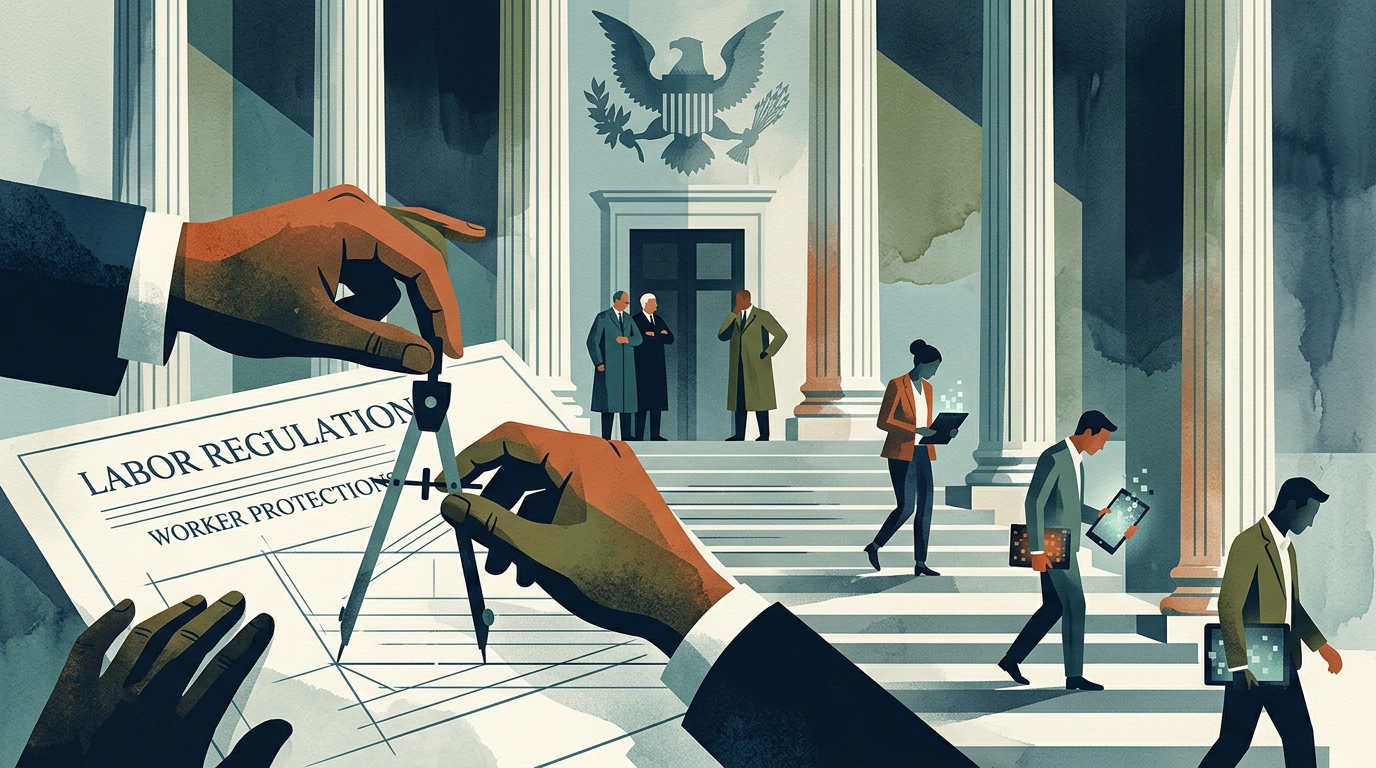
Beyond financial capital, the 'Super Intelligence' race is facing a significant shift in labor governance. The U.S. administration has suspended major firms, including Microsoft, Adobe, and several IT outsourcing giants like Cognizant and Wipro, from the PERM green card program. This move represents a transition toward nationalistic labor protectionism, with officials demanding a 'genuine commitment' to the domestic workforce. Vice President JD Vance has critiqued the H-1B and PERM processes as tools for labor displacement, alleging that companies perform only perfunctory job searches to justify hiring foreign nationals. For businesses, this adds a layer of operational complexity, as the era of frictionless global talent movement appears to be yielding to stricter federal oversight.
Institutional Scrutiny and Market Pressures
While software firms face scrutiny, the broader tech-academic complex is also under review. Nine prestigious universities, including Harvard and MIT, are being investigated regarding the potential misuse of J-1 visas. This suggests that the administration views the ecosystem of technical labor as requiring stricter federal oversight. As Wall Street faces pressure from surging energy prices and high bond yields, the focus is shifting from potential future revenue to the immediate capital requirements for AI infrastructure. The reliance on corporate debt to fund expansion increases competition for investment capital in a high-interest-rate environment, testing the momentum of the AI boom.