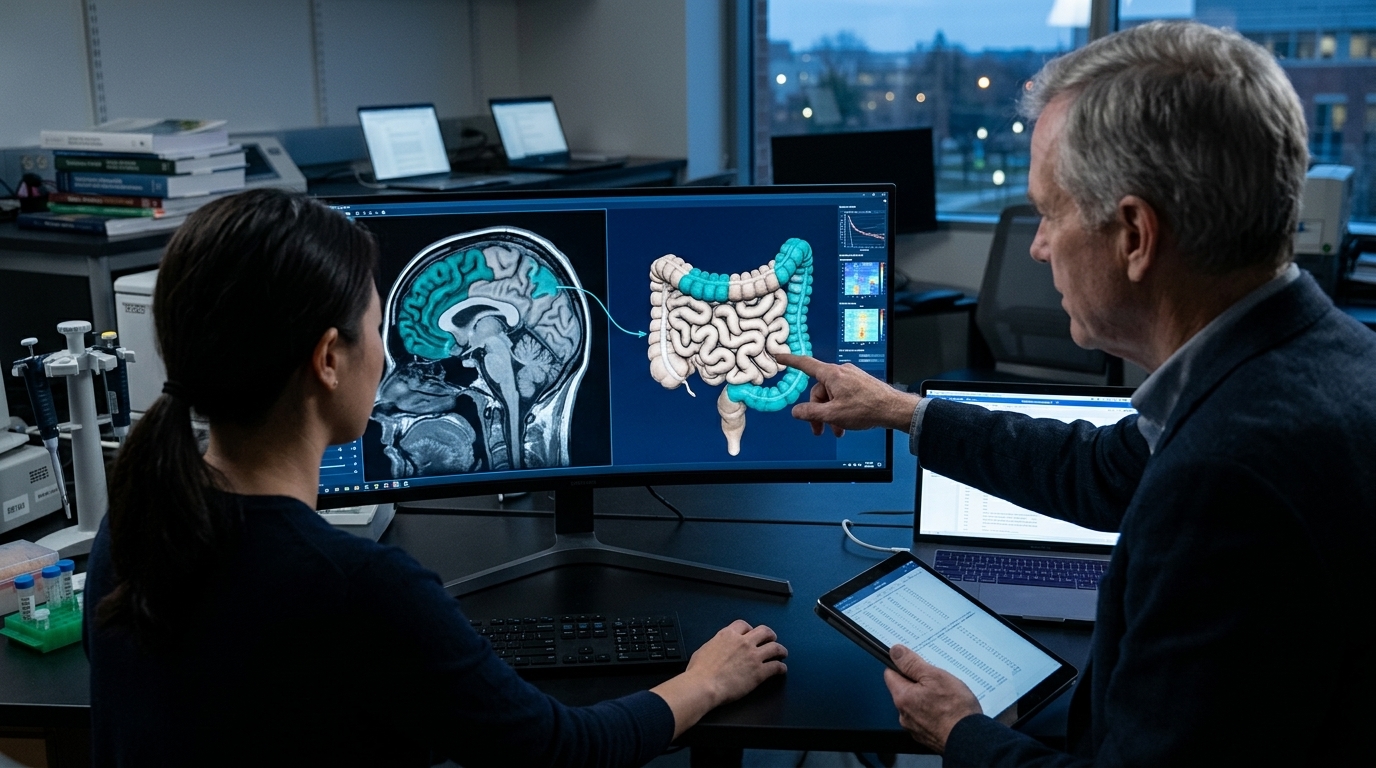
A recent study from the University of California, Los Angeles (UCLA), published in the journal eBioMedicine, highlights a complex link between biological brain age and gut health. Researchers found that adults whose brains appear "older" than their chronological age tend to exhibit lower cognitive performance and distinct gut microbiome characteristics.
The Brain Aging Index (BAI)
The study analyzed resting-state functional MRI (fMRI) scans from approximately 1,500 healthy individuals aged 18 to 65. Using computational modeling, scientists examined communication patterns between various brain regions. The discrepancy between the brain's estimated age and a person's actual age formed the basis of the Brain Aging Index (BAI).
According to the findings, a higher BAI is associated with:
- Lower performance in working memory.
- Reduced executive functions, such as focus and organization.
- Increased symptoms of depression.
A Biological Footprint in the Gut
By analyzing stool samples from a subset of participants, researchers discovered that accelerated brain aging is not tied to a single bacterium but rather to a broader biological footprint. This includes specific metabolites, lipid molecules, and lower levels of the hormone estetrol.
Researcher Kanhao "Alex" Zhao noted that these correlations were present even in younger and middle-aged adults, long before neurodegenerative diseases typically manifest. The biological pathways involved appear to affect the immune system, vascular function, and cellular energy production.
Limitations and Future Outlook
Despite the significant findings, researchers emphasize that the study identifies correlations and does not prove causation. "We cannot conclude from these data that changing the microbiome will slow brain aging," Zhao stated. The effectiveness of interventions such as personalized nutrition, probiotics, and prebiotics remains to be proven through future clinical trials.