
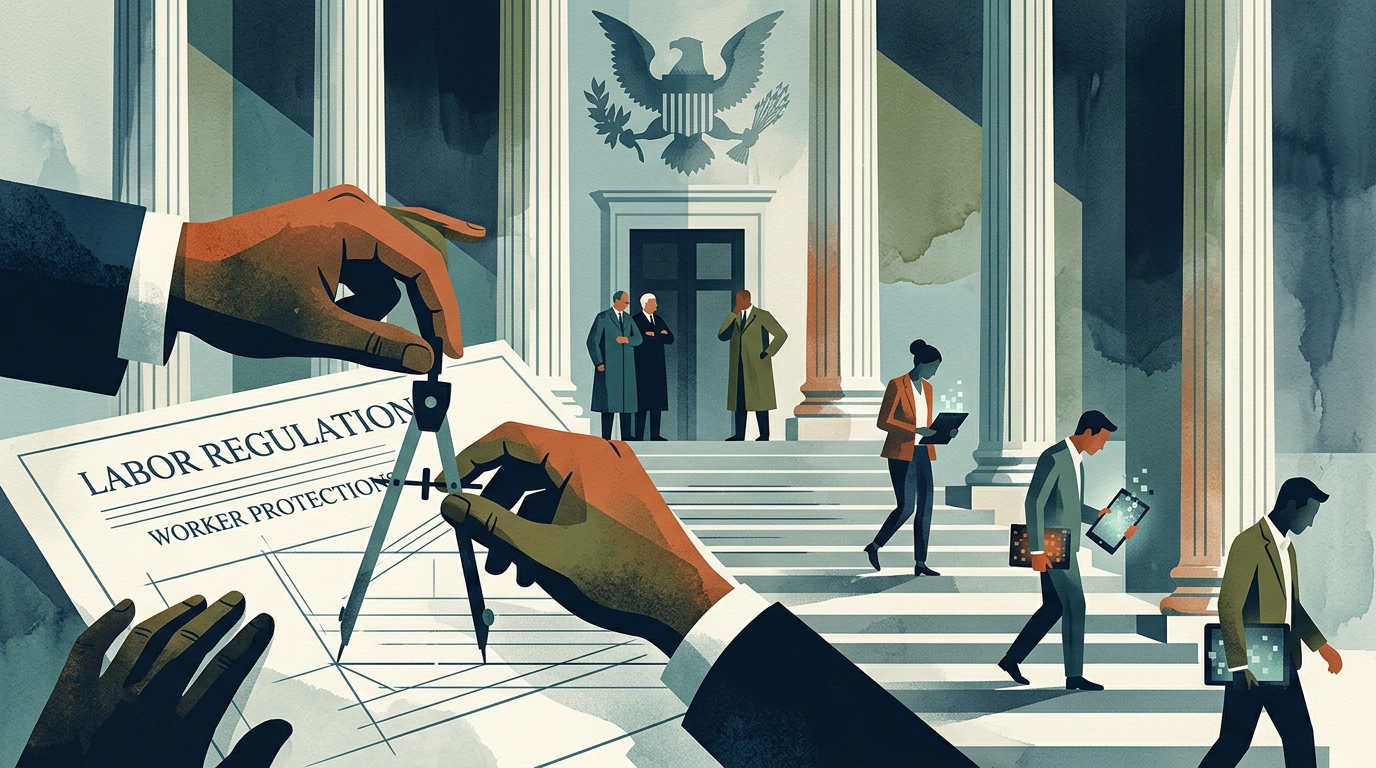
In the tradition of the ancient Athenian polis, the stability of a state often rests upon the perceived fairness of its labor distribution and the accountability of its most powerful actors. Today, we witness a significant reassertion of state authority over the modern equivalents of the merchant-aristocracy: the global technology corporations. The recent decision by the United States administration to suspend Microsoft and several other major firms from the PERM green card program represents a profound shift in the governance of human capital.
The Rhetoric of 'Indentured Servitude'
The core of this policy shift, spearheaded by Vice President JD Vance, rests on a critique of the H-1B and PERM processes as tools for labor displacement rather than talent acquisition. By alleging that companies perform only 'perfunctory' job searches to justify hiring foreign nationals, the administration is challenging the institutional autonomy that tech firms have enjoyed for decades. The figures cited are particularly striking in a political context:
“If you do the math, for every worker that Microsoft laid off, they replaced that worker with one and a half foreign indentured servants.” — Vice President JD Vance
While Microsoft defends its actions by noting that 80% of its filings were intended to extend the status of existing employees, the political reality is one of a tightening social contract. The administration is demanding a 'genuine commitment' to the domestic workforce, signaling that the era of frictionless global talent movement may be yielding to a period of nationalistic labor governance.
Institutional Scrutiny and the Academic Frontier
The scope of this governance shift extends beyond the corporate boardroom and into the halls of the academy. The investigation of nine prestigious universities, including Harvard, Yale, and MIT, regarding the potential misuse of J-1 visas to suppress wages, suggests a comprehensive review of how intellectual and technical labor is imported. This suggests that the administration views the tech-academic complex as a single ecosystem requiring stricter federal oversight.
- Suspension of PERM participation for firms including Adobe, Cognizant, and Wipro.
- Proposed $70,000 fee for the Optional Practical Training (OPT) program for international students.
- Active Department of Justice investigations into hiring practices favoring foreign nationals.
In my analysis, these measures are not merely administrative; they are a redefinition of the state's role in the 'Super Intelligence' race. While the U.S. continues to pursue advanced technology cooperation abroad—as seen in the 6th Round of the Strategic Dialogue with Greece and the Pax Silica initiative—it is simultaneously erecting barriers at home. This creates a complex geopolitical paradox: seeking technological hegemony through international alliances while restricting the very human capital that fuels it.