

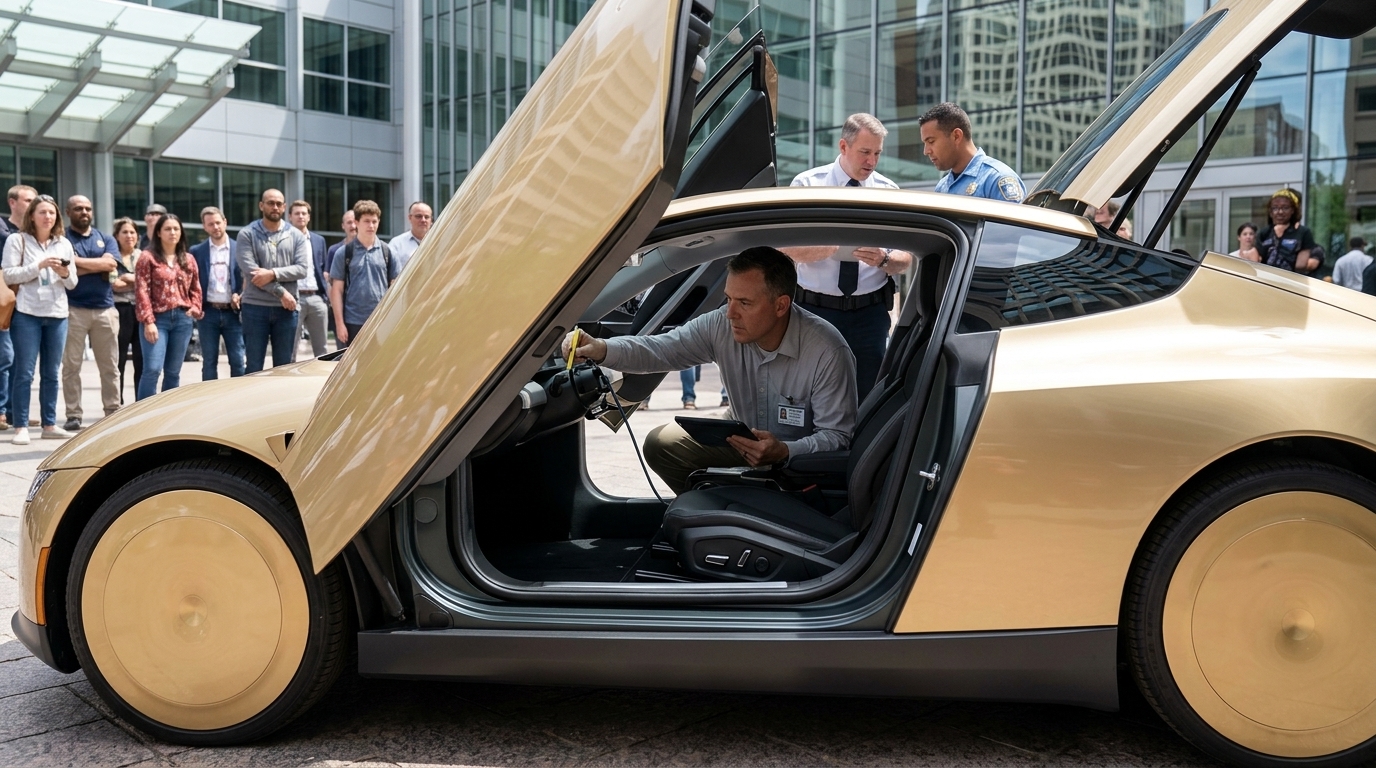
Federal regulators have opened an investigation into Tesla’s new steering-wheel-free taxis just one day after the company launched the service in Austin, Texas. The National Highway Traffic Safety Administration (NHTSA) is investigating whether the two-seat Cybercabs, which lack traditional controls such as steering wheels, mirrors, and brake pedals, are in full compliance with federal safety regulations.
The Scrutiny of Self-Certification
Prior to the launch, Tesla stated it relied on a self-certification process to ensure the Cybercabs met federal standards. However, the NHTSA is now conducting an audit to examine the technical data and procedures Tesla used for this certification. While automakers typically self-certify new models, the agency intervenes when it suspects potential violations, particularly when a vehicle introduces significant design changes rather than minor updates.
Market Reaction and Regulatory Context
Following the announcement of the probe, Tesla’s stock fell nearly 6% to $354.08 on Friday, reversing the gains made during the excitement of the launch event. CEO Elon Musk intends for the Cybercab to be part of a nationwide rollout of an affordable, driverless taxi service, integrated into Tesla’s existing robotaxi network which currently operates with conventional vehicles in parts of Texas and Florida.
Tesla is not the first to face such hurdles; rival Zoox underwent a similar probe three years ago regarding its own steering-wheel-free cabs, eventually receiving approval after a formal review. This new investigation adds to a list of federal probes facing Tesla, including inquiries into crashes during low-visibility conditions and incidents where self-driving software reportedly ignored traffic signals or drove on the wrong side of the road.





