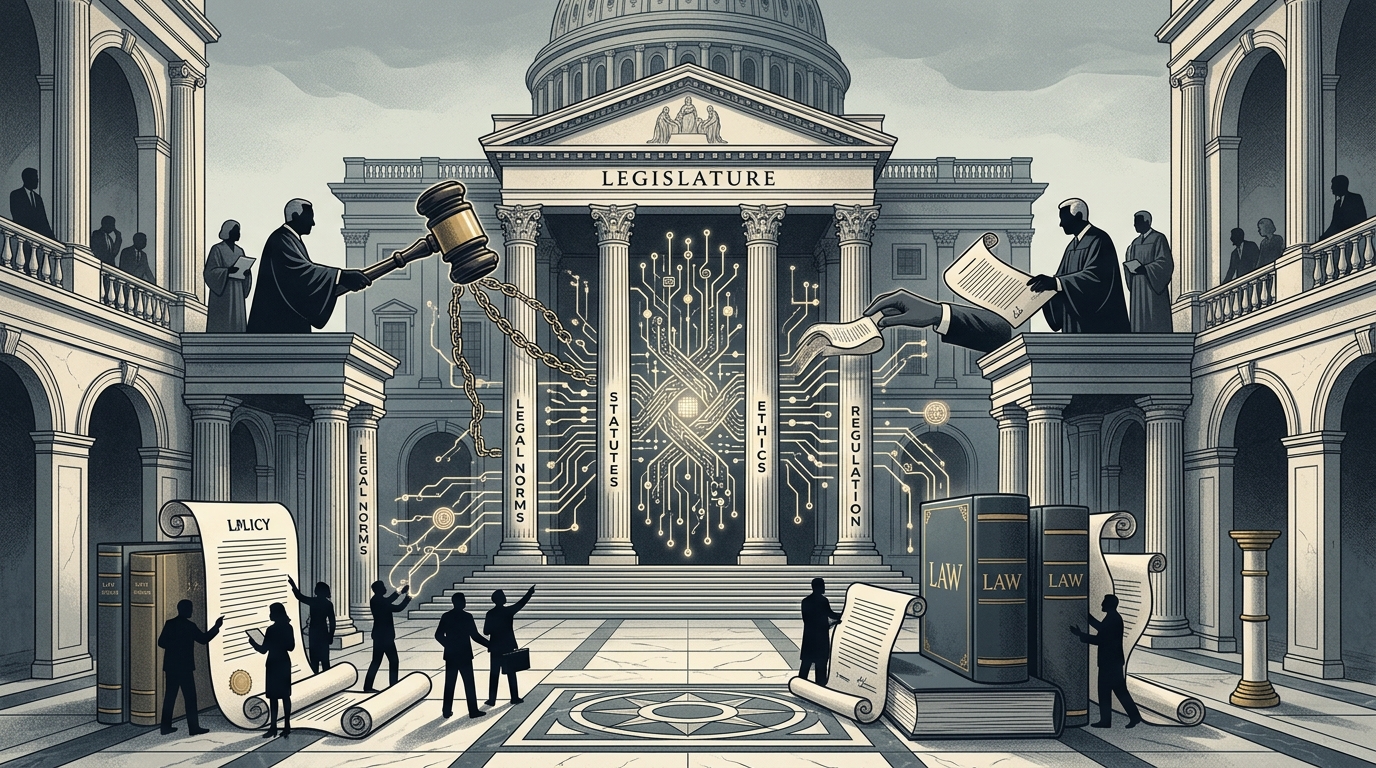
As AI regulatory frameworks evolve globally, ensuring that generative models operate within legal and ethical boundaries has become a top priority. A new research paper introduces Statutory AI, a hybrid approach designed to address the limitations of current alignment methods.
Limitations of Existing Frameworks
The study notes that existing proposals, such as Constitutional AI, rely heavily on human supervision. Meanwhile, broad frameworks like the 'Good-for-Humanity' (GfH) principle are often too general and ambiguous to provide actionable governance. Statutory AI seeks to overcome this by employing pre-existing, human-authored principles drawn from specific themes within a legal corpus.
The Two-Stage Process
The method utilizes Chain-of-Thought (CoT) prompting across two distinct stages:
- Stage 1: Classification of the user prompt into one of the identified legal themes.
- Stage 2: Analysis of the prompt alongside relevant legal articles to enable the AI to autonomously critique and revise its output based on established norms.
Experimental Results
To demonstrate its potential, researchers conducted experiments using 1,000 red-teaming prompts across five penal themes: discrimination, disclosure of confidential information, violence, fraud, and abuse of vulnerable persons. Statutory AI reduced harmful content by 52 to 59 percentage points across the tested models. This performance is approximately 10 percentage points higher than standard Constitutional AI, while simultaneously reducing computation time by over 50%.