

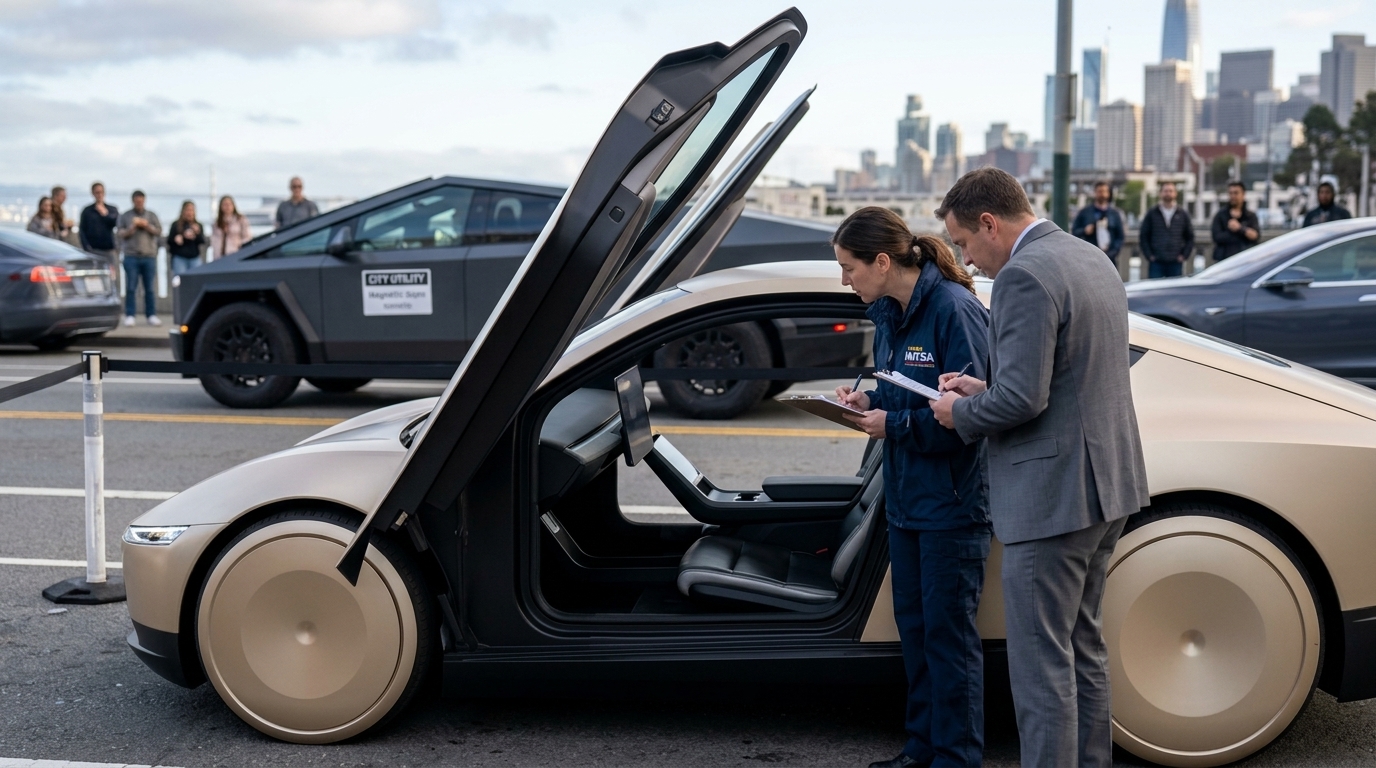
Tesla’s Cybercab, a two-seater designed without a steering wheel or pedals, is preparing to carry passengers in two states. However, the vehicle is already facing a federal inquiry into whether it complies with national safety regulations.
NHTSA opens an Audit Query
This investigation was launched shortly after Tesla hosted a ride-along event in Austin. The company intends to integrate the Cybercab into its Robotaxi network, which is active in several cities across Florida and Texas.
While the National Highway Traffic Safety Administration (NHTSA) is currently revising rules to accommodate autonomous vehicles—potentially removing requirements for mirrors and pedals—the existing standards remain the legal benchmark for now.
The exemption debate
Other developers of unconventional autonomous vehicles, like Amazon-owned Zoox, have sought federal exemptions to operate. Zoox received such an exemption earlier this year, though it is capped at 2,500 vehicles. Tesla has taken a different path, claiming its design already satisfies all current safety laws without needing an exemption.
The government’s "Audit Query" will analyze the data Tesla used to reach that conclusion. Ann Carlson, a professor at UCLA and former NHTSA official, noted that the agency appears frustrated by Tesla’s approach, calling the company's decision to ignore the exemption process “gobsmacking.”
Regulatory risks
The stakes for such an investigation are high. NHTSA has the authority to mandate design revisions or impose financial penalties. Last year, Volvo Group North America was fined $130 million following a probe into its recall procedures.
The Cybercab is central to Elon Musk’s effort to rebrand Tesla as a robotics and AI firm. Although only 45 of these cars are currently registered in Texas, Tesla’s long-term strategy involves producing millions of them every year.





