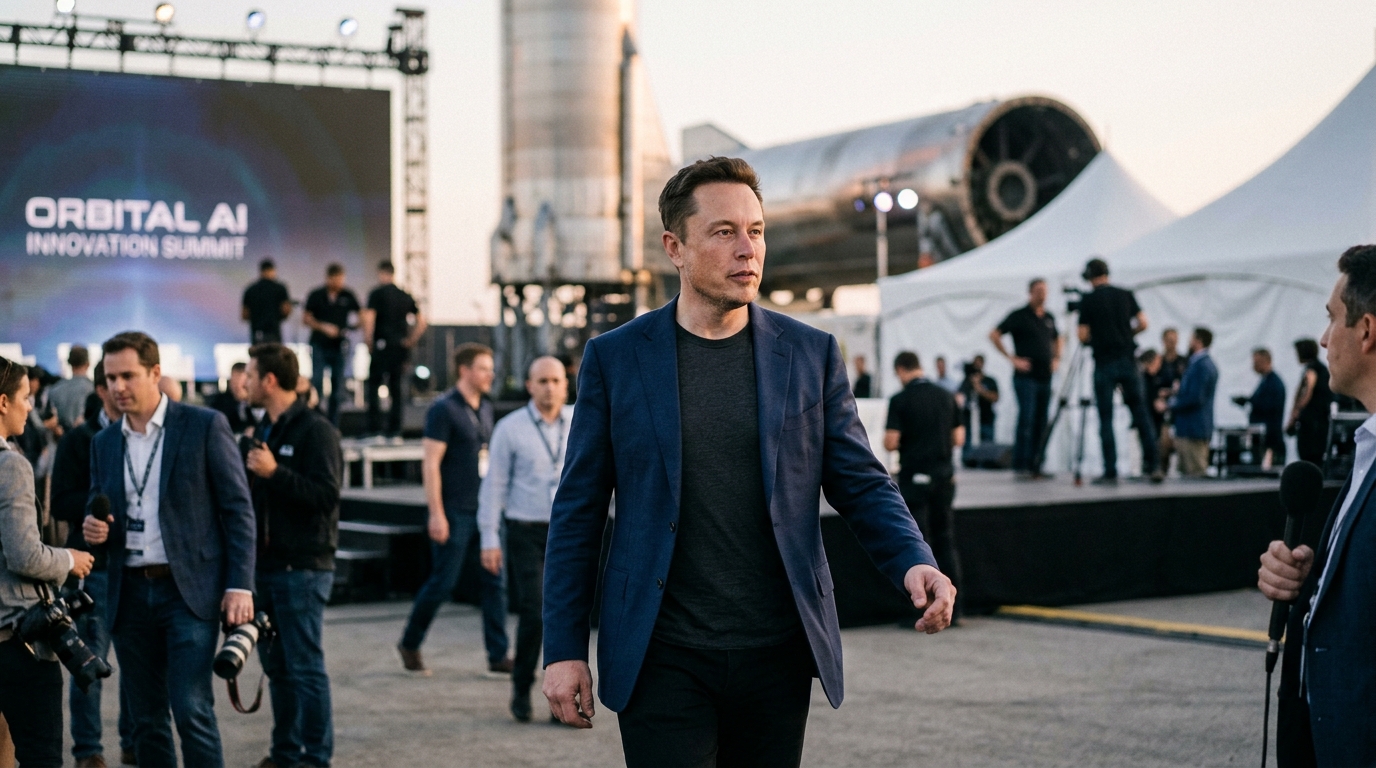
In a move that has sent shockwaves through global financial markets, Elon Musk’s SpaceX has secured a staggering $25 billion in debt financing. This capital injection is not merely intended for rocket manufacturing or the continued expansion of the Starlink constellation. Instead, the company appears to be pivoting sharply toward Artificial Intelligence (AI), aiming to acquire strategic industry players and integrate machine intelligence into the core of its aerospace operations.
The $25 Billion War Chest
SpaceX’s decision to take on such a massive debt load during a period of relatively high interest rates signals extreme confidence. According to Wall Street analysts, this represents one of the largest financing packages ever extended to a private technology firm. The strategy is clear: SpaceX no longer wishes to be just a logistics provider for space; it aims to dominate the infrastructure of the next generation.
The question on every investor's mind is "why now?" The answer lies in the synergy between the data harvested by Starlink and the capabilities of AI. With thousands of satellites in orbit, SpaceX possesses a unique data stream that, if analyzed through advanced algorithms, can provide advantages no other company on Earth can match. From predicting weather patterns to optimizing orbital paths in real-time, AI is the key to full space automation.
Impact on the Tech Portfolio
For the average investor, SpaceX’s move changes the rules of the game. Companies traditionally seen as AI leaders, such as NVIDIA or Microsoft, may find themselves facing an unexpected competitor or a powerful new client. SpaceX’s acquisition of smaller, specialized AI startups could lead to a "talent and expertise drought" for other market players.
- Valuations: The influx of $25 billion into the AI acquisition market will skyrocket startup valuations, making entry harder for smaller venture capitalists.
- Vertical Integration: Musk is following the Tesla blueprint, seeking to control every facet of the production chain.
- Strategic Alliances: The relationship between SpaceX and xAI (Musk’s other AI venture) remains a mystery that could harbor significant hidden value.
"We aren't just looking at a rocket company anymore. We are witnessing the birth of a comprehensive operating system for the planet and beyond," noted a senior investment banking executive.
Risks and Prospects
Of course, borrowing on this scale is not without risk. Servicing $25 billion in debt requires consistent and growing cash flows. While Starlink has begun to turn a profit, SpaceX remains a company that consumes vast capital for the development of Starship. If the AI market proves to be a bubble, or if these acquisitions fail to yield the expected results, SpaceX could find itself in a precarious financial position.
However, history has shown that Musk often wins his high-stakes bets. Integrating AI into satellite services could generate new revenue streams by providing "Intelligence as a Service" to governments and multinationals. SpaceX’s ability to process data at the "edge" directly in space could make Starlink the most critical computing network in the world.
Conclusion
SpaceX’s move to borrow $25 billion to invest in AI is a declaration of intent. It marks the end of an era where aerospace and information technology were separate sectors. For investors, it is a reminder that innovation knows no boundaries and that traditional tech stocks must now be measured by their relationship to the Musk ecosystem. The future of technology is not just Earth-bound; it lies in the intelligence that will connect our world to the stars.