A significant discovery by researchers at the University of Konstanz in Germany has revealed a new bacterial enzyme with a dual function: it can break down certain polyesters as well as penicillin. The findings, published in 'The ISME Journal', suggest a concerning link between plastic waste management and microbial resistance to antibiotics.
The Pac-Man Mechanism and the ‘Plastisphere’
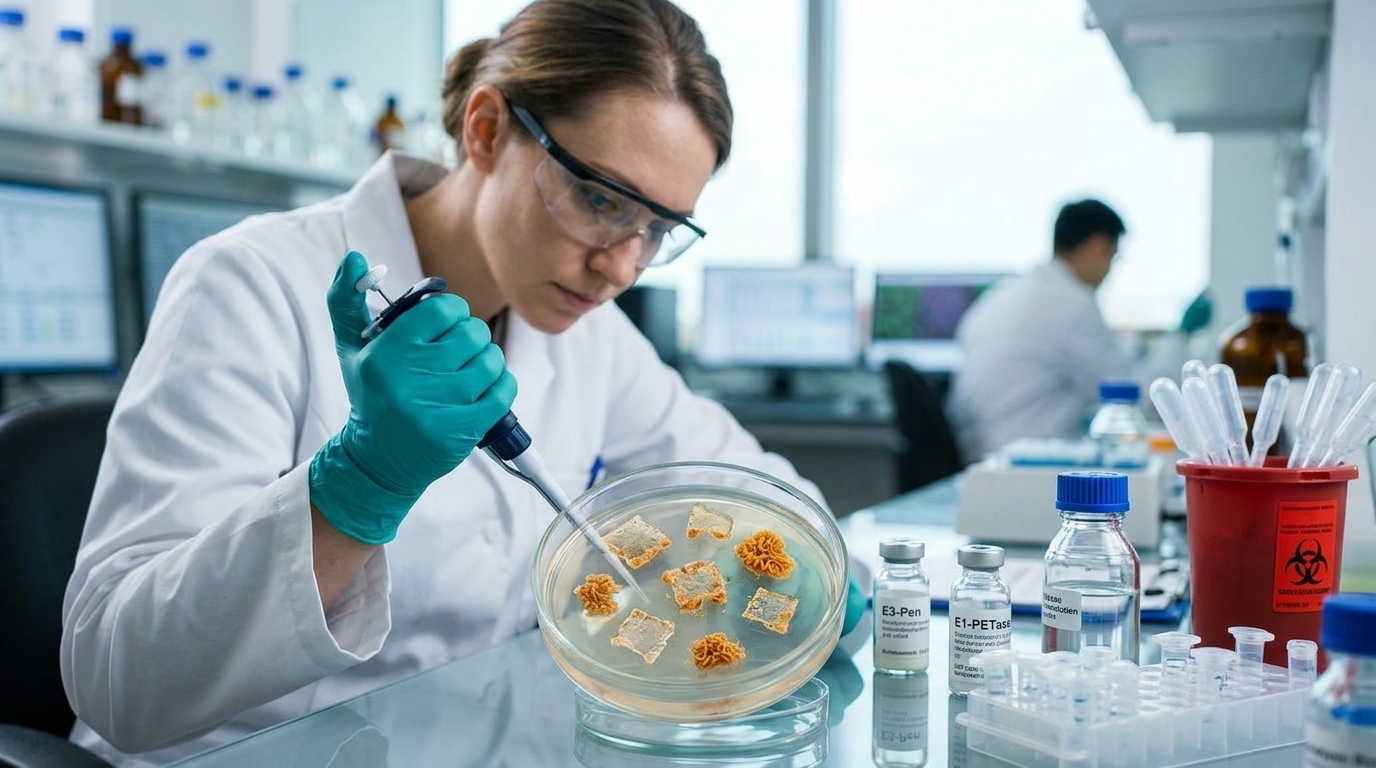
The enzyme was nicknamed ‘Pac-Man’ due to its remarkably open active site, which allows it to 'devour' synthetic materials. Researchers identified the enzyme while investigating how microbial communities interact with long-chain aliphatic polyesters (LCAPs). As part of the experiments, they buried bioplastic films in botanical garden soil for a full year. Electron microscopy revealed that bacteria were creating microscopic holes in the material, as the enzyme remained anchored to the cell surface, allowing the organisms to eat their way into the plastic.
The Medical Connection
The structure of the Pac-Man enzyme shares similarities with beta-lactamases, the enzymes that enable bacteria to neutralize antibiotics like penicillin. Laboratory tests confirmed that the same enzyme capable of breaking down polyesters into monomers can also deactivate penicillin. This suggests that the adaptation of microorganisms to the new ‘plastisphere’—the habitat created by plastic waste—may simultaneously bolster their resistance to medical treatments.
The Future of Materials
While cellulose degrades in approximately 80 days, LCAP bioplastics required 250 to 330 days to fully decompose, whereas conventional high-density plastic (HDPE) remained virtually unchanged. The researchers emphasize that the solution is not simply to rely on nature to adapt, but to transition toward using polymers with specific biochemical cleavage points that microorganisms can readily recognize.