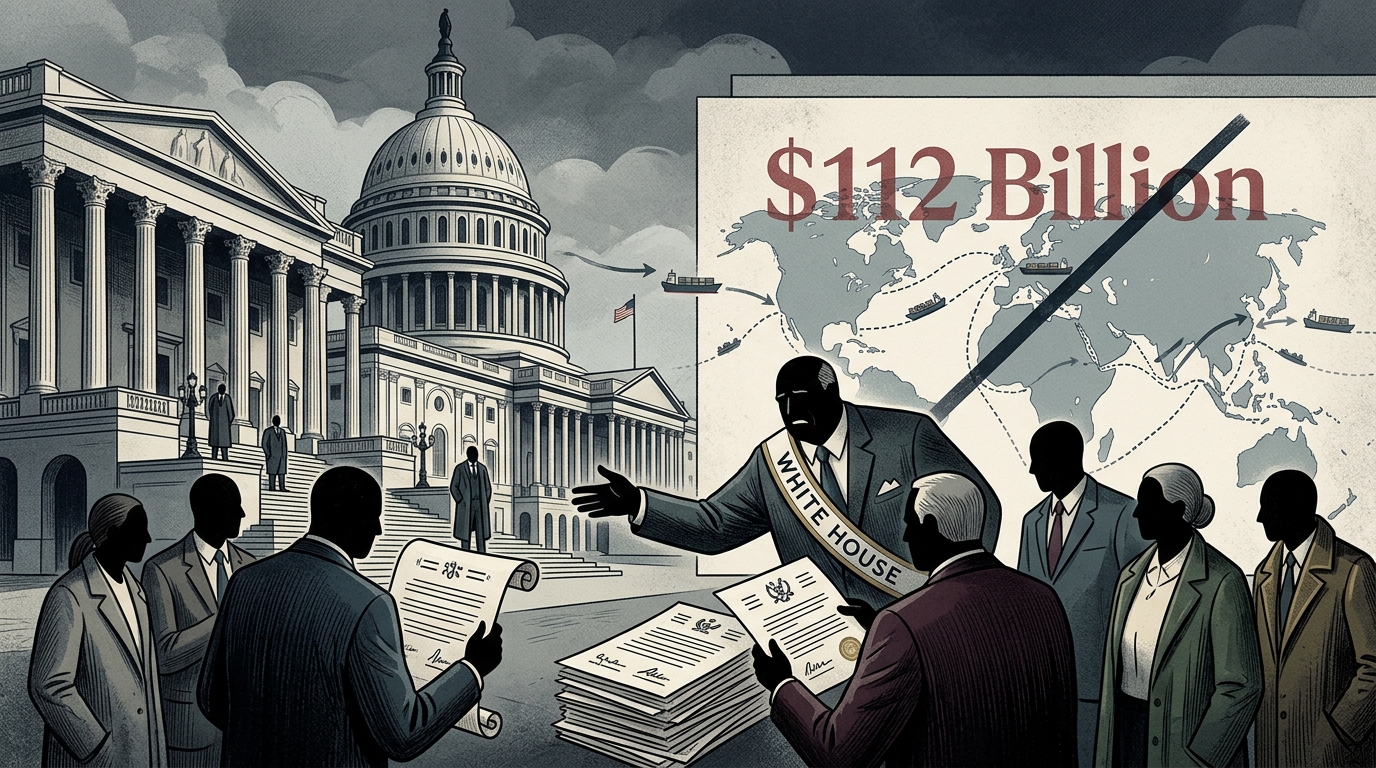
President Donald Trump’s aggressive tariff strategy, initially intended to bolster government revenue, has inadvertently fueled a massive multi-billion dollar tax evasion scheme. According to a report from the White House Office of Trade and Manufacturing Policy (OTMP), the U.S. is losing between $19 billion and $26 billion in annual tax revenue due to "transshipment"—a process where goods are routed through third-party countries to evade levies.
The $112 Billion Discrepancy
The true scale of the issue may exceed official estimates. Data from China’s General Administration of Customs and the U.S. Census Bureau revealed a $112 billion gap between what China reported shipping and what the U.S. reported receiving. China is identified as the primary driver of this trend, allegedly processing exports through more than 40 different nations to mask their origin.
The OTMP report describes the situation as a "Great Transshipment Scam," a toxic mix of economic incentives and lax enforcement. However, trade experts argue that the administration’s own policies are the catalyst. Ryan Petersen, CEO of Flexport, noted that high tariffs create a massive incentive for fraud: "If your tariff was 0%, there’s no need to commit fraud."
Impact on Compliant Businesses
Carrie Owens, a partner at Kelley Drye & Warren and former CBP official, emphasized that tariff dodging creates an uneven playing field. Companies following the rules are forced to compete with businesses that avoid the financial burden of import taxes. Furthermore, the use of "foreign importers of record" allows shell companies to operate outside U.S. jurisdiction, vanishing quickly once regulators detect suspicious activity.
AI-Driven Enforcement
In response, a June 3 executive order restricted foreign entities from using continuous customs bonds and mandated more rigorous documentation. U.S. Customs and Border Protection (CBP) is now deploying Artificial Intelligence to scan shipment data, analyze routing histories, and flag documentation inconsistencies. While these measures are expected to show results as early as October, experts warn that high tariffs may continue to incentivize evasion as long as they remain in place.