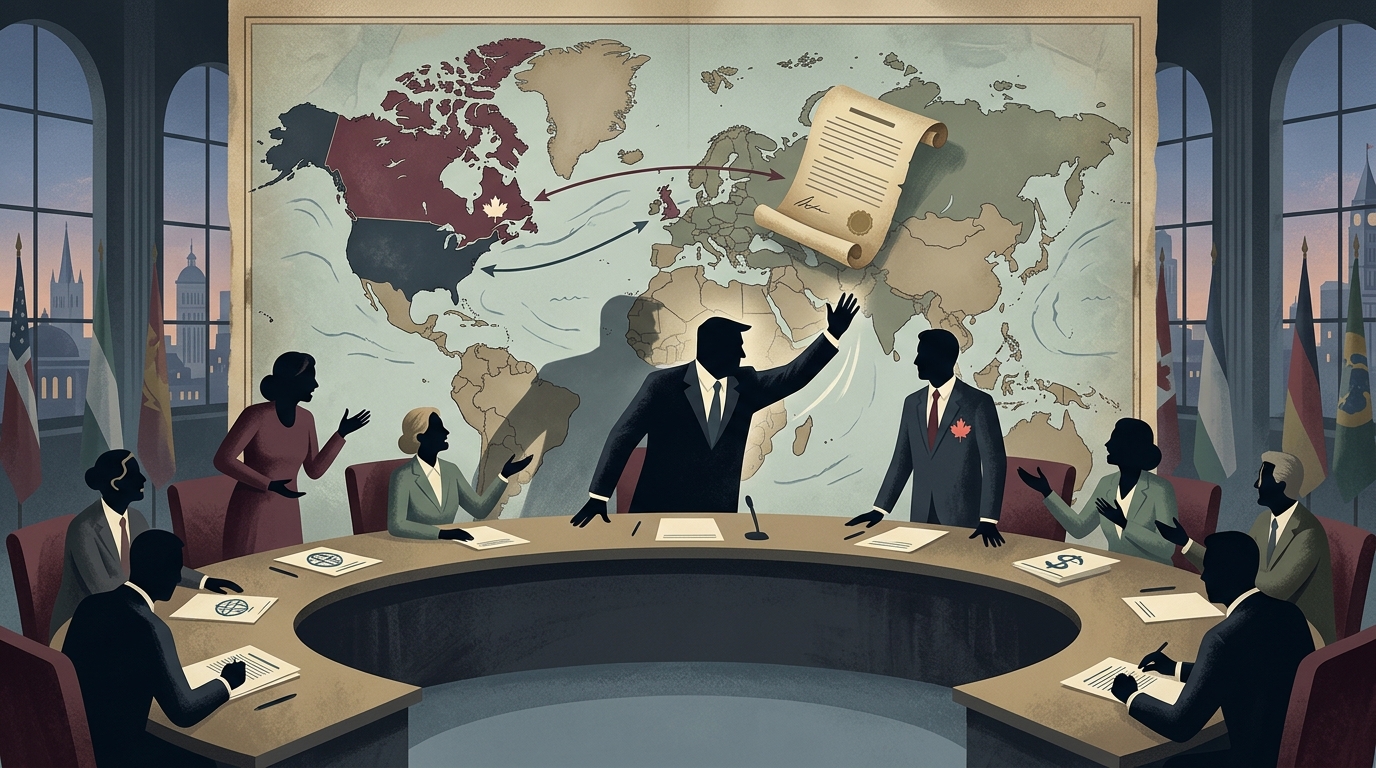
In a move that signals a significant escalation in trade tensions, President Donald Trump announced a new round of retaliatory tariffs against Canada on July 20. The administration is invoking Section 338 of the 1930 Smoot-Hawley Tariff Act—a Depression-era provision that has never before been utilized by a U.S. president to impose tariffs.
The Administration's Argument
The White House contends that these tariffs are a necessary response to Canada's "harmful discrimination" against the American automotive industry. Specifically, the administration points to Canada's 25% tariff on U.S. autos and parts, which was enacted shortly after Trump’s April 2, 2025, "Liberation Day" Executive Order that imposed broad tariffs on global imports.
Official claims suggest that Canadian imports of U.S. vehicles fell by approximately $5 billion, or 22%, while imports from competitors like Mexico, Japan, Korea, and Germany rose by nearly $3 billion. The administration argues this unfairly disadvantages American commerce compared to other nations.
Data Contradictions
However, actual trade flow data presents a more complex reality. While U.S. auto exports to Canada have fluctuated, they recently trended back toward levels seen in April 2025. Furthermore, American manufacturers like General Motors and Ford continue to lead the Canadian market in total sales.
Evidence suggests the decline in exports may be linked to consumer behavior rather than trade barriers. A Toyota Canada survey revealed that 56% of Canadians are delaying major purchases due to "affordability concerns." Additionally, the market for U.S. auto parts remains robust; imports reached a peak in March 2026, suggesting that Canada’s tariffs have had no clear negative impact on this specific segment of the American industry.
A Cycle of Retaliation
The invocation of Section 338 appears to be the latest volley in a "tit for tat" game that began with unilateral U.S. tariffs. Critics suggest that attempting to penalize Canada for responding to initial American trade restrictions is a self-defeating strategy. In this trade war, the primary victims are likely to be consumers and the broader economies of both North American neighbors.