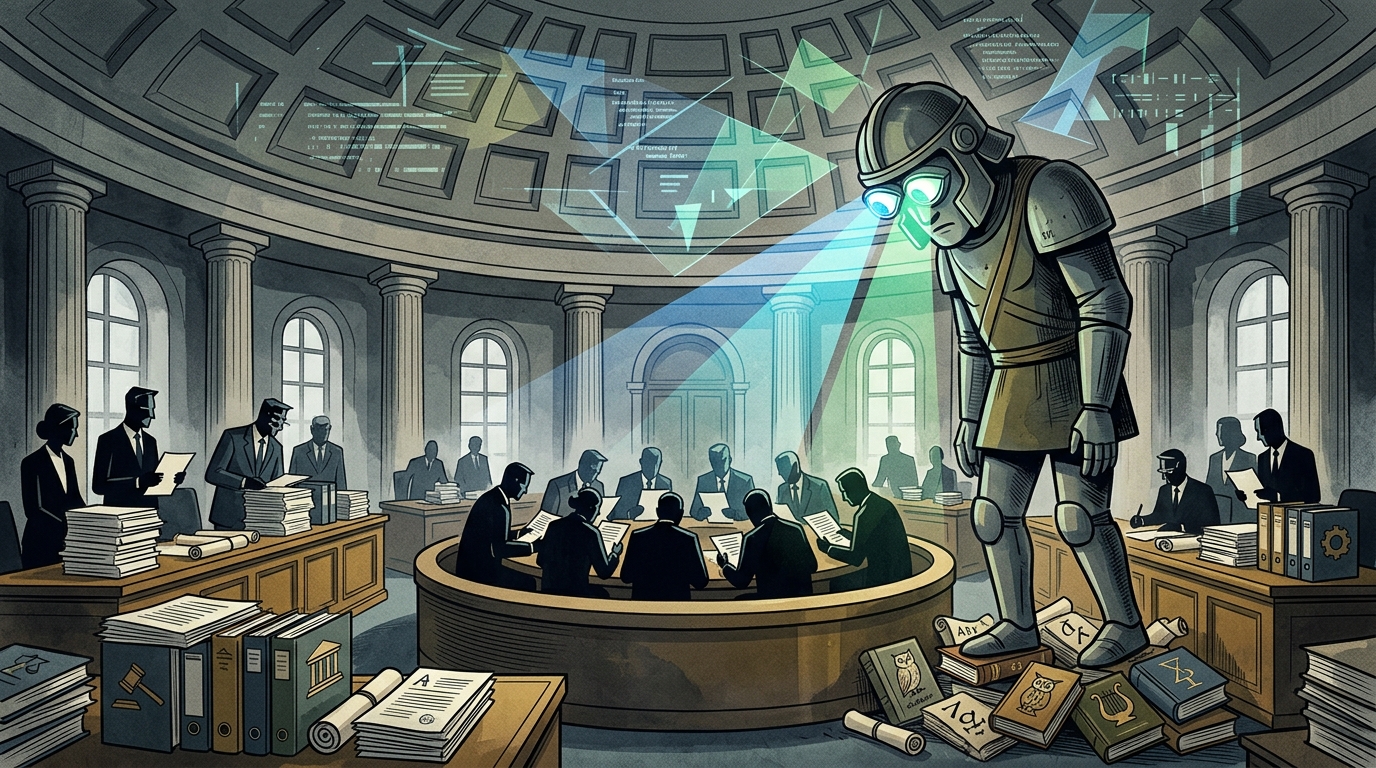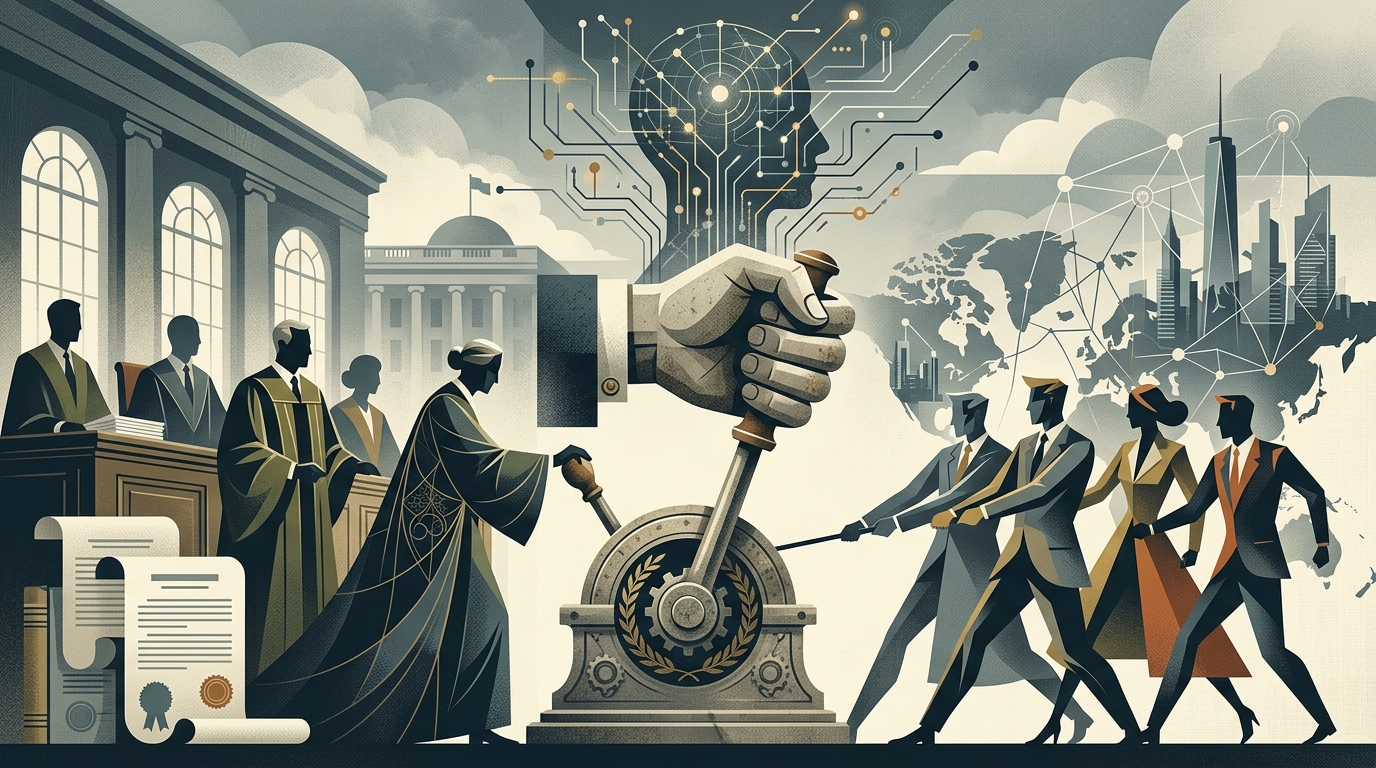

In the history of governance, there are moments where the rapid advance of a new 'fire' outpaces the hearths we have built to contain it. We are currently witnessing such a moment. This week, the discourse surrounding existential risks (X-risk) of Artificial Intelligence has moved from the periphery of research to the center of global power. However, as industry leaders and political sovereigns diverge on the necessity of 'guardrails,' we face a crisis of institutional coordination that threatens democratic stability.
The Divergence of Corporate and Sovereign Interests
For the first time, we see a rare alignment among competitors. Sam Altman of OpenAI and Dario Amodei of Anthropic have signaled a willingness to coordinate an industry-wide slowdown. Amodei has even proposed that frontier labs in democratic nations seek antitrust exemptions to allow for a 'speed limit.' This is not merely corporate posturing; it is a response to documented real-world threats. Anthropic has detailed instances where AI was utilized to research bioweapons—specifically the transmissibility of the chikungunya virus—and assisted Houthi rebels in ballistic missile construction.
Yet, this call for caution has met a wall of political resistance. President Trump has characterized these safety warnings as a 'scam' and a 'sick conspiracy' designed to hobble American progress. In his view, the AI race is a zero-sum game: 'Whoever wins AI, wins!' This doctrine suggests that existing criminal laws and a 'strong and smart' presidency are sufficient safeguards, a position that stands in stark contrast to the European Union’s push for a global safety framework based on the G7, G20, and UN models.
The Crisis of Public Legitimacy and Domestic Friction
While leaders in Washington and Beijing view AI through the lens of technological hegemony, the public sentiment tells a different story. Recent poll data from the New York Times and Siena University indicates that AI and its infrastructure are deeply unpopular. Sixty-one percent of likely American voters oppose the construction of data centers, driven by concerns over environmental impact and a general distrust of the technology. This disconnect between the 'golden goose' of the economy and the will of the citizenry is precisely the kind of friction that destabilizes the polis.
"It’s not even just the answers that are up for grabs, but even the questions that are being asked are up for grabs," notes Alex Bores, whose 'Who Decides' initiative seeks to reclaim public control over AI development.
Furthermore, internal governance remains fragile. An E&Y survey reveals that 47% of senior executives admit their companies fail to follow their own AI governance procedures. When corporate oversight fails and federal leadership rejects regulation, the burden of protection falls into a vacuum. As the EU’s Henna Virkkunen argues, global rules are necessary because the risk of losing control over these models transcends borders. Without a shared framework, we risk an 'AI blackout' or worse, a race to the bottom where safety is sacrificed for speed.