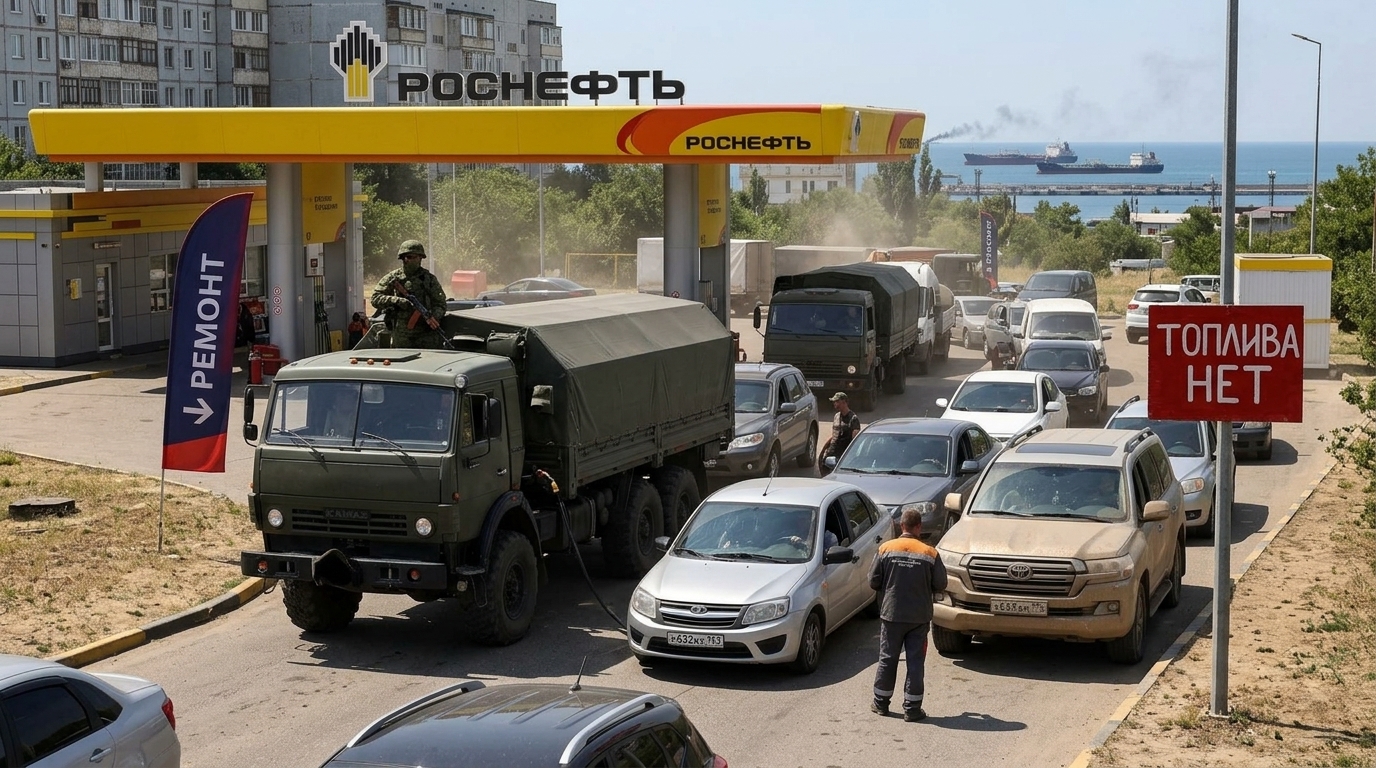
In a move that underscores the new phase of the war in Ukraine, Kyiv has launched a series of targeted drone strikes against two Russian tankers in southern Russia. This attack is not an isolated military incident but part of a broader strategy of asymmetric attrition aimed at paralyzing the Russian war machine by striking its logistical infrastructure and economic base. Today, July 9, 2026, reports from the region indicate that Russia is facing unprecedented pressure on its domestic fuel market, exacerbated by the ongoing successes of Ukrainian strikes.
The Strategy of 'Energy Strangulation'
The choice of tankers as targets signals a significant evolution in Ukrainian tactics. While the early years of the conflict saw Kyiv focused primarily on defending its territory, 2026 finds Ukraine possessing a sophisticated arsenal of long-range drones capable of penetrating Russian air defenses and striking strategic targets deep within Moscow's territory. The two tankers, which were transporting fuel for the needs of Russian occupying forces and for the supply of southern Russia, sustained serious damage, causing further disruption to supply chains.
According to military analysts, Kyiv is seeking to create a 'domino effect' of problems. By hitting transport vessels, Ukraine not only destroys the fuel itself but also disables the means of transport, which are difficult to replace due to international sanctions. "It is no longer a war of trenches, but a war of flows," a source from the Ukrainian Ministry of Defense noted. "If we stop the flow of oil, we stop the flow of Russian tanks."
The Internal Crisis in Russia and Gasoline Shortages
The timing of the strikes is extremely critical for the Kremlin. Russia, despite being one of the world's largest energy producers, is facing serious gasoline and diesel shortages at home. This paradox is due to three factors: the need to supply the front lines, damage to refineries from previous attacks, and the difficulty of maintaining infrastructure due to the lack of Western spare parts.
- Increased Demand: Military operations require massive amounts of fuel, leaving the civilian market as a secondary priority.
- Refining Issues: Many Russian refineries have been put out of operation or are operating at reduced capacity after successful drone strikes.
- Logistics: The destruction of tankers in the Black Sea and the Sea of Azov makes sea transport of fuel dangerous and expensive.
The Russian government has already imposed restrictions on fuel exports in an attempt to stabilize domestic prices, but public discontent is growing. Queues at gas stations in regions like Rostov and Krasnodar have become a daily phenomenon, creating a political headache for the leadership in Moscow.
"The security of our sea routes is non-negotiable, but the reality on the ground shows that the enemy has found ways to bypass our traditional defenses," said a Russian official who requested anonymity.
Geopolitical Implications and Maritime Security
The transformation of the Black Sea into a field of active hostilities against commercial and semi-commercial targets has broader consequences. The international shipping community is watching with bated breath, as the risk of a major environmental accident increases with every strike on a tanker. Furthermore, the security of grain exports, which is already hanging by a thread, is once again at risk.
The West, for its part, maintains a cautious stance. While providing technology and intelligence to Ukraine, it avoids direct involvement in attacks within Russian territory. However, it is clear that the effectiveness of Ukrainian drones relies heavily on advanced guidance and artificial intelligence systems developed with Western assistance. The ability of these systems to identify and strike specific parts of a ship (such as the engine room or tanks) demonstrates the high level of technological progress achieved.
Conclusion: A War Without End?
As July 2026 progresses, Ukraine's strategy appears to be bearing fruit in terms of attrition. Russia is forced to redeploy its anti-aircraft systems to protect its economic infrastructure, potentially weakening the front line. At the same time, the economic pressure from fuel shortages may prove more effective than any territorial counter-offensive. The question remains: how long can the Russian economy withstand this constant bombardment of its energy arteries before being forced into substantial concessions at the negotiating table?