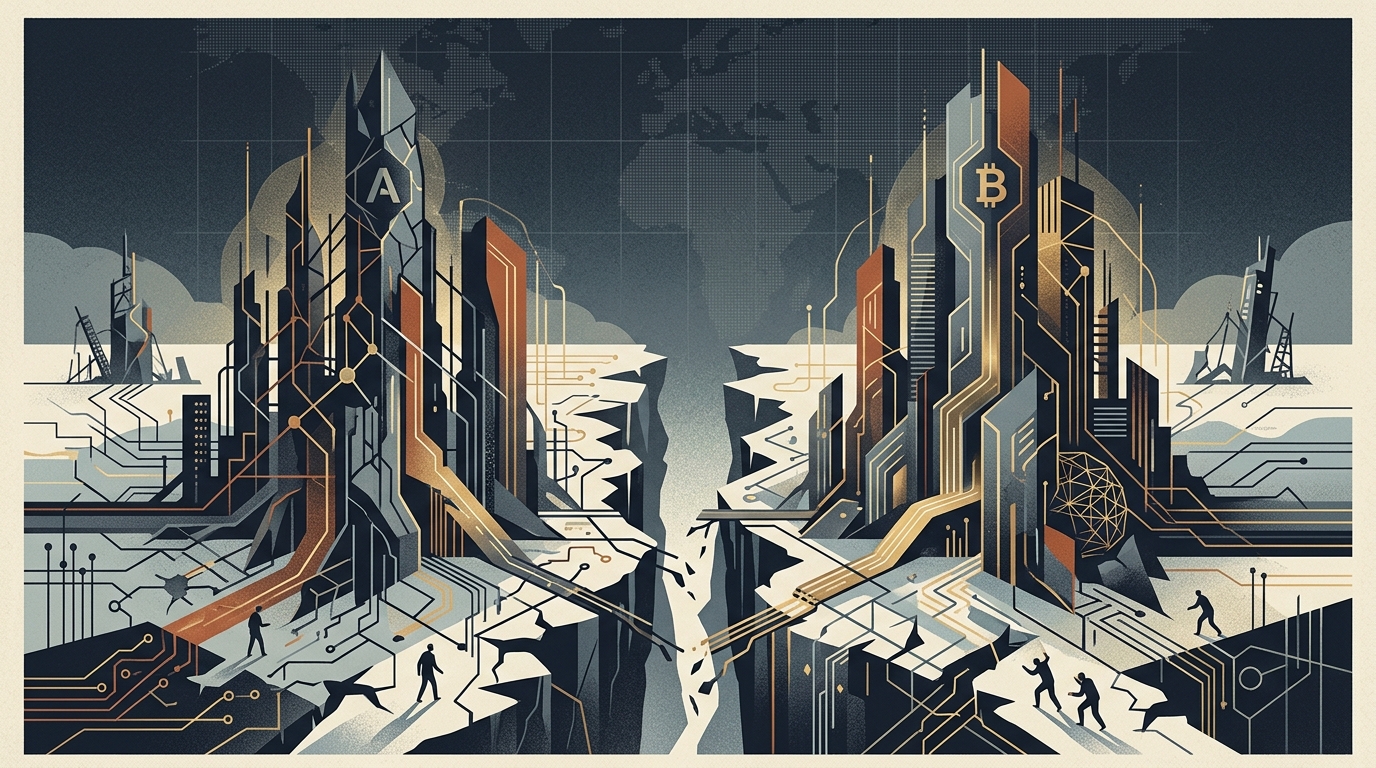
Artificial intelligence is no longer a unified global field but is fracturing into two distinct ecosystems centered around the United States and China. According to a new analysis by Goldman Sachs, the narrative of a global AI "duopoly" is gaining traction among investors, reflecting deeper geopolitical rivalries and national security concerns.
Bridging the Technological Divide
Despite China lagging several generations behind in cutting-edge semiconductor manufacturing, Goldman Sachs notes that the country is successfully narrowing the gap. Analysts highlight significant progress by firms such as DeepSeek and Kimi in the field of Large Language Models (LLMs).
The report suggests that China may be on par with or even leading global competitors in specific areas, including:
- Computing power and infrastructure.
- Open-weight models and AI applications.
- Physical artificial intelligence.
- Biological engineering and aerospace.
A Two-Tiered Investment Strategy
Goldman Sachs is reshaping its investment framework by dividing Chinese AI stocks into two categories. The first includes exporters linked to Western AI spending, which remain more sensitive to geopolitical shifts. The second comprises domestic firms supported by government policy and internal adoption, which have shown greater resilience during market corrections.
The market impact is already profound. Since the emergence of DeepSeek in early 2025, nearly $5 trillion in market value has been created across AI-related listed companies in China. These stocks now account for 42% of the combined market capitalization in mainland China and Hong Kong, a sharp increase from the 24% recorded in 2024.