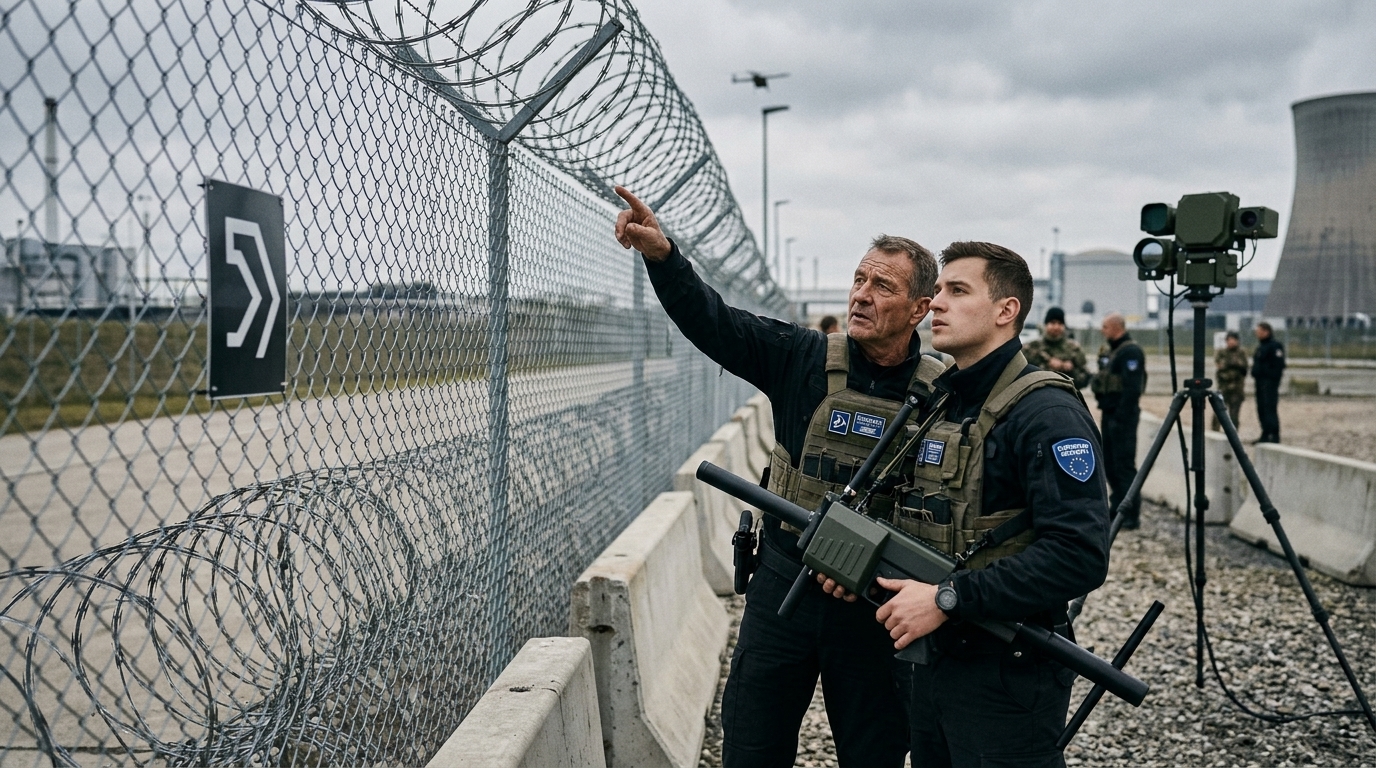
European countries are not adequately prepared to counter drone attacks from Russia and currently lack the capacity to clearly attribute responsibility for such incidents, according to a study by the London-based International Institute for Strategic Studies (IISS).
The research, conducted in collaboration with Germany's Hanns Seidel Foundation, examined 144 cases of drone overflights near airports and sensitive military installations across 12 NATO member states and Ireland between August 2024 and February 2026.
Security Architecture Deficiencies
The IISS study concludes that Europe's current anti-drone architecture is failing to meet the threat level. Despite increased attention from NATO, the EU, and national governments, detection remains uneven and judicial authorities are fragmented. Response options are often described as disproportionate, while the attribution process is too slow to support timely deterrence.
"The report considers it very likely that the Kremlin conducted a drone campaign over Europe," the study states.
The Challenge of Attribution
A key finding is that no European government has yet publicly attributed a UAV overflight to Russia. According to European officials cited in the research, this is partly because relevant governments have focused on responding at a national level rather than connecting different events across Europe to see the broader picture.
Klaus Holetschek, chairman of the Hanns Seidel Foundation, described the findings as "disturbing," emphasizing that Europe remains insufficiently prepared for this specific form of hybrid threat.