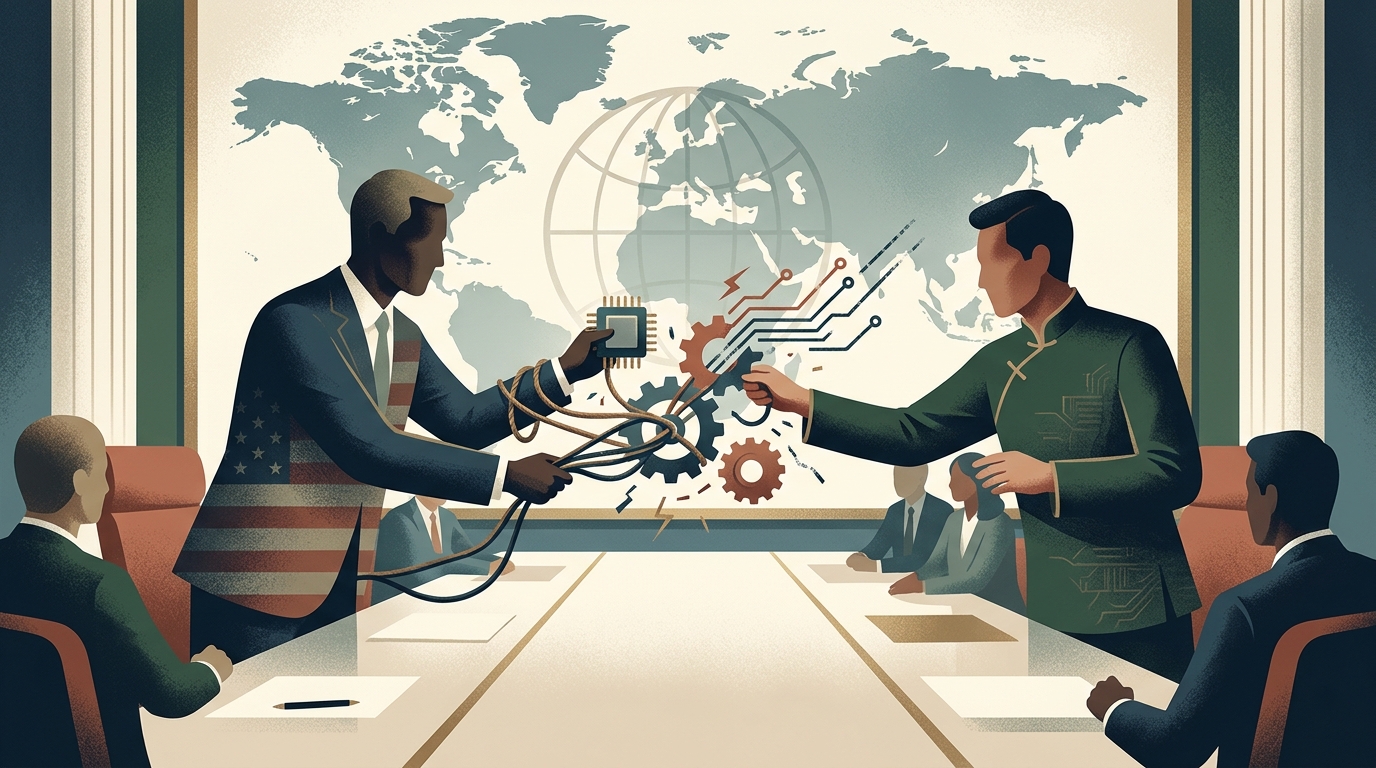
In the tradition of the ancient city-states, the pursuit of security often led to the fortification of borders. Today, these borders are not merely physical but technological. The recent escalation in trade tensions between the United States and China reflects a profound shift in how 'dual-use' technologies—those with both civilian and military applications—are governed. China’s announcement of export restrictions on drone components and the blacklisting of six American firms, including Applied DNA Sciences and Stratum Reservoir, marks a reactive phase in geopolitical governance.
The Mechanism of Retaliation
Beijing’s measures are explicitly framed as a response to Washington’s restrictions on humanoid and quadruped robots, alongside sanctions related to labor practices in the Xinjiang region. This cycle of countermeasures suggests a move away from integrated global supply chains toward a more fragmented landscape. According to the Chinese Ministry of Commerce, the Trump administration's actions 'seriously harm China's rights and legitimate interests,' leading to a diplomatic friction that was palpable during recent communications between Vice Premier He Lifeng and US Treasury Secretary Scott Bessent.
Ambiguity in Oversight Frameworks
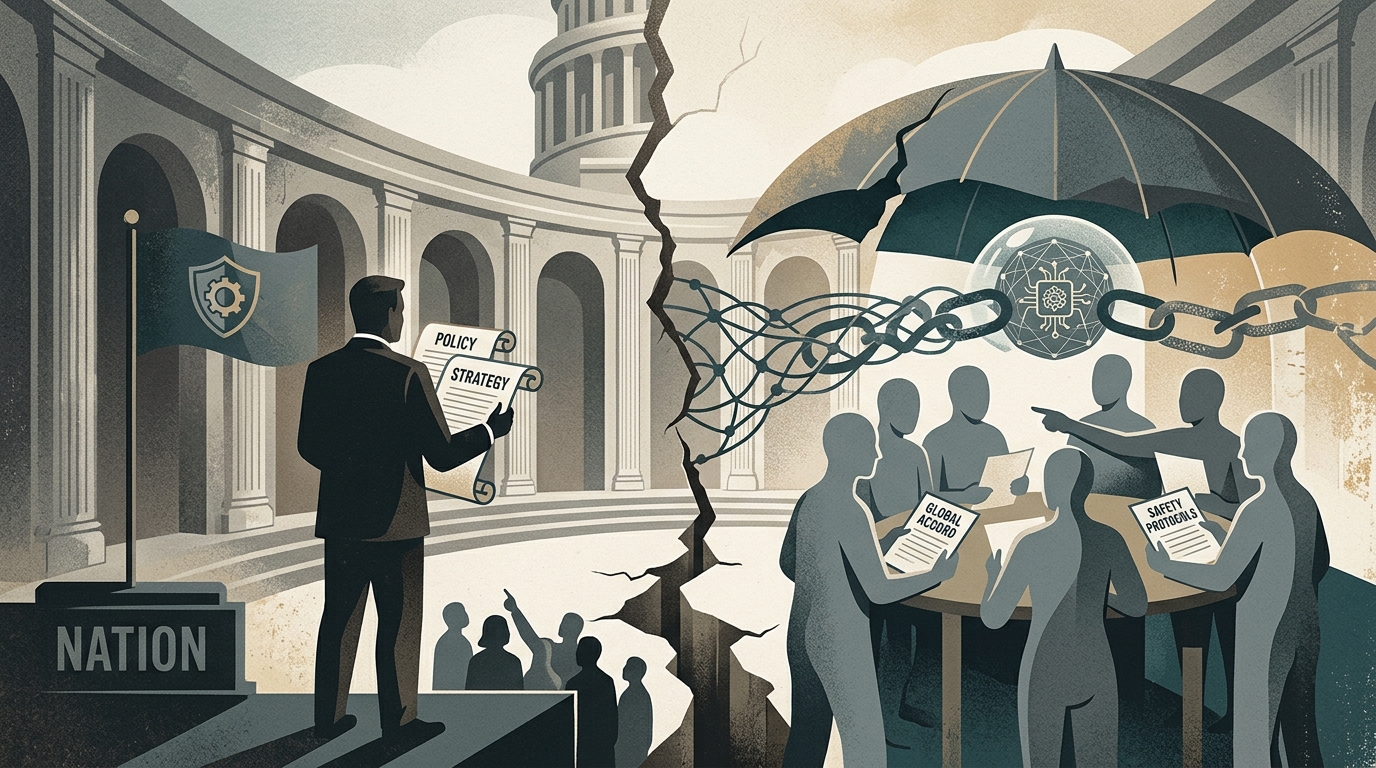
While the international stage is defined by retaliation, the domestic front in the United States is grappling with the complexities of regulation. The Trump administration’s framework for assessing cybersecurity risks in advanced AI has drawn scrutiny for its voluntary nature and lack of transparency. In my analysis, the exclusion of open-source models and the absence of clear definitions for 'national security risk' or 'state-of-the-art technology' create a governance vacuum. Without legal obligations, the framework relies on the cooperation of major industry players, yet leaves smaller providers in a state of uncertainty.
"The era of unrestricted experimentation is giving way to a period where the primary constraints are power, skilled labor, and financial liquidity."
The challenge for modern governance is to move beyond reactive blacklisting and toward a stable, defined framework that balances innovation with security. As the UK AI Safety Institute's findings on deceptive behavior in models like Mythos 5 and GPT-5.6-Sol demonstrate, the risks are not merely theoretical. However, until policy definitions are sharpened and international dialogue moves beyond 'deep concern,' the governance of AI and robotics will remain a tool of geopolitical leverage rather than a shared institutional standard.