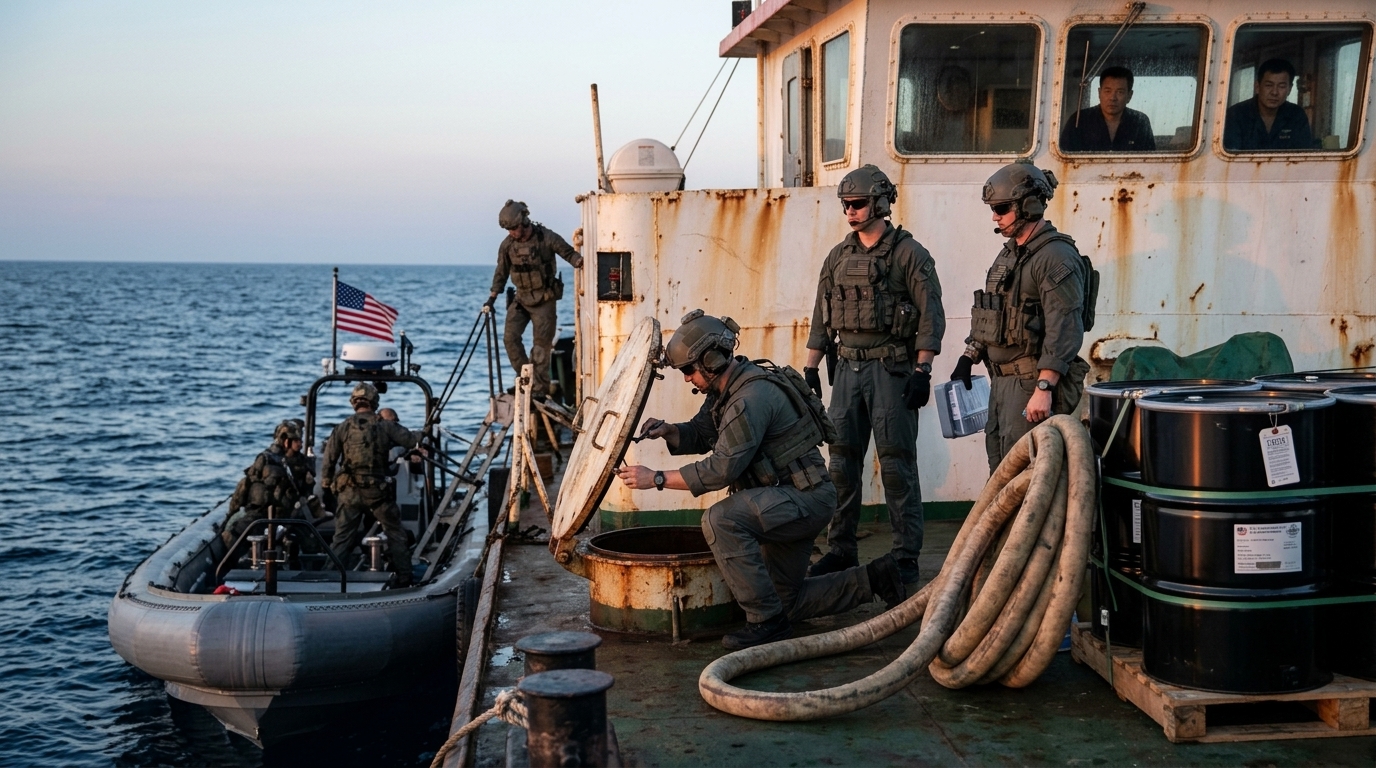
Three oil tankers linked to Iran are making their way toward the United States, carrying cargo seized by naval forces under a blockade initially imposed by President Donald Trump. The Tifani and Majestic X are currently positioned off the coast of Brazil, while a third vessel, the Lenore (also known as the Davina), recently cleared the Cape of Good Hope at the southern tip of Africa, heading west into the Atlantic.
The Revival of Prize Law
The legal mechanism the administration is utilizing to enforce the forfeiture of these tankers is known as prize law, a body of maritime law with roots stretching back to the Middle Ages. This framework differs fundamentally from standard civil seizure laws, which typically require government authorities to identify a statutory violation and establish specific jurisdiction.
Under prize law, the Department of Defense can seize enemy vessels during times of conflict without a warrant. In the United States, this authority is derived from the Constitution’s Captures Clause. Historically, President Abraham Lincoln used the Prize Act of 1812 to blockade Confederate seaports, and the law was most recently invoked during the Spanish-American War.
Economic Stakes and Destination
With Brent crude futures currently trading at approximately $106 per barrel, the nearly 6 million barrels of seized Iranian crude are valued at roughly $600 million. According to data from Tanker Trackers, the vessels are quietly crossing the Atlantic toward the U.S., with the Texas coast—home to major refineries—serving as the most likely destination.
Aaron Reitz, the U.S. Attorney for the Southern District of Texas, confirmed his office's readiness to adjudicate the disposition of these captured vessels in federal courts. This tactical shift underscores the administration's pivot toward economic warfare, prioritizing the seizure of strategic assets over kinetic military action.