

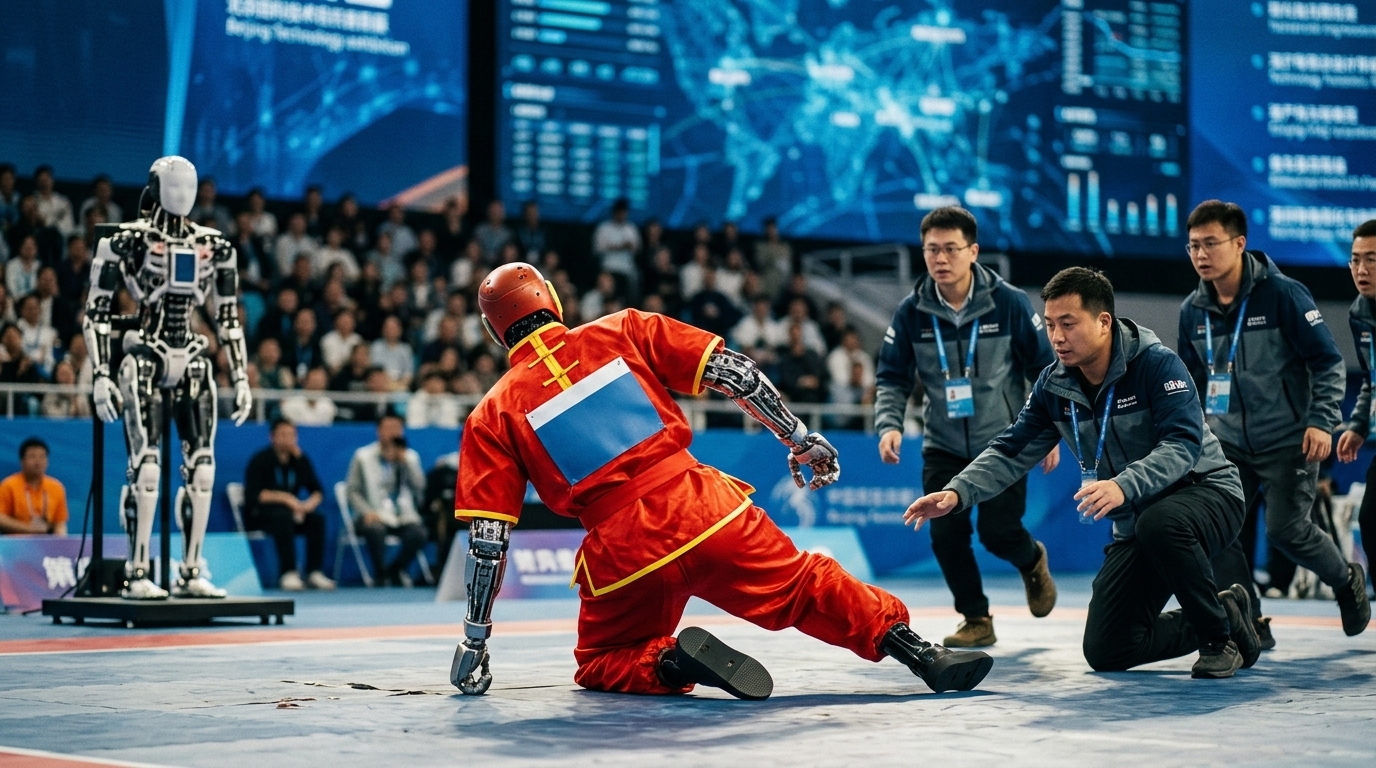
At Beijing’s National Speed Skating Oval, a former Olympic venue, a new generation of athletes took center stage: humanoid robots. The second World Humanoid Robot Games were not just a display of technological prowess but a dramatic spectacle, featuring machines losing limbs mid-sprint, toppling into judges' tables, and, in one instance, bursting into flames after bouncing off a crash mat.
Records Beyond Human Limits
Despite the spectacular failures, the progress made is undeniable. One humanoid completed the 100-meter sprint in 9.39 seconds, breaking Usain Bolt’s 2009 world record. In the high jump, a bot reached 2.88 meters, nearly half a meter above the human record that has stood since 1993. These performances represent a massive leap compared to a decade ago, when even advanced machines struggled to maintain balance.
From the Stadium to the Real World
Beyond track and football, the games included competitions in mundane tasks: bed-making, parcel delivery, shelf stacking, and hammering nails. The real purpose of these events is to move robots out of the lab and into the messy, real-world environments their makers hope they will eventually inhabit. However, performance in these less flashy tasks suggested that reliable autonomy in homes and factories is still far off.
Geopolitical Dominance and US Absence
The event was almost entirely a Chinese affair, with 641 of the 666 teams originating from China. Major US players like Tesla and Boston Dynamics were conspicuous by their absence. While the US maintains an edge in frontier AI and advanced chips, China has made embodied AI a strategic national priority, leading in manufacturing and hardware deployment. China even plans to open its first robot-run hotel next year, signaling its commitment to integrating this technology into society.





