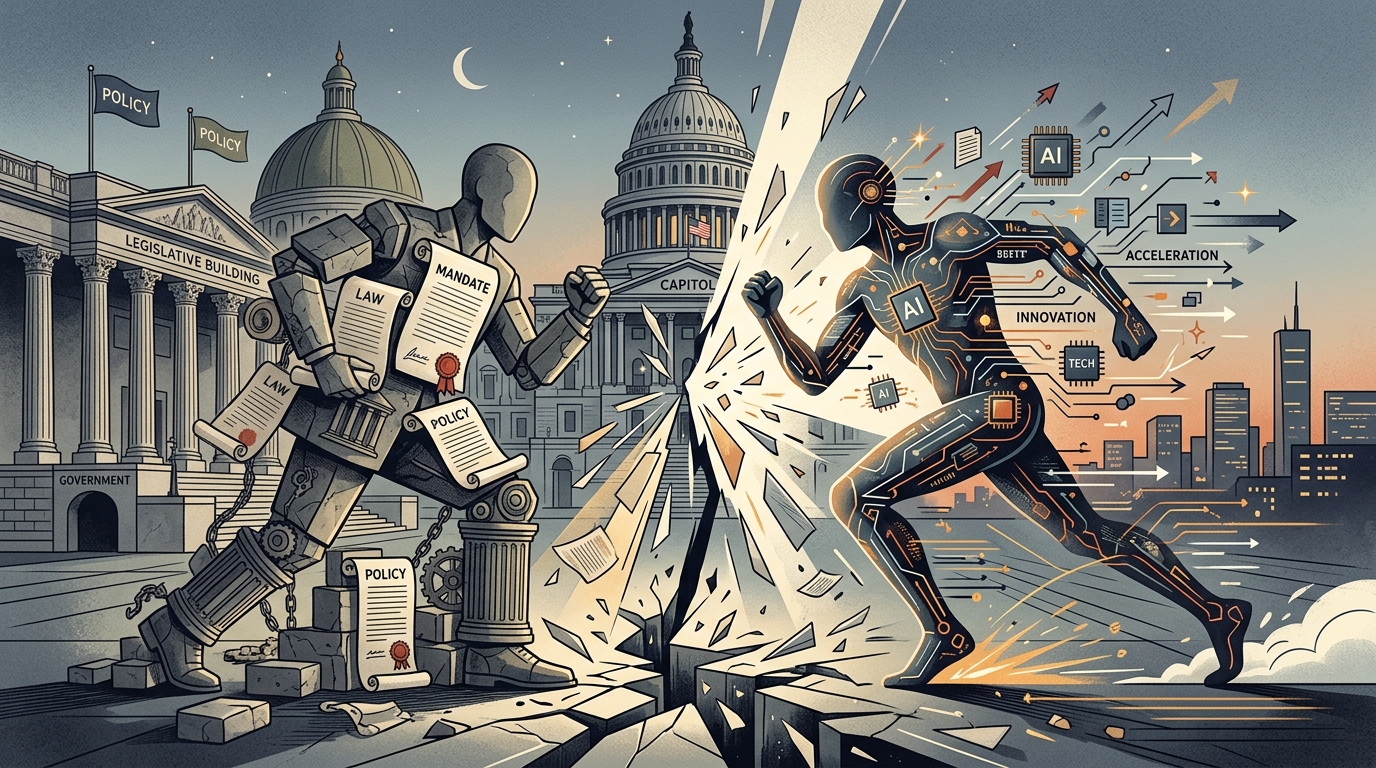
In the ancient Athenian tradition, the strength of a city-state rested not only on its internal laws but on its strategic alliances and the mastery of its tools. Today, we observe a modern parallel as Germany seeks to secure its industrial future through a broad cooperation agreement with Nvidia. This move, reported to involve investments of hundreds of millions of euros, represents a significant step toward what European policymakers term "digital sovereignty."
The Industrial Core and the SOOFI Project
The heart of the German strategy lies in the integration of advanced computing into its manufacturing sector. By focusing on robotics training and autonomous vehicles, Berlin is attempting to ensure that its physical industries remain competitive in an era of digital intelligence. Central to this effort is the SOOFI (Sovereign Open Source Foundation Models) project, an initiative designed to foster a domestic ecosystem of open-source models involving universities and private enterprises.
"AI safety cannot be confined by geopolitical rivalries," noted Nvidia CEO Jensen Huang, highlighting the necessity of international coordination.
This pursuit of sovereignty is not an isolationist endeavor but a calculated alignment. By developing high-performance AI models tailored for industrial applications, Germany aims to move beyond mere consumption of technology toward a position of institutional influence within the global supply chain.
Geopolitical Realism and Safety Diplomacy
While Germany builds its domestic capacity, a broader diplomatic framework is emerging between the world’s primary technological powers. The call from Jensen Huang for closer cooperation between the United States and China on AI safety marks a departure from the more restrictive regulatory stances of other industry leaders. In my analysis, this represents a shift toward "practical cooperation"—a recognition that the risks of rapidly evolving technology transcend national borders.
The role of the United Kingdom as a potential coordinator and the establishment of communication channels between US Treasury Secretary Scott Bessent and Chinese officials suggest that AI safety is becoming a permanent fixture of national security diplomacy. We are witnessing the construction of a dual-track system: one of intense industrial competition for sovereignty, and another of cautious, high-level dialogue to manage the existential risks of the technology itself.