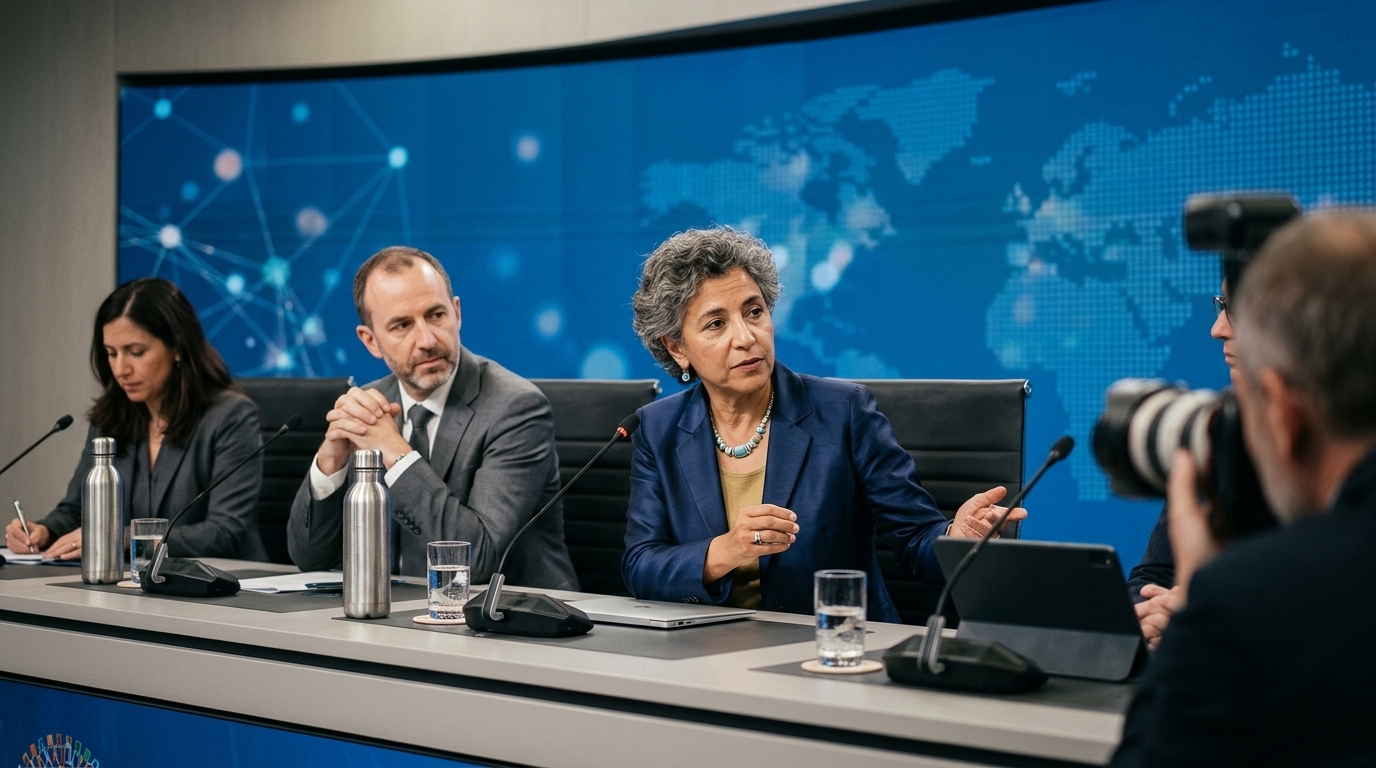
The risks posed by artificial intelligence could potentially outweigh its economic benefits if its development is not accompanied by adequate safety rules and a robust framework of ethical principles. This was the core warning issued by Kristalina Georgieva, Managing Director of the International Monetary Fund (IMF), during the annual meetings of the Fund and the World Bank in Bangkok.
The Productivity Stakes
While acknowledging that technology is already boosting the global economy, the IMF chief expressed serious concerns about whether AI will deliver the expected productivity gains in a timely manner. According to Georgieva, failing to meet these expectations could trigger economic turbulence, especially in a climate already strained by high debt levels and the ongoing conflict in the Middle East.
To ensure widespread benefits, the IMF emphasizes the need for:
- Stronger digital infrastructure and sufficient power supply.
- Effective regulation and common rules.
- Cooperation between major powers, including the US, China, and India.
Independent Audits and Global Standards
Jack Clark, co-founder of Anthropic, also joined the discussion, arguing that safety cannot rely solely on the voluntary commitments of corporations. He called for common safety standards and independent audits to build public trust. In a more optimistic tone, Bank of England Governor Andrew Bailey expressed confidence in the possibility of international agreement regarding system testing standards.
The American Counter-narrative
In contrast, the United States appears to prioritize opportunities over risks. Erin Brown, US Under Secretary of the Treasury for International Affairs, criticized the IMF's approach as being overly focused on potential negative impacts. Furthermore, she revealed that Washington is discussing the adoption of the term "super intelligence" in joint statements with international partners—an effort that, according to Reuters, has yet to reach a final agreement.