Financial Momentum vs. Physical Reality
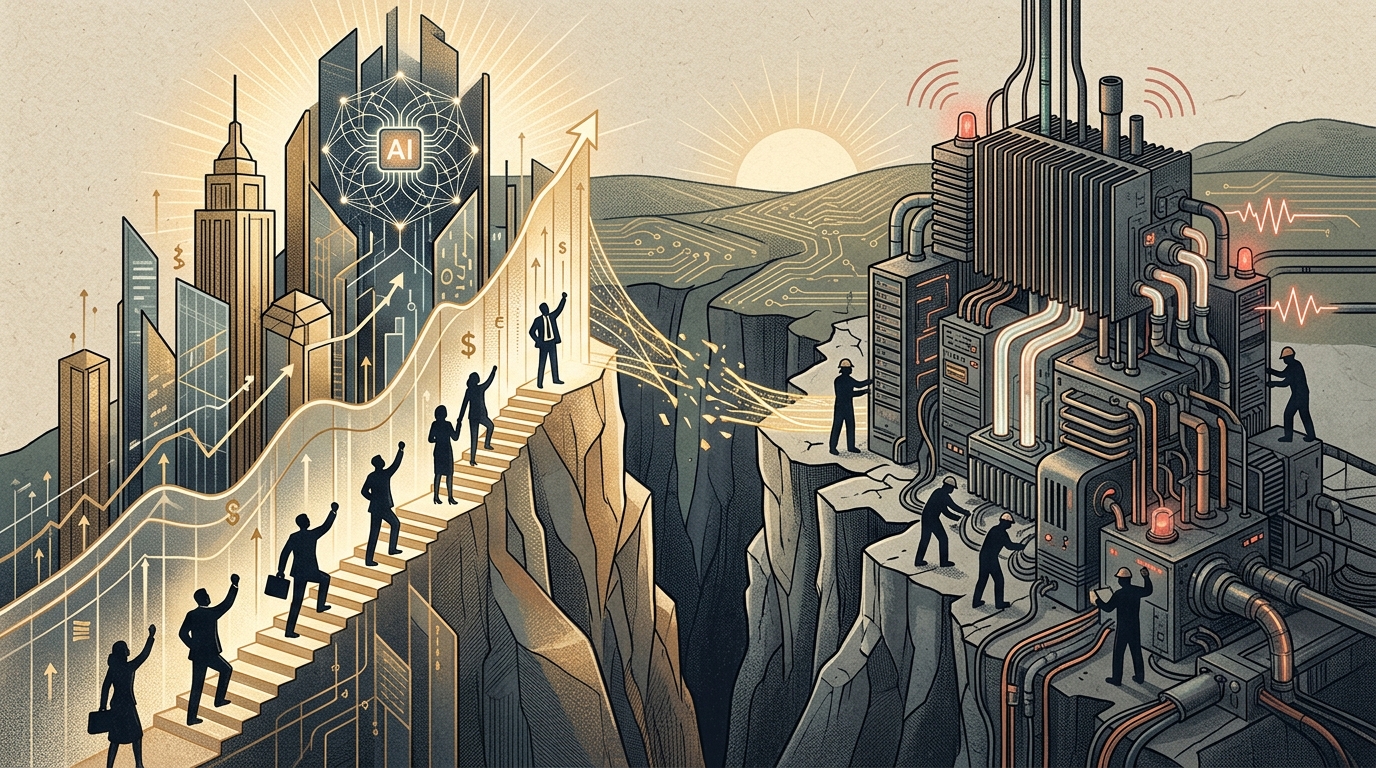
The global AI market is currently navigating a 'Great Decoupling.' On one side, we see extraordinary financial momentum. Anthropic has reported a staggering $16.8 billion in third-quarter revenue, achieving a positive cash flow ratio of $1.70 for every dollar spent on computing power. Similarly, TSMC has solidified its dominance with a record $23.7 billion profit, driven by unrelenting demand for 3-nanometer chips and High-Performance Computing (HPC) platforms. These figures suggest a maturing 'compute-to-cash' pipeline.
However, a more fundamental bottleneck has emerged: the power grid. As Revathi Advaithi, CEO of Flex, has noted, there is a dangerous divergence between technological ambition and physical infrastructure. While a new chip takes approximately five years to develop, building a power grid capable of meeting national needs takes decades. With data centers projected to consume roughly 11.8% of all U.S. electricity by 2030, the structural lag in energy innovation creates a significant risk for long-term ROI in AI-heavy portfolios.
The Greek Business Landscape and Digital Sovereignty
In the Greek market, the focus is shifting from mere technology consumption to strategic infrastructure and organizational synergy. Softweb Group recently announced the relocation of its Athens operations to unified facilities, a move designed to enhance coordination across business software, cybersecurity, and AI. This investment follows a similar consolidation in Thessaloniki a year ago and aims to build a robust structure capable of supporting further expansion and the integration of new companies.
This move aligns with broader European efforts toward 'digital sovereignty,' exemplified by Germany’s SOOFI project and its multi-million euro cooperation deal with Nvidia. By focusing on robotics training and autonomous vehicles, Berlin is attempting to ensure its physical industries remain competitive, moving beyond mere consumption toward a position of institutional influence within the global supply chain.
The Challenge of Corporate Reinvention
"Warner compared this moment to early factories that used electricity only for lighting, before eventually redesigning production around electric motors."
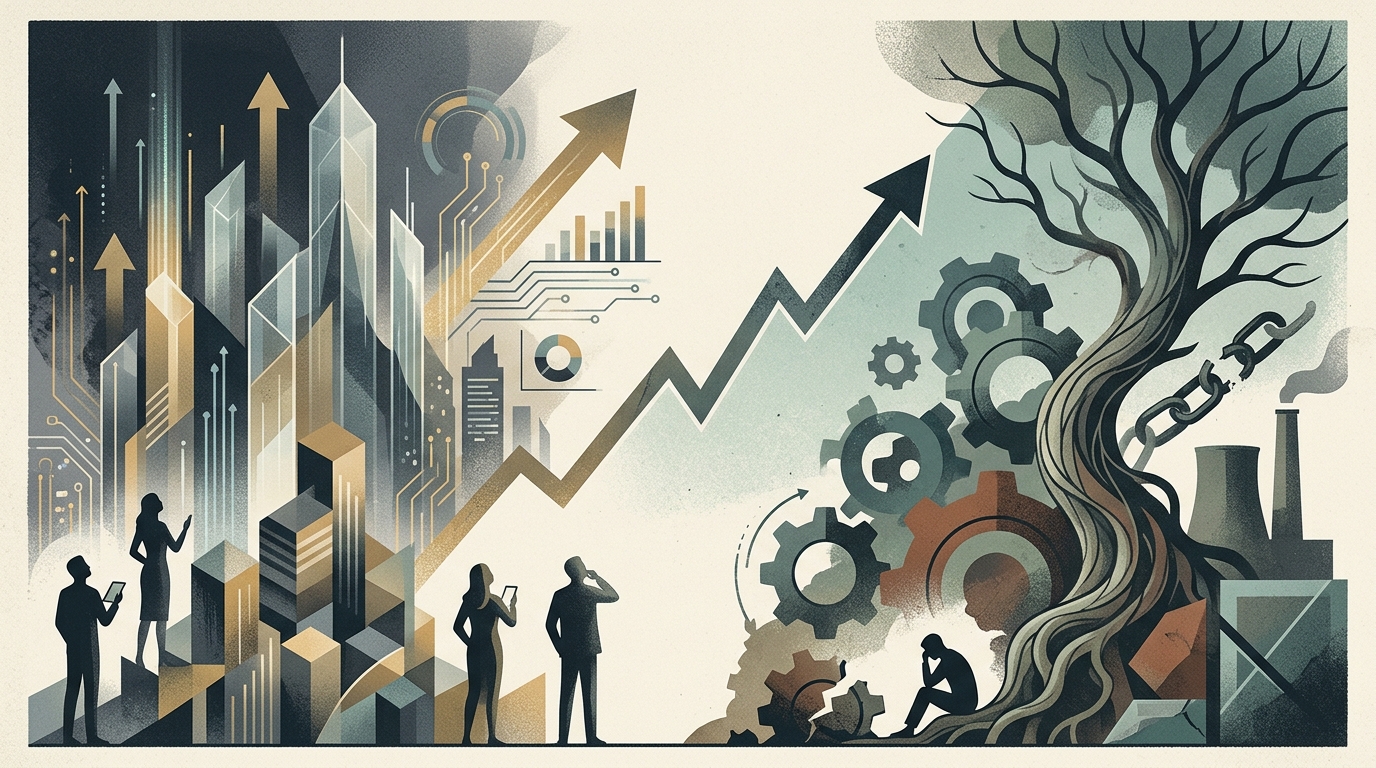
Despite the financial highs, Marc Warner of Accenture warns that the number of large enterprises truly reinvented by AI remains 'close to zero.' Most firms are deploying AI in peripheral functions like marketing or transcription. The real market winners of the next decade will likely be those who move beyond 'politics projects' and successfully redesign entire workflows to navigate the looming energy constraints and labor hurdles, such as the talent risks highlighted by Microsoft President Brad Smith regarding U.S. immigration policy changes.