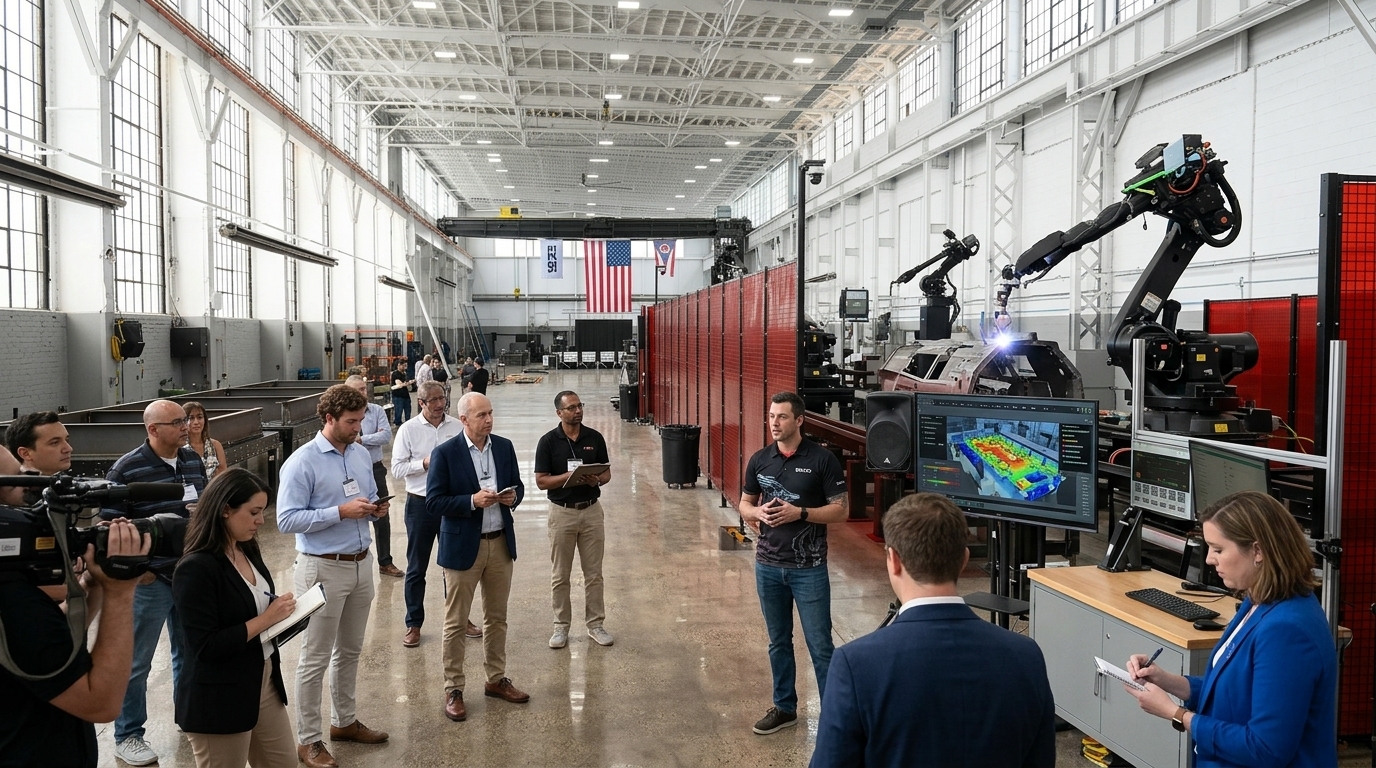
Three former SpaceX engineers have pivoted from rocket science to the heavy industry of steel fabrication. Their startup, 1872, officially launched its first facility in Cincinnati, Ohio, aiming to automate the manufacturing of essential infrastructure components by 2027 using AI-driven software and robotics.
Targeting Critical Infrastructure
The company is initially focusing on steel skids—rectangular frames used as foundations for modular buildings, AI data centers, and small modular nuclear reactors. CEO Dan Summers, who previously led the team building SpaceX’s Raptor engines, explained that these components are ideal for early automation because they are "lower precision" compared to aerospace parts but consume significant skilled labor.
Addressing the Labor Shortage
The push for automation is fueled by a looming crisis in the American workforce. The American Welding Society predicts a shortage of 320,500 welding professionals by 2029 due to retirements and rising demand. Furthermore, tightening immigration restrictions are limiting the pool of available labor. Automation offers a dramatic efficiency boost; while human welders typically have an "arc-on" time of 10-12%, robotic arms can reach 70%, potentially reducing welding costs by 85%.
A Pragmatic Approach to Autonomy
Unlike many tech firms chasing total automation, 1872 is taking a measured path. "We may achieve 80 percent autonomous operations, and we may decide that it makes sense to stop there," Summers told Ars Technica, citing diminishing returns for full autonomy. The company’s tech stack includes "Architect," a system that schedules manufacturing plans from digital designs, and "Conductor," which orchestrates robotic movements on the factory floor.