Young workers from Gen Z are becoming increasingly pessimistic about their professional future, identifying artificial intelligence as the primary threat to their prospects. According to recent Gallup surveys, this anxiety is fueled by a market paradox: tech giants are reaching record-high valuations while simultaneously cutting staff, as youth unemployment remains high in the post-pandemic era.
The Educational Dilemma
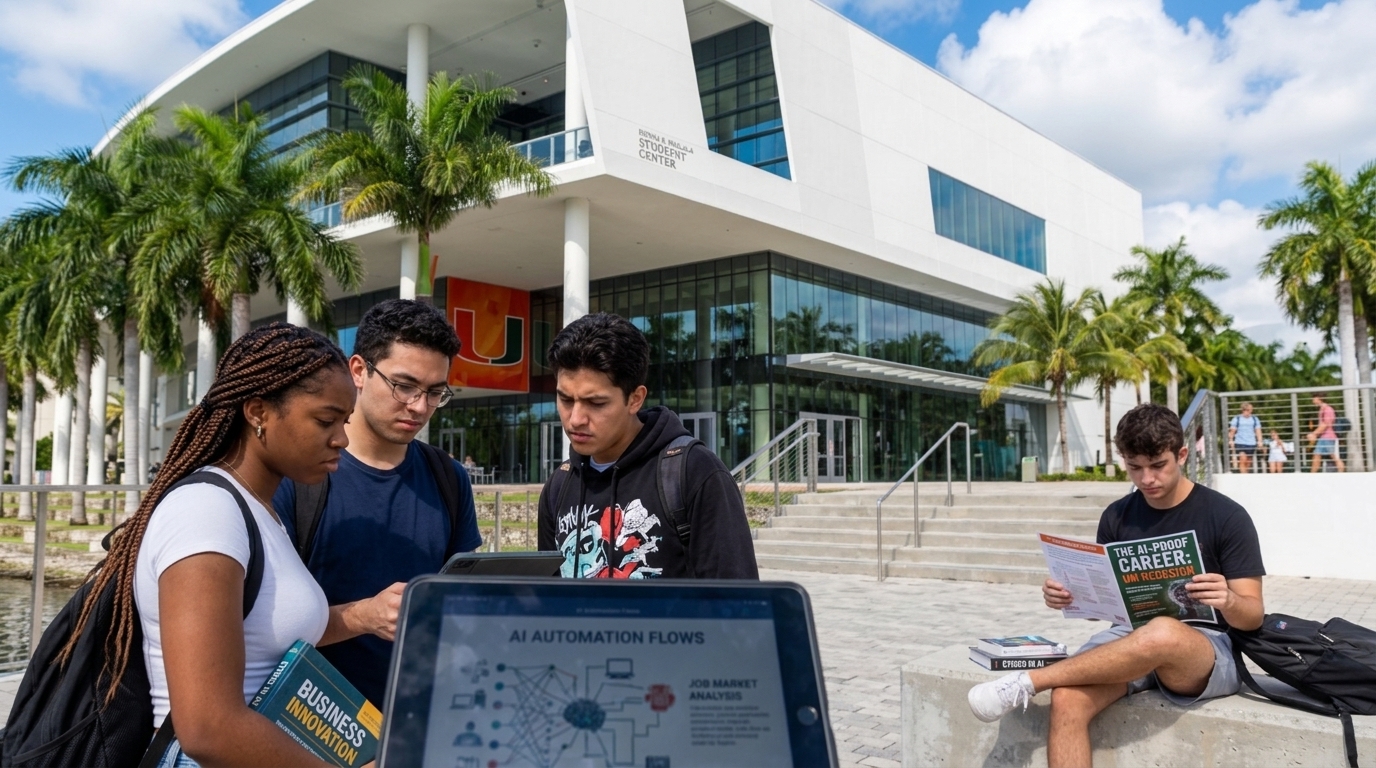
In response to this shifting landscape, the Patti and Allan Herbert Business School at the University of Miami is choosing to confront the challenge head-on. Dean Paul A. Pavlou argues that the solution lies in a complete redesign of business education. The school is tackling fundamental questions, such as how to structure an MBA when technology shifts weekly or how to prepare a graduate for an interview conducted entirely by an AI system.
A Three-Pillar Strategy
The Miami Herbert approach is built on three core strategic axes:
- Strategic Utilization: AI is integrated across the entire curriculum, moving beyond technical courses to focus on long-term strategic implementation.
- Emerging Professional Roles: Preparing students for brand-new positions, such as "forward deployed AI accelerators," which can command salaries up to $198,000.
- Experiential Learning: Embedding students within companies that are actively redefining work through AI experimentation.
The Return to 'Human Intelligence'
Despite the technological pivot, the school is placing unprecedented emphasis on what it calls "human intelligence." Skills such as emotional intelligence, resilience, negotiation, and leadership are now viewed as more critical than ever, representing areas where automation still has limited impact.
"My biggest fear is how to prepare my graduates to interview with an AI system," Pavlou notes.
Through partnerships with Microsoft for Copilot integration and American Airlines for AI-driven logistics, Miami is evolving into a real-world laboratory for the new economy. The goal is to treat AI as a tool for augmentation rather than a replacement for human talent.