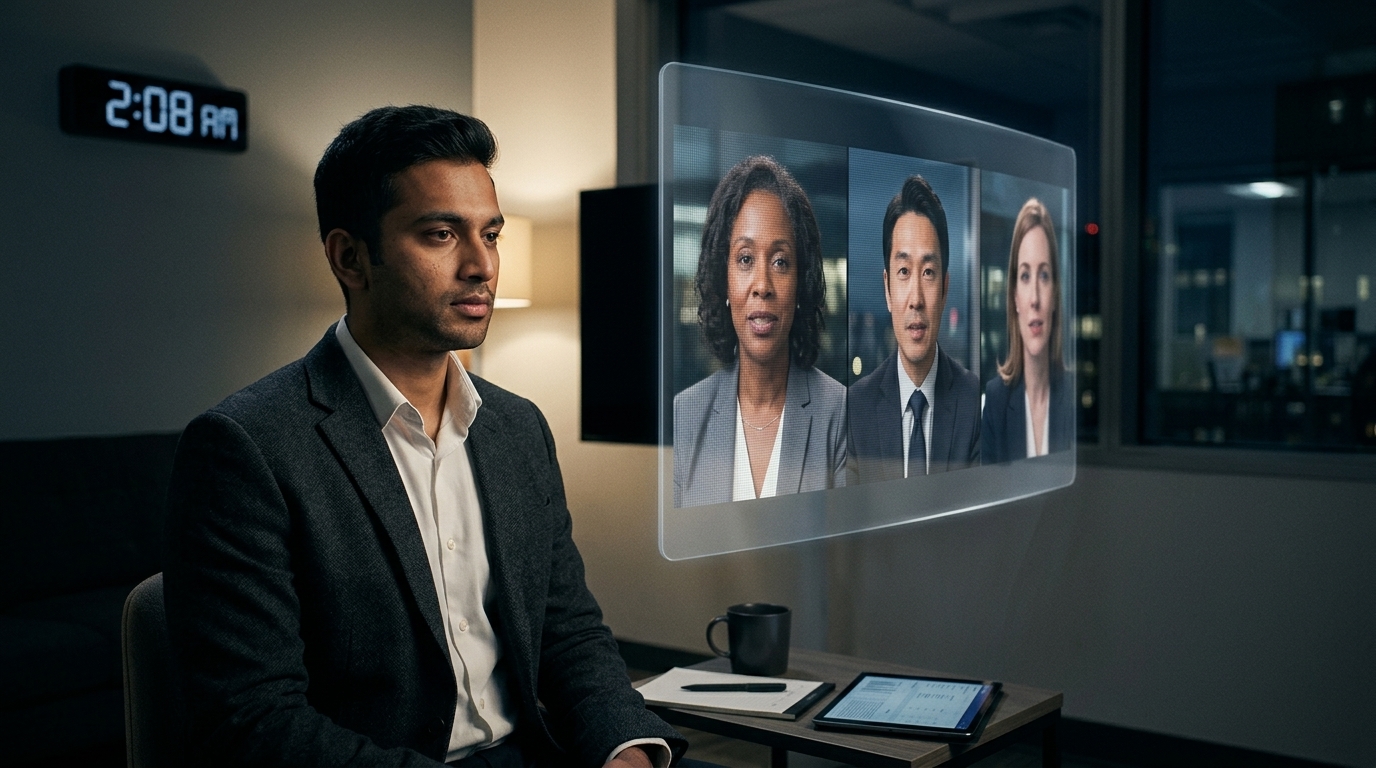
The traditional image of a job interview conducted in an office during standard business hours is giving way to a new digital reality. According to data from Ribbon AI, approximately one in four interviews conducted via its platform now takes place between 10 PM and 2 AM.
The Drive for Accessibility and Flexibility
This trend is far from accidental. Arsham Ghahramani, CEO of Ribbon AI, explains that the option for late-night interviews serves as an accessibility tool for worker groups with limited free time during the day. Working parents and employees in factories or kitchens are utilizing AI to pursue career opportunities at their own convenience.
- In the manufacturing sector, the rate of late-night interviews reaches 35%.
- AI tool usage is linked to 10% to 30% higher employee retention over a 180-day period.
- A major automaker reported a 35% acceleration in hiring processes after adopting the technology.
"Now you have candidates who could never have interviewed before," Ghahramani stated, highlighting the shift in accessibility.
Concerns Over Dehumanization and Bias
Despite the gains in speed and flexibility, the adoption of AI in recruitment faces significant resistance. A study by Greenhouse reveals that 38% of U.S. candidates have abandoned a hiring process because it required an interview with an AI agent. The primary concerns revolve around evaluation methods and inherent biases.
Specifically, 36% of survey participants felt they were judged differently based on age, while 27% reported similar concerns regarding race or ethnicity. Despite these reactions, experts like Steve Boese believe a large-scale return to traditional methods is unlikely, as the model is increasingly adapting to the candidate's schedule rather than the employer's.