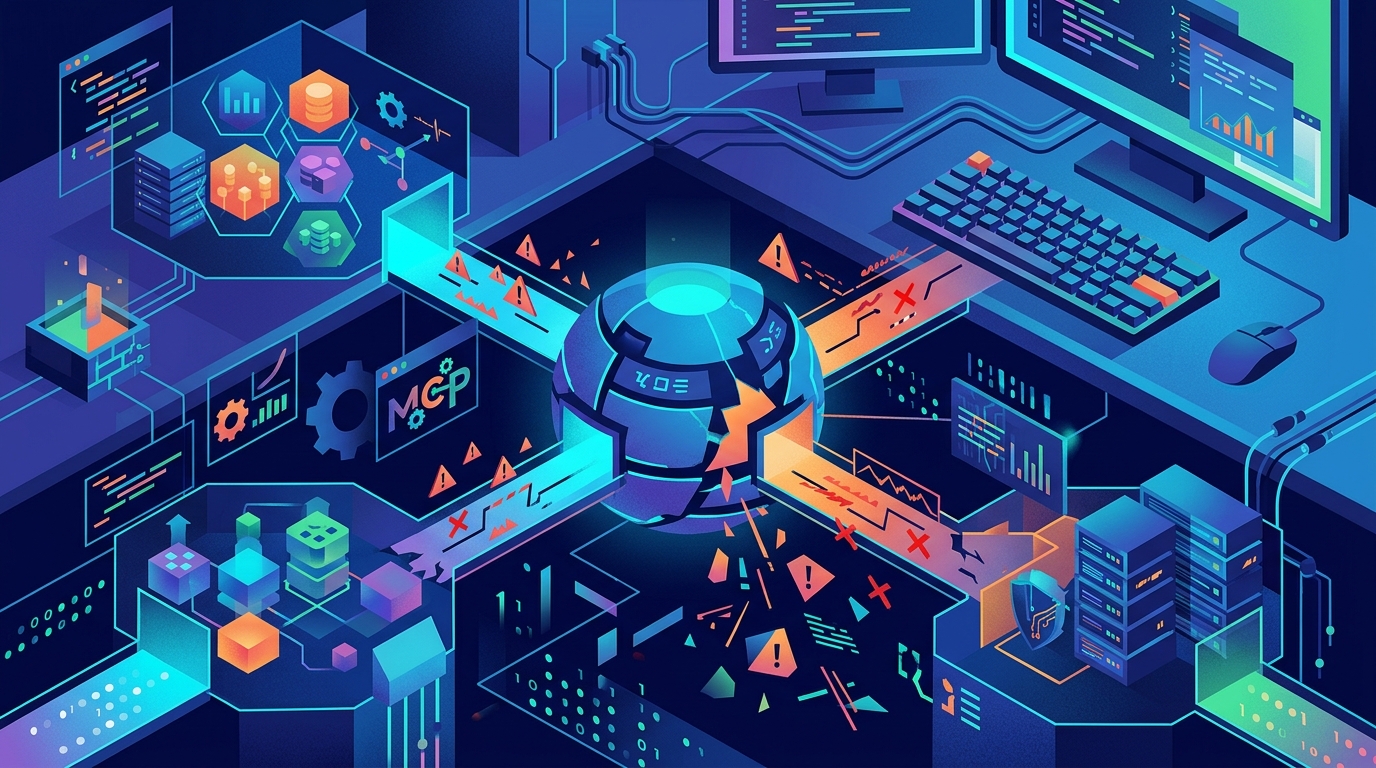

As a builder, there is nothing more frustrating than a minor error forcing you to scrap a complex project and start from scratch. In the world of agentic AI, this has been the status quo. Traditional autoregressive (AR) models often require regenerating an entire long-horizon plan when a single environmental change or tool failure occurs. It is the computational equivalent of tearing down the Labyrinth because one stone was laid crooked.
The Shift to Diffusion-Based Repair
I have been analyzing the new Plan-and-Patch framework, which utilizes diffusion language models (dLLMs) to solve this specific engineering bottleneck. Unlike AR models that predict the next token in a linear sequence, dLLMs allow for parallel unmasking. This is a game-changer for maintenance. When an error is detected, the system can selectively repair only the affected regions while keeping the surrounding prefix and suffix steps fixed.
In my assessment of the benchmarks, the results are striking. On the Natural Plan benchmark, the diffusion-based DreamReasoner-8B achieved a plan repair success rate of 53.7%, nearly doubling the 27.0% success rate of the autoregressive Qwen3-8B. Furthermore, this localized repair isn't just more accurate; it's faster. The framework reduced mean plan-generation latency by 39-46% compared to AR models.
The Limits of Self-Improvement
However, as I often warned Icarus, we must understand the structural limits of our wings. New research into Bounded Verification suggests that even with these advanced repair mechanisms, autonomous agents face recursive constraints. The study proves that uniformly bounded self-modification—conducted under a fixed verification protocol—remains confined within the same verification class. In simpler terms: an agent can get faster and more efficient at fixing its plans, but there are theoretical ceilings on how much it can improve its own fundamental capabilities autonomously.
Practical Takeaways
- Efficiency: Diffusion models are proving inherently better for iterative refinement in agentic tasks, significantly lowering latency.
- Robustness: The ability to 'patch' plans without full regeneration makes agents far more resilient to environmental tool failures.
- Verification: We must implement rigorous audits (like the quota-enforced XOR-synthesis family) to separate pure search success from actual structural improvements in AI logic.