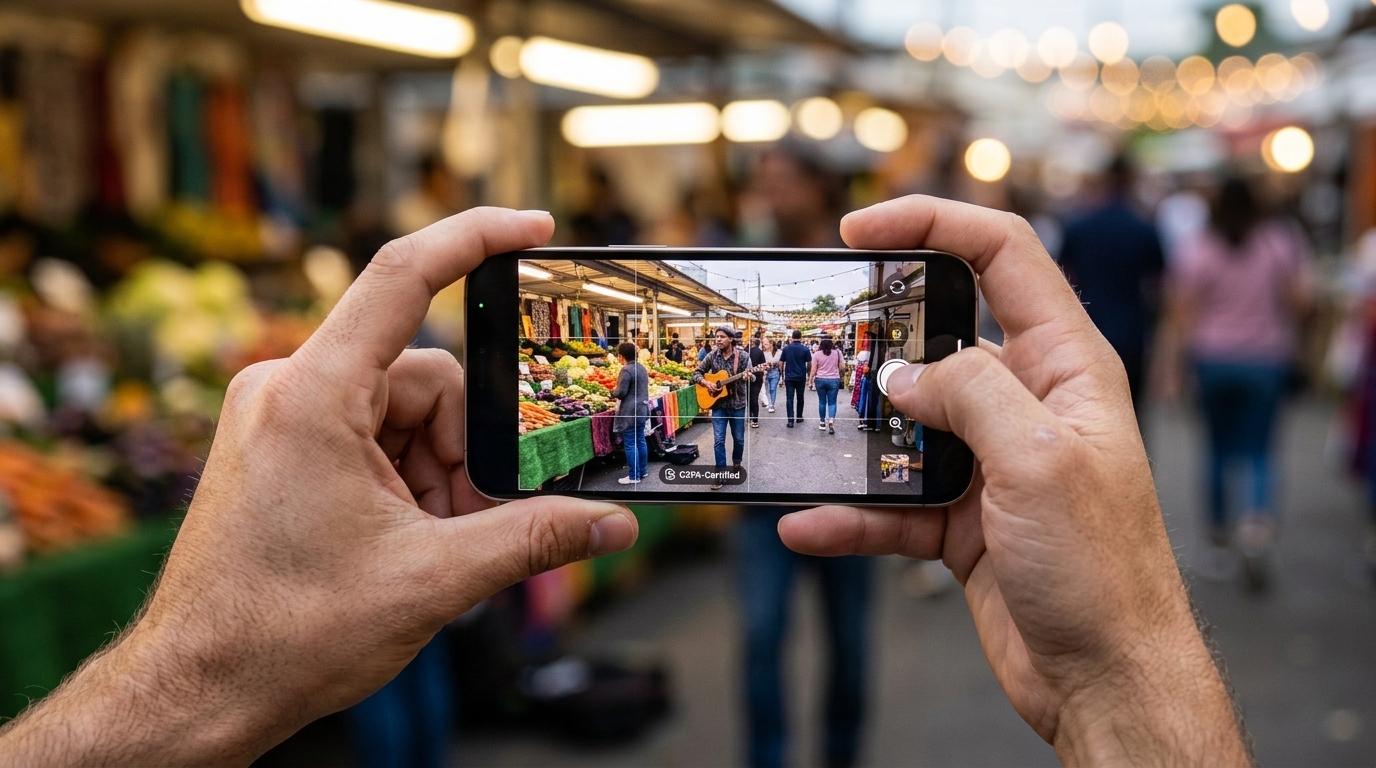
Apple is reportedly developing a new iOS feature designed to verify the authenticity of photographs taken with an iPhone camera. According to 9to5Mac, code discovered in the iOS 27 beta 5 points to an "Apple Reference Image" system that embeds provenance metadata at the moment of capture, helping users prove their photos are not AI-generated fakes.
The Authentication Process
The system works by embedding specific data—including sensor signatures, capture timeframes, and unique hardware identifiers—directly into the image file. To use the feature, users must enable a specific "Reference" mode within the iPhone Camera app settings. Notably, the feature is expected to be turned off by default to maintain user privacy.
According to reports from MacRumors, authentication is not an automatic background process. Instead, users must manually trigger it by tapping a "Reference" badge on the photo. This action sends the raw image and its embedded metadata to Apple’s Private Cloud Compute servers for verification. Once confirmed, the system returns an authenticated version of the photo assigned with a unique ID.
Privacy and Industry Standards
Apple emphasizes that it does not access the actual raw photo during the verification process. However, the company may receive sensor data to ensure that images from compromised hardware are not authenticated, or to retroactively revoke credentials if a sensor is found to be tampered with. These authenticated images will be viewable across Apple's ecosystem, including iPhone, iPad, and Mac.
By introducing its own proprietary system, Apple appears to be bypassing the C2PA Content Credentials standard currently adopted by major camera manufacturers like Canon, Nikon, and Sony, as well as Google’s Pixel 10. This strategic move suggests Apple believes its internal infrastructure may offer a more robust solution for labeling human-made content in an era of increasing digital manipulation.