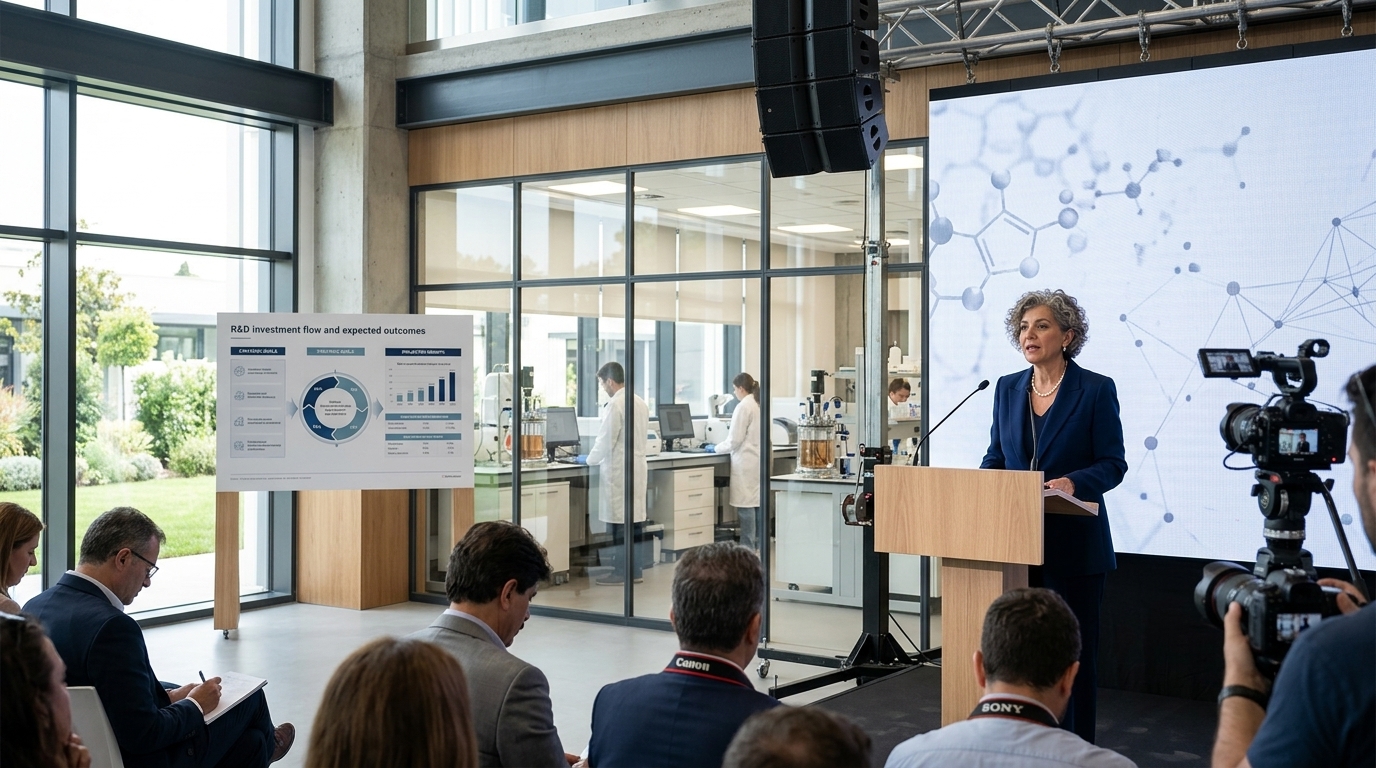
In a move that underscores the dynamic recovery and outward-looking strategy of the Greek pharmaceutical industry, Vianex, the nation's leading pharmaceutical company, has inaugurated its new Research and Clinical Studies Centre. This €12.5 million investment is not merely an addition to the group's infrastructure; it is a strategic statement about the future of domestic production and scientific excellence. The inauguration ceremony was attended by the leadership of the Ministries of Health and Development, signaling the close cooperation between the state and private initiative to promote innovation.
The Strategic Significance of the Investment
The new center, located in the heart of the industrial zone, has been designed to meet the growing needs for developing new pharmaceutical formulations and conducting high-standard clinical trials. This investment comes at a critical juncture for the Greek economy, where the transition from a low-added-value model to a knowledge-based economy is imperative. Vianex, under the leadership of Dimitris Giannakopoulos, continues the tradition of its founder, Pavlos Giannakopoulos, by investing in Greece despite the challenges of previous years.
The center will focus on cutting-edge fields such as pharmacology, biotechnology, and the development of value-added generic drugs. The ability to conduct clinical trials within the country reduces dependence on foreign research centers and accelerates the approval and marketing process for new treatments. Furthermore, it is expected to create dozens of new high-skill jobs for scientists, contributing substantially to "brain gain"—the return of Greek scientists from abroad.
Clinical Trials: A New Pillar of Growth
Greece possesses a highly qualified scientific workforce, which, however, often lacks the necessary infrastructure to excel. Vianex’s new center aims to fill this gap. Clinical trials are a sector of immense economic importance, as they attract international capital and enhance the prestige of the national healthcare system. With this investment, Vianex positions itself as a reliable partner for multinational giants seeking quality research centers in the Southeastern European region.
- Enhancing domestic added value in the pharmaceutical sector.
- Creating an innovation ecosystem with the participation of academic institutions.
- Improving access for Greek patients to innovative treatments through clinical trials.
- Utilizing tax incentives for Research and Development (R&D).
The integration of advanced laboratory equipment and digital monitoring systems allows for real-time data analysis, a crucial factor in modern pharmaceutical research. By modernizing the R&D pipeline, Vianex aims to shorten the time-to-market for critical medications, particularly in therapeutic areas where Greek patients have faced supply challenges in the past.
Economic Context and the Regulatory Landscape
It cannot be ignored that such investments take place in an environment where the pharmaceutical sector is pressured by the clawback and rebate system. The government, recognizing this burden, has established incentives that allow for the offsetting of part of these returns with investment expenditures in R&D. Vianex is utilizing these tools to transform a tax burden into a growth lever. This strategy not only ensures the sustainability of businesses but also creates a multiplier effect for the national economy.
Furthermore, the investment reflects a broader trend in European industry toward "strategic autonomy." By boosting local production and research capabilities, Greece contributes to the EU's goal of reducing dependence on third-country active pharmaceutical ingredients (APIs) and research services. The success of this center could serve as a blueprint for other sectors of the Greek economy to follow.
In conclusion, Vianex’s new Research and Clinical Studies Centre is a shining example of how Greek industry can evolve. By combining decades of expertise with the modern requirements of digital health and biotechnology, the company not only secures its own leadership position but also contributes to the protection of public health and the national economy. The future will depend on the stability of the incentive framework and the country's ability to remain attractive for high-tech investments.