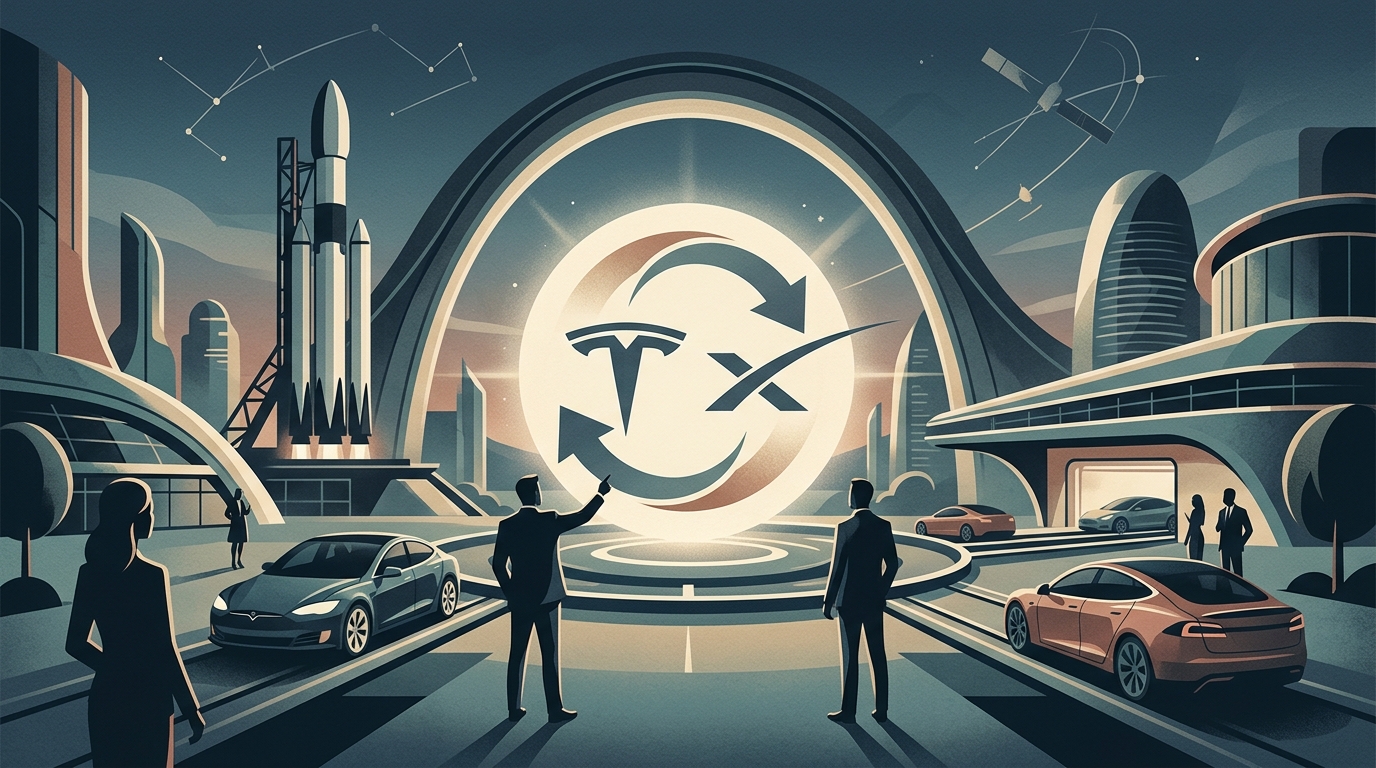
A new chapter for Elon Musk's business empire is unfolding with the formal exploration of a merger between SpaceX and Tesla. Both companies have established special committees of independent board members to evaluate the feasibility and terms of a potential union, which would create a technological titan with a combined market value approaching $3.5 trillion.
Musk’s Role and Independent Committees
Despite his personal backing for the move, Elon Musk stated he is recusing himself from official negotiations due to conflicts of interest. During an earnings call, he described the process as "dancing in a minefield," acknowledging the complexity of securing shareholder support, particularly from Tesla investors. However, he confirmed his belief that the merger is a "good idea," betting on the technological synergies between the two entities.
AI as the Strategic Catalyst
The strategic logic behind the merger is rooted in the increasing overlap of their operations. SpaceX is emerging as a dominant player in AI infrastructure through its "Super Intelligence" (SI) unit, which recorded $7.56 billion in revenue in the third quarter. SI provides computing power to giants like Alphabet and Anthropic, while Tesla develops autonomous vehicles and humanoid robots that require exactly this type of infrastructure.
- SpaceX: $4.4 billion net profit and 161% revenue growth in Q3.
- Starlink: 13.6 million subscribers with $5.25 billion in revenue.
- Starship: Plans for full reusability and orbital refueling tests in early 2025.
Towards a Unified Physical AI Infrastructure
Analysts such as Chad Anderson of Space Capital point out that the merger could grant the group total control over the physical infrastructure of artificial intelligence: from chips and data centers to autonomous devices on Earth and in space. Despite high expectations, the special committees have yet to reach final terms, and the ultimate outcome remains dependent on shareholder approval.