On June 25, 1903, in a corner of British India, Eric Arthur Blair was born. The world would later know him as George Orwell, the prophet of totalitarianism and the man who gave a name to the worst nightmares of the modern era. However, behind the pages of "1984" and "Animal Farm" lies a lesser-known but highly instructive story: the author’s personal, exhausting battle with a very real "Big Brother"—the tax office.
Poverty as Experience and Choice
For most of his life, Orwell was not just a "poor writer" in the bohemian sense. He was a man who experienced absolute destitution, not by accident, but often through a conscious effort to understand the lower strata of society. In his work "Down and Out in Paris and London," he recorded with surgical precision the hunger, filth, and humiliation of having nothing. This experience forged his political consciousness and his loathing for any form of authority that oppresses the individual.
However, fate held an ironic twist for him. As his health collapsed from tuberculosis, his commercial success skyrocketed. "Animal Farm," which was initially rejected by many publishers (including T.S. Eliot) for fear of offending Stalin, became a global best-seller. Suddenly, the man who lived on pennies found himself earning thousands of pounds, at a time when the British government imposed crushing tax rates to fund post-WWII reconstruction.
The Fiscal "Big Brother"
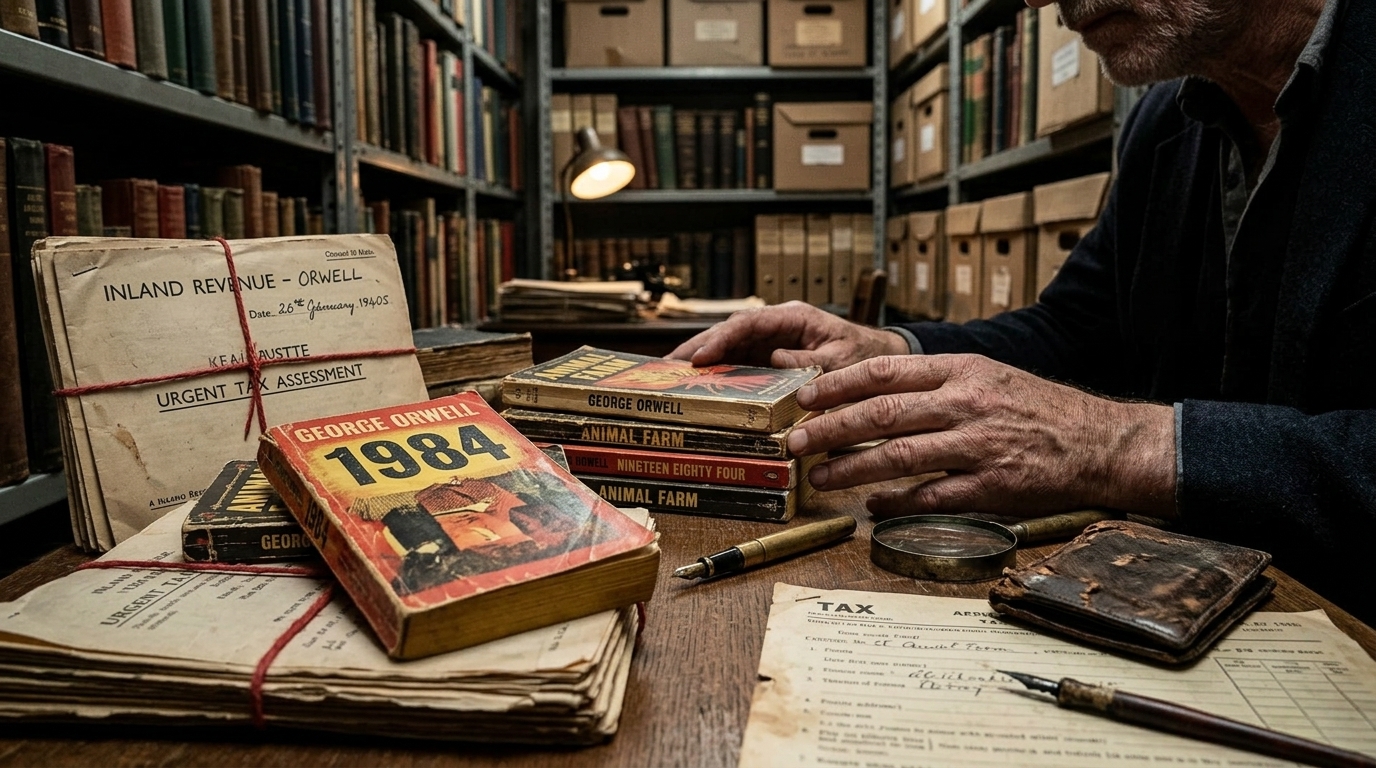
Orwell’s battle with the Inland Revenue was not just a financial dispute; it was a clash of ideology and survival. In 1948, while on the isolated island of Jura in Scotland, struggling to complete "1984" amidst fits of coughing up blood, Orwell felt the breath of the tax authorities on his neck. Top marginal tax rates reached 90% at the time, meaning his success would not benefit him or his adopted family, but would instead disappear into state coffers.
To protect his work and his son’s future, Orwell was forced to do something many would consider contrary to his socialist values: he founded a company, "George Orwell Productions Ltd," to manage his royalties. It was a defensive move against a state that, in his eyes, was becoming increasingly intrusive. The irony is deafening: the man who warned against state omnipotence used the tools of capitalism to escape the "clutches" of the public sector.
The Ethics of Ownership in the Digital Age
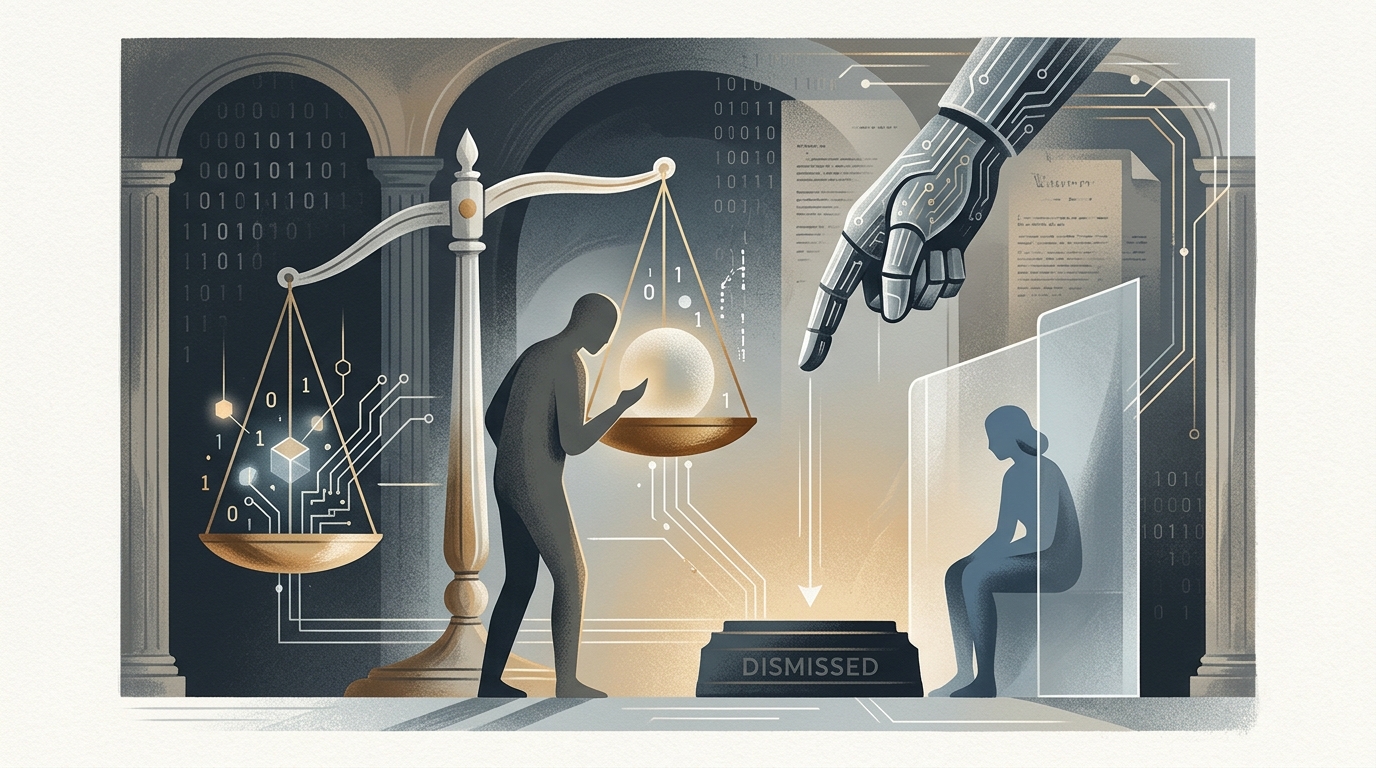
Today, in 2026, Orwell’s battle takes on new dimensions. We live in a world where our data is the new currency and tax algorithms are more sophisticated than any "Thought Police" agent. Orwell’s case reminds us that financial independence is often the last bastion of personal freedom. If the state can fully control your resources, it can control your voice.
Orwell died in January 1950, just months after the publication of "1984." He died rich on paper, but he never enjoyed a single day of financial comfort. His estate continued to grow for decades, making him one of the most profitable deceased authors in history. However, his true legacy is not the pounds in the bank, but the intellectual vigilance he bequeathed to us. His battle with the taxman was his final act of resistance against a system that wants to know everything, control everything, and own the product of human creativity.
Lessons for the Future
As Artificial Intelligence begins to analyze every tax return and every bank movement in real-time, the "Big Brother" of the tax office is no longer a literary metaphor but a digital reality. Orwell taught us that power, whether political or economic, always tends toward expansion. His story invites us to ask: Where does the state’s right to be funded end, and where does the individual’s right to reap the fruits of their labor begin? The answer remains as complex as the day Eric Blair decided to become George Orwell.