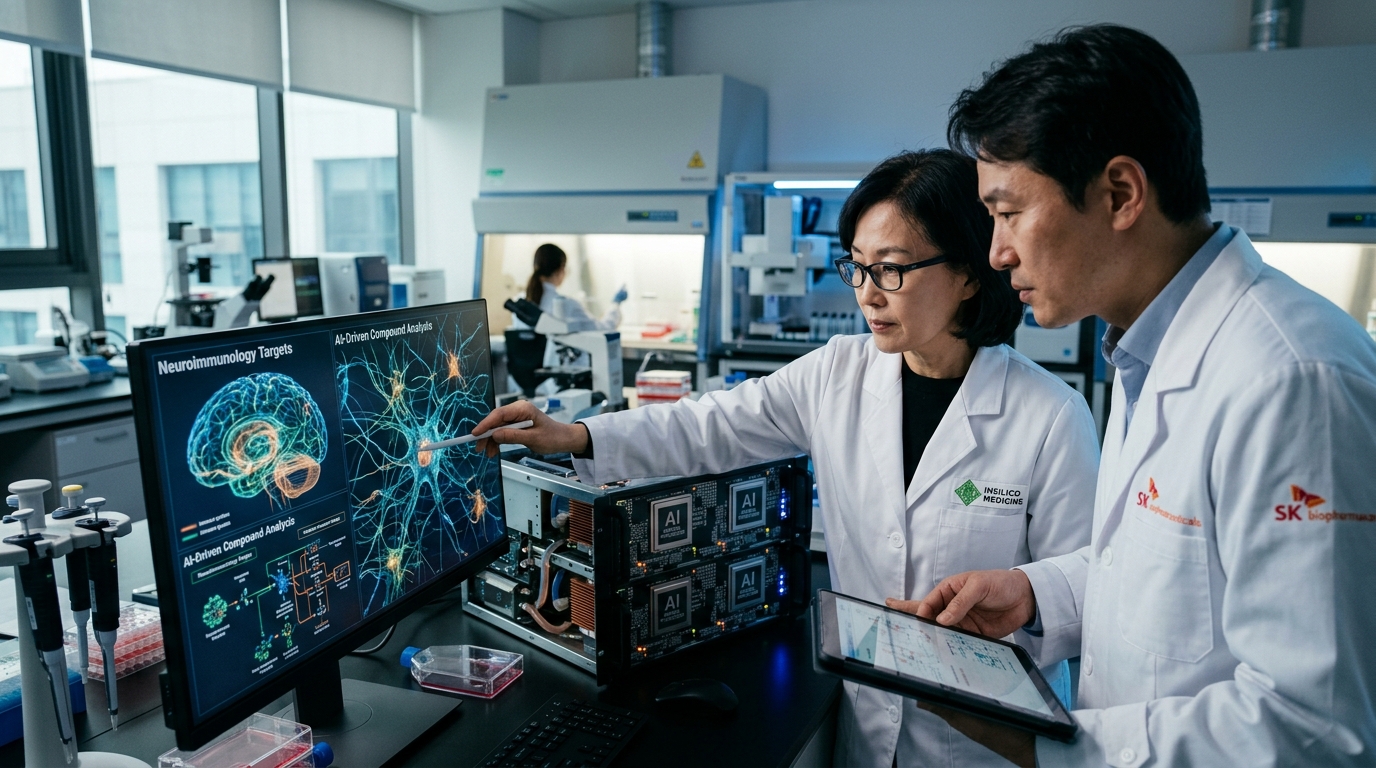
At the threshold of a new era for biomedical research, Insilico Medicine and SK Biopharmaceuticals have announced a landmark collaboration that could reach a total value of $2.5 billion. This agreement is not merely another business transaction in the biotech sector; it is a profound commitment to exploring neuroimmunology—a field that promises to provide answers to conditions previously deemed incurable, from Alzheimer’s disease to multiple sclerosis.
The Convergence of Disciplines: Why Neuroimmunology?
For decades, neurology and immunology were treated as two distinct silos. However, modern science has proven that the immune system plays a pivotal role in the health and degeneration of the central nervous system (CNS). Chronic inflammation in the brain (neuroinflammation) is now recognized as the "usual suspect" behind the progression of most neurodegenerative diseases. The partnership between Insilico, a leader in generative artificial intelligence (Generative AI), and SK Biopharmaceuticals, a giant with deep expertise in CNS disorders, targets exactly this critical intersection.
The use of AI allows for the analysis of massive biological datasets to identify novel therapeutic targets that human intuition might take decades to discover. Insilico’s Pharma.AI platform can simulate thousands of molecular interactions in seconds, dramatically reducing the time and cost required to find a viable drug candidate.
The Technological Edge of Pharma.AI
The heart of this collaboration beats within the Pharma.AI platform. It is a comprehensive ecosystem comprising PandaOmics for target discovery, Chemistry42 for the design of novel molecules, and InClinico for predicting the success of clinical trials. Insilico’s ability to generate de novo molecules—compounds that do not exist in nature but are optimized to bind to specific brain proteins—is the "key" to the deal.
- Precision: Targeting only pathogenic cells, thereby minimizing side effects.
- Speed: Moving from the lab to clinical trials in less than 18 months.
- Innovation: Discovering "orphan" receptors related to memory and cognitive function.
SK Biopharmaceuticals brings to the table its vast experience in CNS drug development and the infrastructure for global commercialization. This synergy creates a powerful pole capable of competing with traditional Big Pharma giants in the West.
Economic and Geopolitical Implications
The $2.5 billion deal consists of a significant upfront payment and tiered milestone payments based on research progress. This "bio-bucks" model is now the standard in biotech, allowing AI companies to capitalize on their expertise without bearing the full risk of production. Furthermore, this collaboration highlights the emergence of East Asia (with SK from South Korea and Insilico with a strong presence in Hong Kong and the UAE) as the new center of gravity in healthcare innovation.
"We are not just looking for incremental improvements in existing treatments. We are using AI to invent a new language of communication between the brain and the immune system," stated executives involved in the collaboration.
Challenges and the Future for Patients
Despite the optimism, the path is not without obstacles. The brain remains the most complex organ in the known universe, and the blood-brain barrier acts as a physical wall that many drugs fail to penetrate. AI is tasked with solving this problem by designing molecules that can "disguise" themselves to enter the brain safely.
For millions of patients worldwide, this collaboration offers a glimmer of hope. If AI can successfully decode the mechanisms of neuroinflammation, treatments for degenerative diseases will cease to be merely palliative and become truly curative, altering the destiny of generations to come.