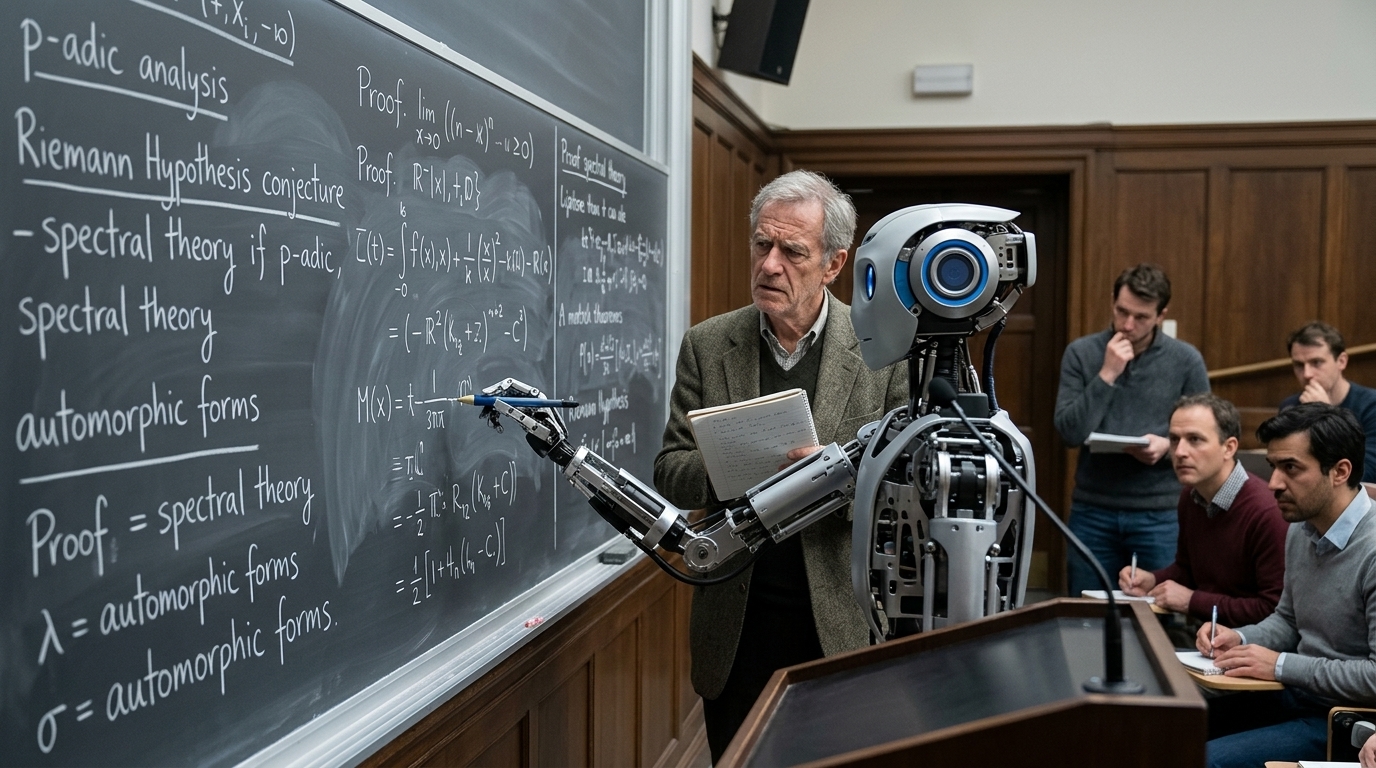
OpenAI’s decision to release solutions for hundreds of previously unsolved mathematical puzzles has sent ripples through the cybersecurity world. Because the security of global banking and blockchain networks depends on mathematical complexity, experts are concerned that standard encryption methods could become vulnerable much sooner than expected, potentially exposing private data and digital wallets.
Justin Drake’s Call for 'Bunker Mode'
The debate intensified when Justin Drake, a researcher for the Ethereum foundation, suggested on X that cryptocurrency holders should consider entering "bunker mode." He advised users to move their assets to new addresses to protect against future threats. Drake pointed to the capabilities of OpenAI's latest models, suggesting that "mathematical superintelligence" is approaching. He argued that while current supercomputers might take trillions of years to crack modern encryption, advanced AI could potentially find a solution in just one week.
Vitalik Buterin Urges Caution
In contrast, Ethereum co-founder Vitalik Buterin offered a more tempered perspective. While he agreed that the industry must take the risks posed by AI-driven mathematical models seriously and develop stronger security measures, he told investors there is no immediate reason to panic-transfer funds today. He emphasized the need for the sector to proactively build more resilient safeguards for private keys.
Skepticism Over the AI Threat
Not all experts agree with Drake’s timeline. Chris Sidor, a German crypto entrepreneur, expressed skepticism on X, questioning the idea that the ECDSA algorithm—the primary security mechanism for Bitcoin and Ethereum—is on the verge of collapse. Sidor argued that the leap from AI solving math problems to breaking complex cryptographic signatures is being overstated. Nevertheless, Drake maintains that AI has now overtaken quantum computing as the most immediate threat to traditional security assumptions.