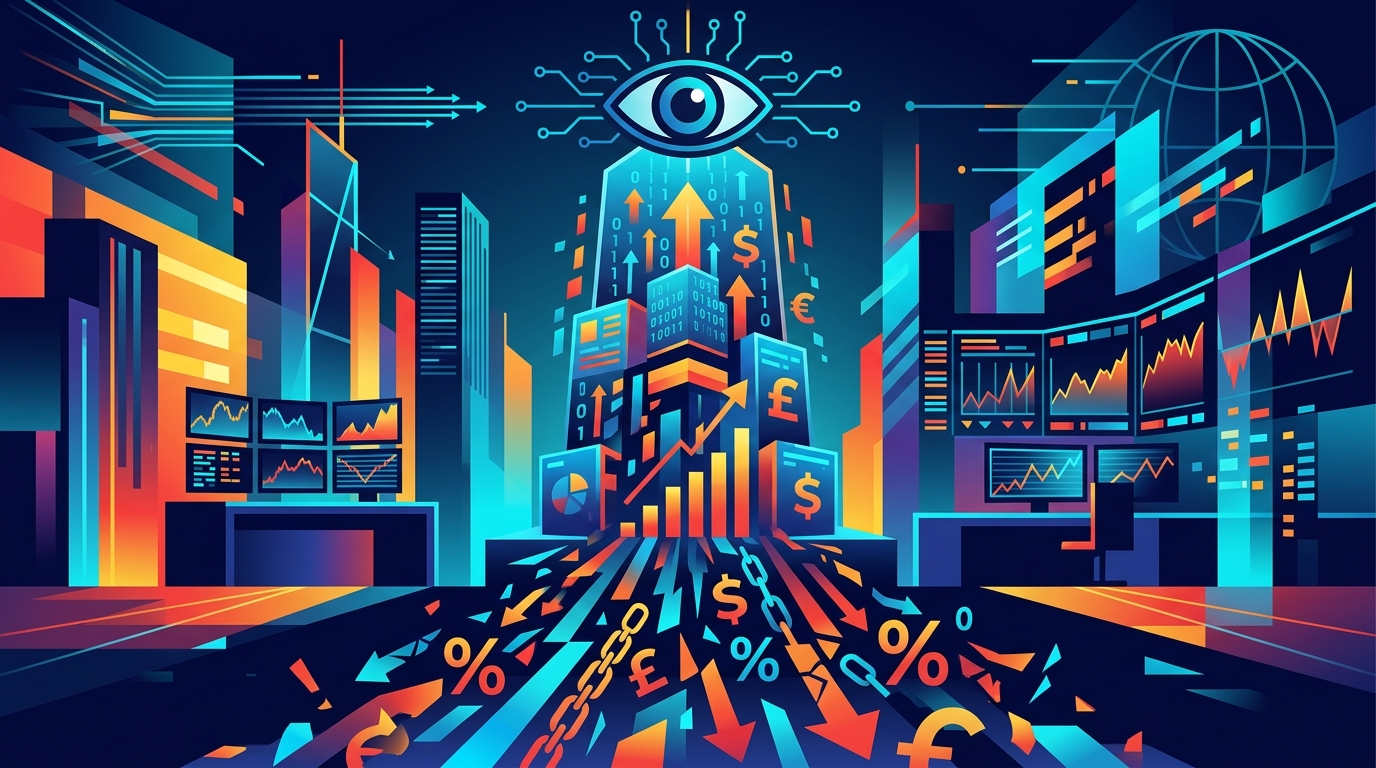
As of mid-2026, the dust from the initial "Generative AI explosion" has begun to settle. What remains is not a burst bubble, but a new global economic reality. For investors looking beyond the daily fluctuations of the Nasdaq, the question is no longer who will win the chatbot race, but who owns the "rights of way" in the digital world of the next decade.
NVIDIA: The Architect of the Computational Universe
NVIDIA is no longer just a chipmaker; it is the architect of "AI Factories." Despite concerns about market saturation, its dominance is rooted in the CUDA ecosystem, which makes its hardware an integral part of software development. With the advent of the Blackwell architectures and their successors, the company has managed to create an upgrade cycle reminiscent of the golden ages of the smartphone.
NVIDIA's true advantage for the next decade lies in its expansion into "Sovereign AI." Nations around the world are investing billions to build their own AI infrastructures, independent of American Big Tech. In this geopolitical game, NVIDIA acts as the sole supplier of the weapons of the new era. The transition from GPUs to integrated data center systems ensures that the company will remain at the heart of the digital economy.
Microsoft: The Hegemon of Enterprise Software
If NVIDIA is the hardware, Microsoft is the operating system of the new era. Through its strategic partnership with OpenAI and the integration of Copilot into every aspect of the Office and Azure ecosystem, the company has managed to make AI indispensable for every business on the planet. Microsoft doesn't just sell technology; it sells productivity.
Microsoft's strength lies in its ability to turn AI into recurring revenue. As businesses move from experimentation to full implementation of AI agents, Azure becomes the undisputed hosting platform. With massive cash flows and a management team that has proven it can navigate decades of technological change, Microsoft is the definition of a "buy and hold" stock.
Alphabet: The Giant of Data and Vertical Integration
Alphabet (Google) is often underestimated due to its initial lag in the LLM market, but 2026 finds it in a position of strength. Google possesses something no one else has: the full stack. From its own chips (TPUs) and the most sophisticated model (Gemini), to the massive data pool of YouTube and Search.
The next decade for Alphabet will be defined by the transition from "Information Search" to "Solution Provision." The integration of AI into Android, Waymo's dominance in autonomous driving, and investments in quantum computing make it a multi-dimensional player. Its ability to automate advertising via AI ensures its main revenue stream remains profitable, while new ventures provide the necessary growth.
Challenges and Long-term Outlook
Of course, investing with a decade-long horizon is not without risks. The energy issue is the biggest "wall" for AI growth. Companies that manage to secure access to clean, cheap energy (such as through Small Modular Reactor - SMR - nuclear deals) will have the upper hand. Additionally, the regulatory framework in the US and EU will continue to pressure monopolies.
- Energy Efficiency: The key to data center sustainability.
- Geopolitics: Access to Taiwan's supply chains remains critical.
- Transition to Agents: The shift from chat to autonomous systems that perform tasks.
In conclusion, investing in AI for the next decade requires a focus on infrastructure and software that is already embedded in users' daily lives. NVIDIA, Microsoft, and Alphabet are not just tech companies; they are the pillars upon which the 21st century is being built.