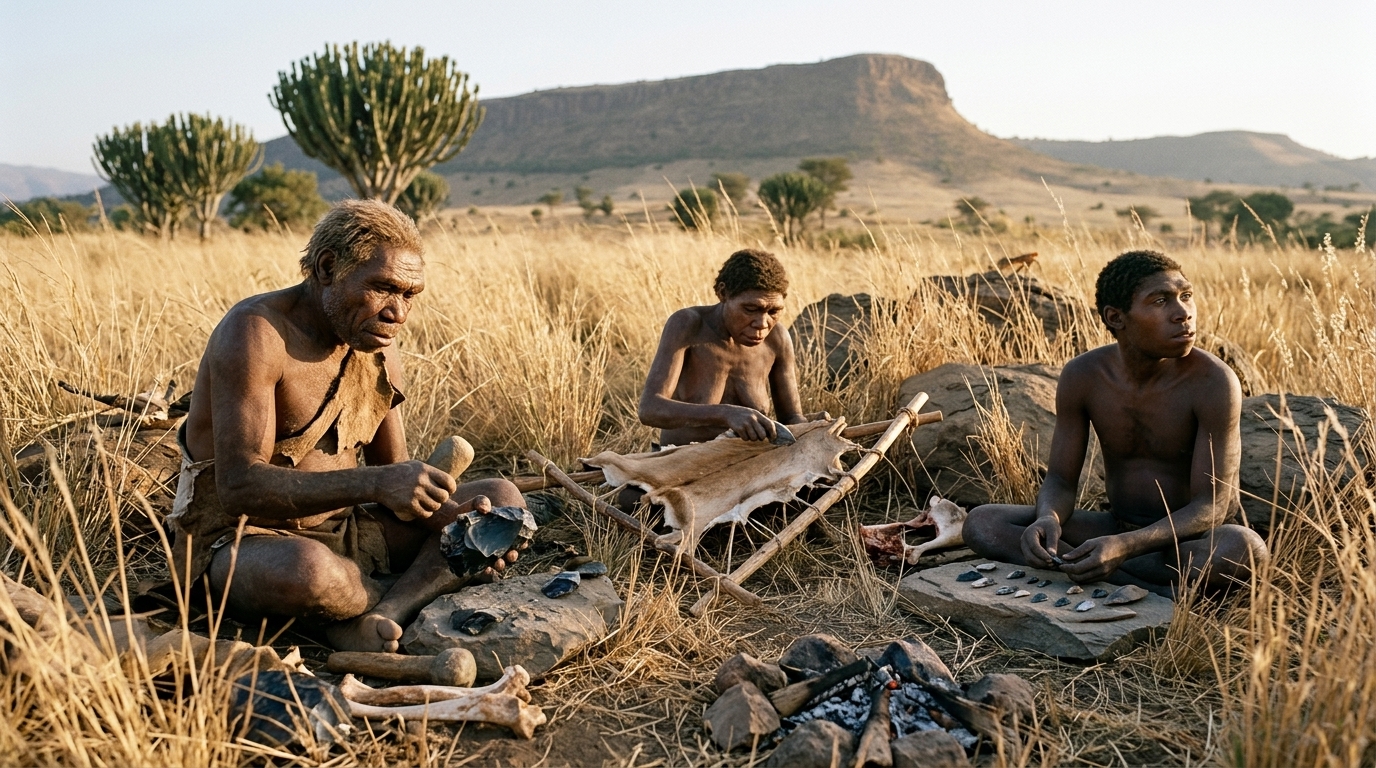
New research led by scientists at the University of California, Berkeley, reveals that modern humans interbred with two mysterious, previously unknown human lineages, which experts have termed 'ghost' populations. These findings expand our understanding of human evolution beyond our known interactions with Neanderthals and Denisovans.
The TRACE Method: Mapping the Unseen
To identify these genetic traces, researchers developed a new computational tool called TRACE (TRacking Archaic Contributions via ARG Estimation). Instead of relying on ancient DNA extracted from fossils—which are rare and often degraded—this technique reconstructs genealogical relationships hidden within the genomes of hundreds of modern individuals.
- The African Lineage: This group interbred with anatomically modern Homo sapiens in Africa more than 50,000 years ago. It split from the human evolutionary tree approximately 800,000 years ago. Today, its DNA accounts for about 1% of the genome of every living human.
- The Super-Archaic Lineage: Dating back approximately 1.8 million years, this Eurasian group did not interbreed directly with modern humans. Instead, it mixed with Denisovans, whose descendants eventually passed that DNA to modern populations, particularly in Oceania.
Biological Significance and Adaptation
Lead researcher Yulin Zhang emphasizes that this archaic heritage has significantly influenced human adaptation. Many of these ancient gene segments are located in regions of the genome linked to the immune system and metabolism. Dr. Priya Moorjani explained that interbreeding introduced new genetic diversity, helping early humans survive new pathogens and environments.
"The discovery of the super-archaic lineage is particularly exciting because it reveals genetic contributions from a human population that lived more than a million years ago, even though we do not yet have sequenced DNA from them," stated Dr. Arjun Biddanda.
In total, these two newly discovered lineages represent about 2% of the modern human genome, highlighting a complex web of prehistoric interactions that continue to shape our biology today.