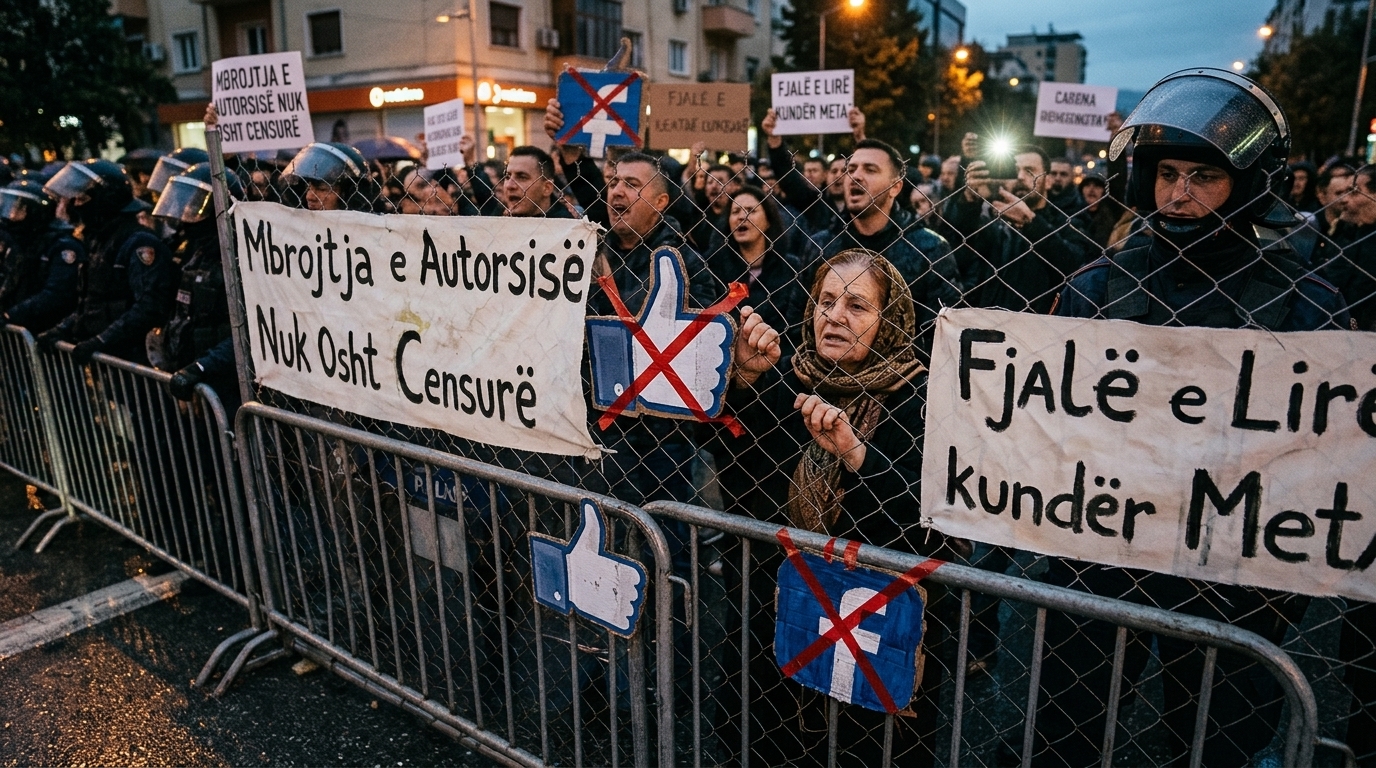
Members of the European Parliament are urging an inquiry into Meta after numerous accounts covering anti-government demonstrations in Albania were suspended. Analysts suspect these incidents are part of a coordinated "brigading" effort, where the platform's reporting tools are misused to suppress political opposition.
The "Flamingo Revolution" and Digital Censorship
The "Flamingo Revolution" demonstrations began in response to a proposed luxury resort project associated with Jared Kushner and Ivanka Trump. Protesters are calling for the prime minister's resignation and changes to laws governing development on protected land. Since late August, however, many Instagram accounts have been hit by a surge of copyright infringement claims.
The nonprofit group Repro Uncensored has confirmed roughly 100 instances of account restrictions and suggests the actual figure may reach several hundred. Martha Dimitratou, the organization's founder, noted that the evidence "strongly indicates coordinated activity" aimed at a specific civic movement.
Paid Attacks and DMCA Vulnerabilities
In one specific instance, protester Arjan Koçi, who documented the Tirana rallies using drone footage, faced multiple reports against his original work. After reaching out to the person who filed the complaints, Koçi was reportedly told the individual had been paid $1,800 to target the accounts and was asked for cryptocurrency to withdraw the claims.
Tech policy experts point out that US-based platforms adhere to the Digital Millennium Copyright Act (DMCA), which features notice-and-takedown rules that often lead to over-compliance. This creates a loophole where malicious actors can exploit automated systems by making false ownership claims to trigger suspensions.
European Union Intervention
More than 30 MEPs have signed a formal letter asking the European Commission to determine if Meta’s conduct aligns with the Digital Services Act (DSA). MEP Alexandra Geese characterized the events in Albania as being "tantamount to censorship."
Meta stated that the accounts were disabled by mistake and have been reinstated, though it did not address the possibility of a coordinated attack. Albanian Prime Minister Edi Rama denied any government involvement in the matter, dismissing the allegations as "nonsense."