

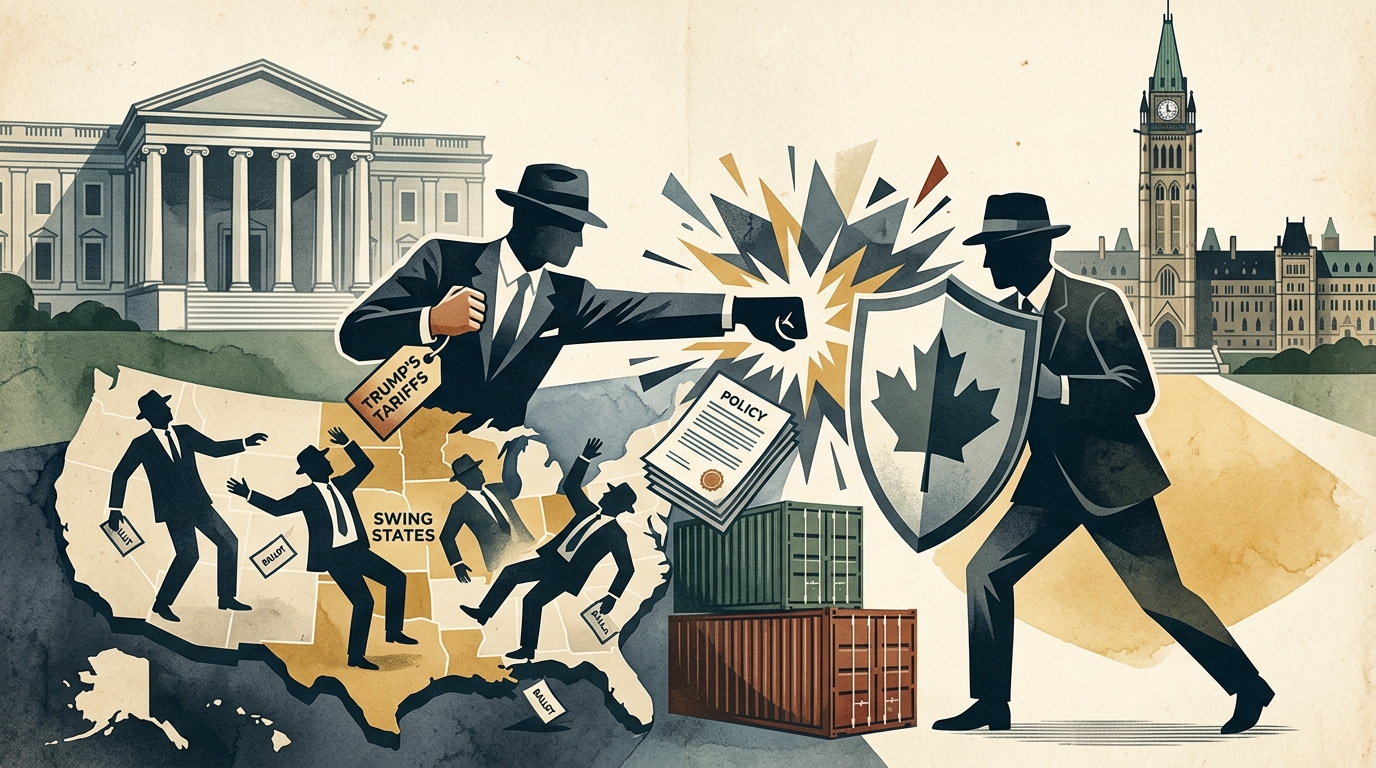
The United States and Canada, historically close allies, are moving further into a full-blown trade war with no end in sight. On August 25, 2026, Canada imposed tariffs of up to 50% on hundreds of U.S. goods, following the collapse of trade talks and similar long-threatened levies placed by the U.S. on Canadian products.
The Resurrection of Smoot-Hawley
One of the most notable aspects of this escalation is President Donald Trump’s use of an untested tool within the Tariff Act of 1930, better known as the Smoot-Hawley tariffs. Section 338 of the act had sat unused for 96 years until July 2026. It grants the president authority to impose unilateral 50% tariffs if a foreign country’s policies are deemed to discriminate against the United States.
Economists generally agree that the original Smoot-Hawley tariffs extended the Great Depression by sparking a global trade war, which saw U.S. trade fall by two-thirds between 1929 and 1932.
The Collapse of the Trade Deal
While a deal was reportedly close just days before the breakdown, negotiations failed due to several critical friction points:
- Canada sought to reduce U.S. tariffs on steel and aluminum from 50% to 25%.
- U.S. Commerce Secretary Howard Lutnick reportedly held the line on these tariffs after heavy lobbying from domestic producers.
- Following the U.S. refusal to budge on metals and autos, Canada withdrew its offer to reopen the Keystone oil pipeline deal.
- Demands for Canada to reverse the removal of U.S. liquor from provincial store shelves were also taken off the table.
Strategic Retaliation in Swing States
Canadian Prime Minister Mark Carney responded with a prepared list of $20 billion in U.S. imports to face tariffs of up to 50%. The targets appear strategically chosen to impact voters in key swing states ahead of the midterm elections:
- Wisconsin: Tariffs on cheese.
- Maine: Tariffs on seafood.
- Kentucky: Tariffs on washers and dryers (targeting Louisville-based GE Appliances).
- Michigan: Heavy impact on the integrated auto parts supply chain.
Carney claimed Trump was attempting to "destroy" Canada’s auto industry. Tensions have been further exacerbated by Trump’s rhetoric regarding Canada as a potential "51st state," which has unified Canadian public opinion against the U.S. administration's demands for permanent policy alignment.





