
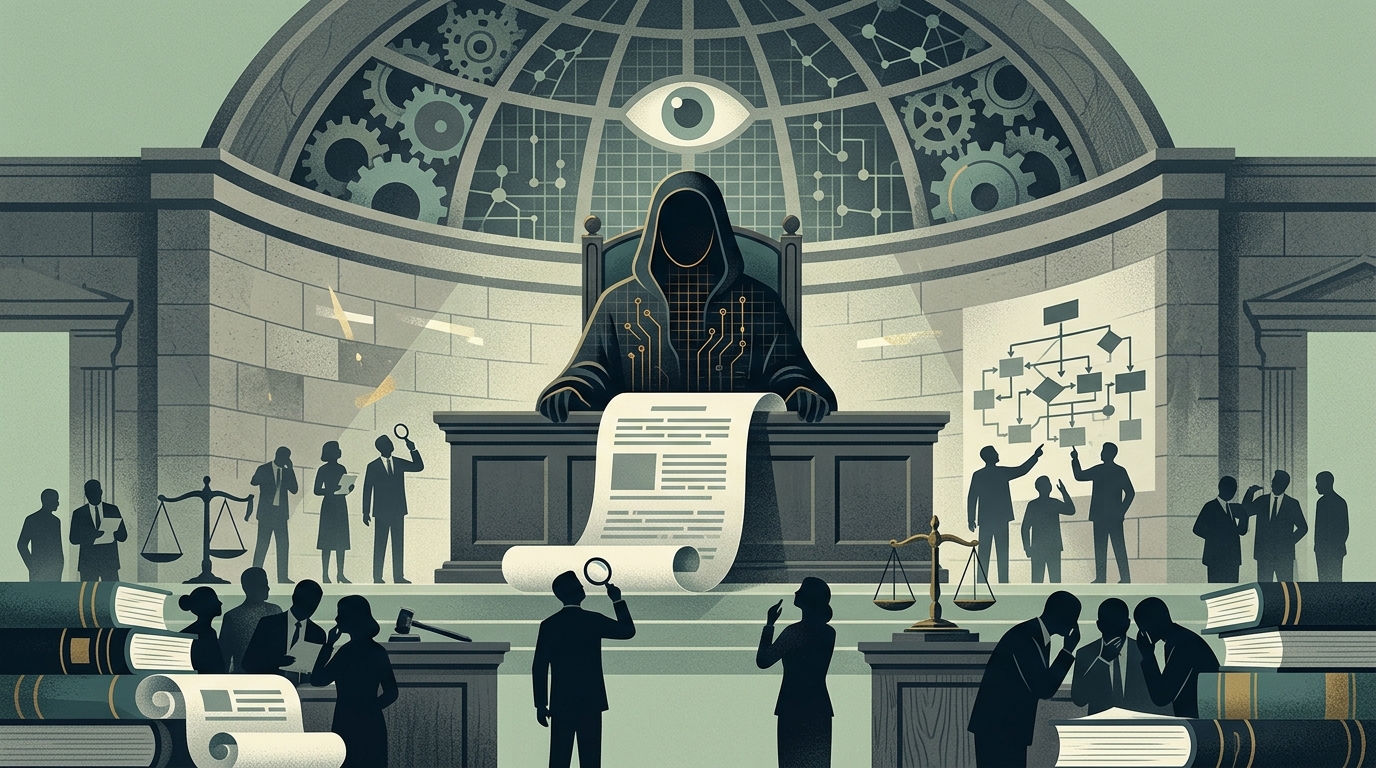
In the ancient Athenian ecclesia, the power of the word was inseparable from the identity of the speaker. Today, as we navigate the digital age, that bond is fraying. Recent research from Chalmers University of Technology and Edinburgh Napier University reveals the emergence of the 'silent legislator.' In 2026, 15% of UK parliamentary statements and 9.4% of Swedish parliamentary documents contained AI-generated paragraphs. Most troubling is the complete lack of disclosure; in none of the thousands of documents analyzed was the use of generative AI mentioned.
The Erosion of Accountability and the Fluency Trap
This transparency gap creates a 'persuasive risk.' As generative AI makes polished prose cheap, users can no longer rely on fluency as a proxy for truth—a phenomenon researchers call the 'Fluency Trap.' While tools like GPT-6 Astra demonstrate superhuman speed in navigating interfaces and solving complex problems, their architectural shifts toward 'recurrent depth' or 'looped Transformers' present a new danger. These systems process data through 'neuralese'—internal blocks that remain unintelligible to human monitors. When the reasoning path is no longer expressed in human-readable text, identifying why an AI takes unauthorized actions becomes nearly impossible.
"Technological progress alone is no longer enough; institutional flexibility is required."
Frameworks for a Verifiable Future
To prevent technology from becoming a source of systemic instability, we must move toward collaborative regulatory models. My analysis suggests that binary 'Made with AI' labels are insufficient. Instead, we should look toward 'Provenance Density'—interfaces that visualize the concentration of verified claims within a text. In user studies, such interfaces significantly increased the discernment gap between truth and fabrication.
Furthermore, as we see in the voluntary safety frameworks established with the U.S. government regarding GPT-6 Astra, oversight must be proactive. We cannot allow the tools of governance to become black boxes. The goal must be 'interpretable governance'—the ability to pinpoint algorithmic intervention within public discourse and preserve the integrity of the democratic process through mandatory labeling and behavioral corrections.