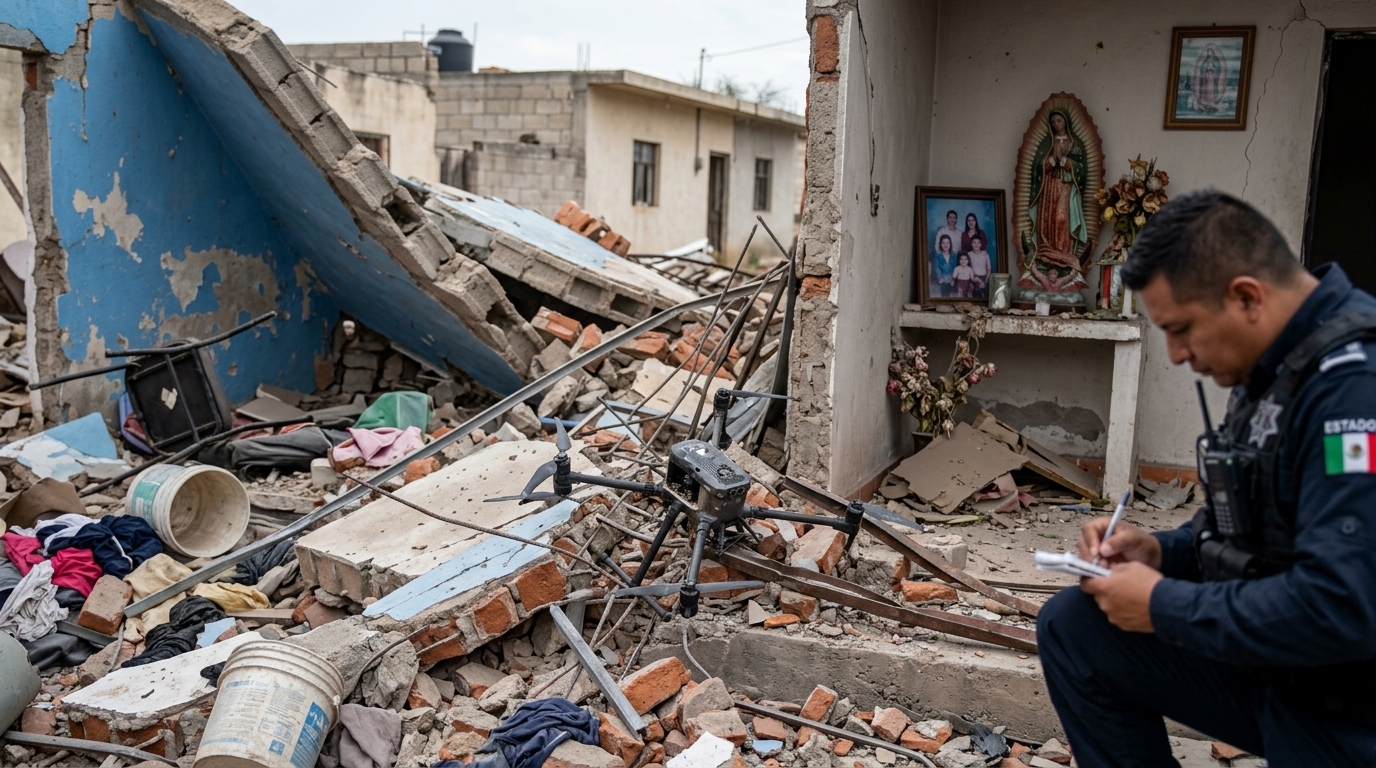
Drug cartels across Mexico are increasingly turning to car bombs, explosives-laden drones, and improvised explosive devices (IEDs). This trend threatens to further strain Mexico’s already tense relationship with U.S. President Donald Trump, who has repeatedly threatened military action against the cartels.
The Zacatecas Attack and Escalation
The latest incident occurred Sunday night outside a police station in Ojocaliente, a town in the state of Zacatecas. While no one was killed, the explosion of 200 kilograms (440 pounds) of explosives injured 11 people and damaged more than 60 homes in the city center. Mexico’s security chief, Omar García Harfuch, detailed the damage during a visit to the site with President Claudia Sheinbaum.
So far this year, Zacatecas has recorded 23 attacks involving explosives. The region has been a battlefield for years as the Jalisco New Generation Cartel (CJNG) and the Sinaloa Cartel fight for control over trafficking routes.
From Drones to Landmines
The extensive use of explosives by cartels began roughly five years ago. Organizations drop explosives from drones to attack security forces or rival groups and bury devices in the ground to defend territory. In 2024, authorities deactivated nearly 3,200 explosive devices in Michoacán state alone, and in 2025, one such device killed eight soldiers in one of the deadliest incidents of its kind.
“We are facing steady intensification of violence,” said Vanda Felbab-Brown, an organized crime expert at the Brookings Institution. “This certainly greatly intensifies the atmosphere of fear and retaliation.”
Political Implications and the 'Terrorism' Label
The Trump administration has designated eight Mexican cartels as foreign terrorist organizations, using this framework to justify potential military action. Conversely, Mexican President Claudia Sheinbaum maintains that her government’s strategy is working, citing a nationwide decline in homicides.
However, experts like Carlos Pérez Ricart caution against applying counterterrorism strategies to organized crime, noting that in the drug trade, the adversary is not merely an armed group but an entire illegal market.