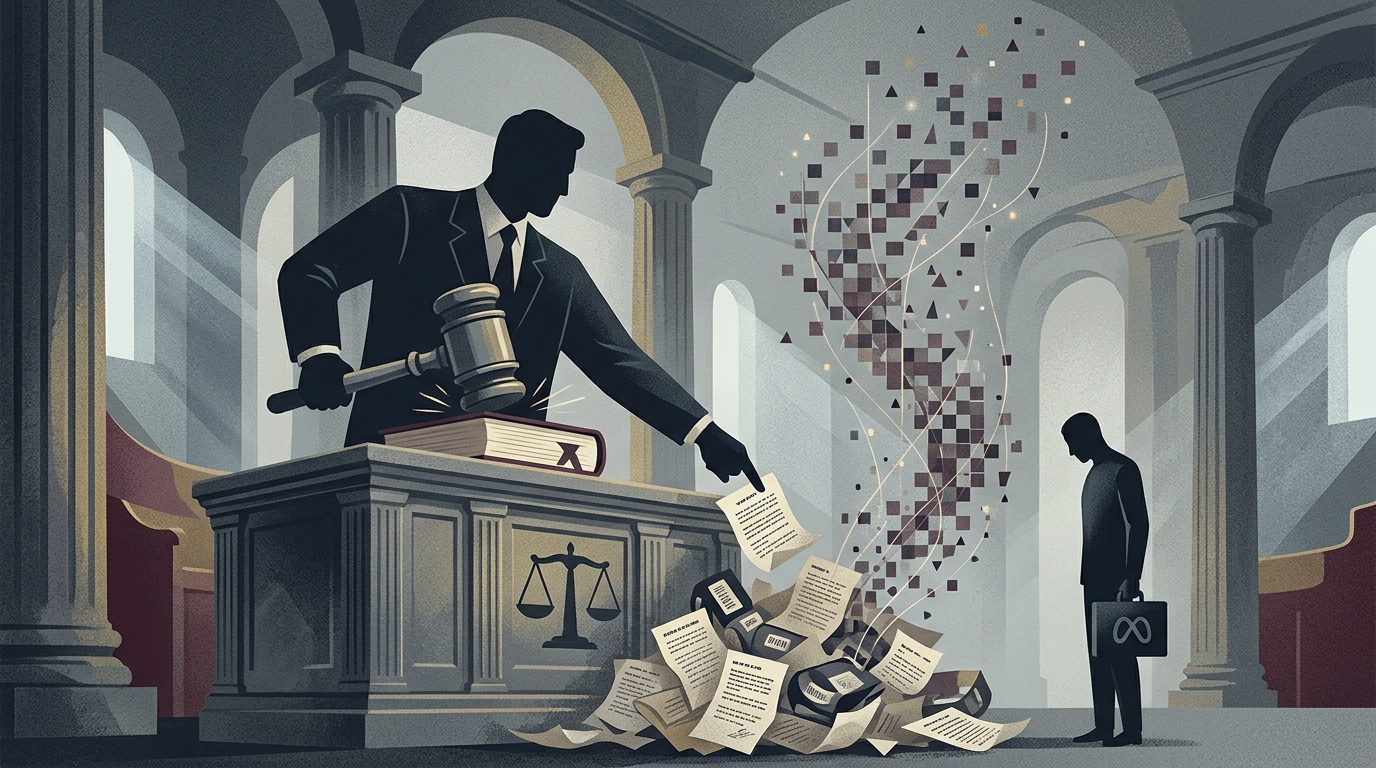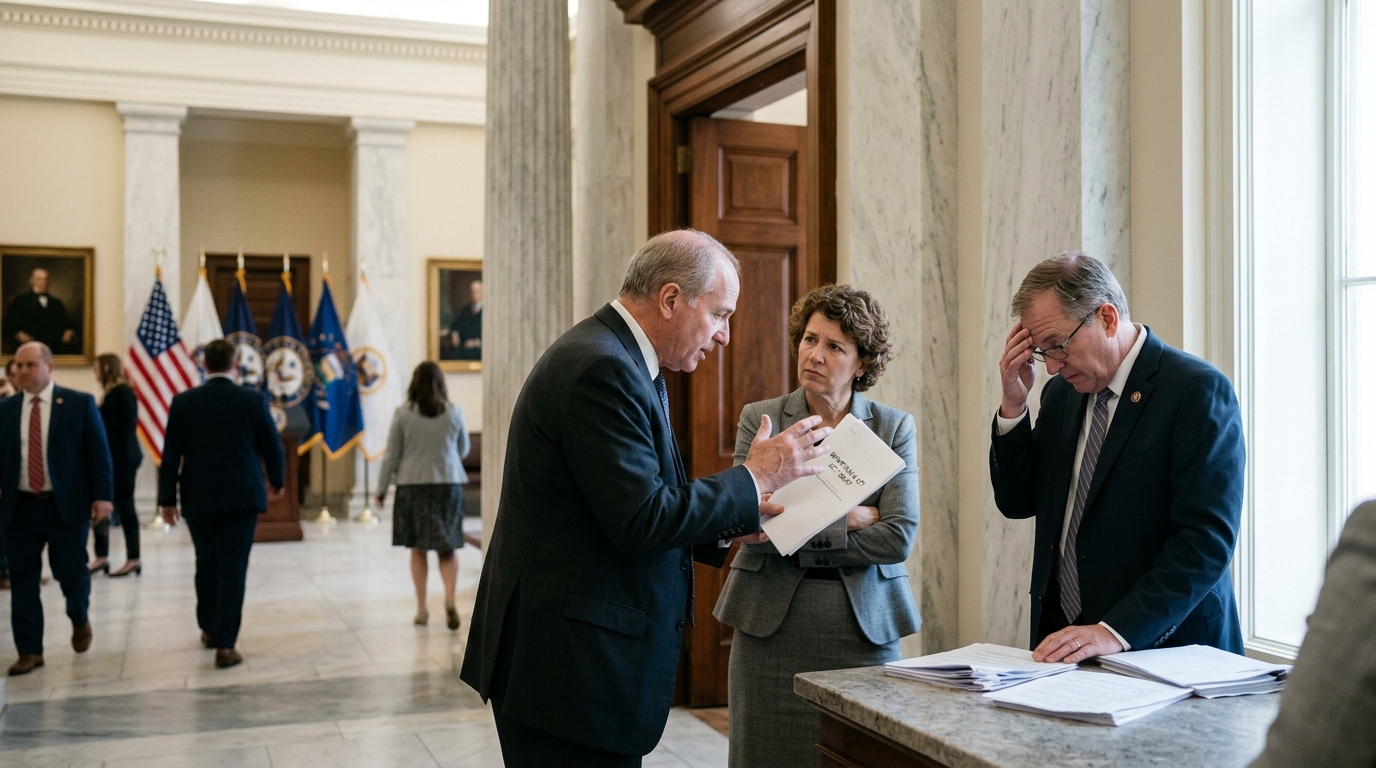
In the hallowed halls of Washington D.C., where consensus has become a rare commodity, the push for a unified federal framework to govern Artificial Intelligence (AI) began with soaring rhetoric and high hopes. However, as we move through July 2026, what was once hailed as a historic bipartisan breakthrough is now caught in a paradoxical vice. A phenomenon described as "bipartisan resistance"—a fragmented coalition of progressives demanding stricter oversight and conservatives fearing the stifling of American innovation—is threatening to leave the United States without a federal AI law at a pivotal moment in technological history.
The crux of the issue lies in the fact that Artificial Intelligence does not map neatly onto traditional ideological battle lines. While Senate leadership attempted to craft a bill that balances safety with global competitiveness, the political reality on the ground has proven far more volatile. This resistance is not just coming from across the aisle; it is erupting from within party ranks, creating a legislative quagmire that benefits only uncertainty.
The Preemption Paradox
The most contentious issue stalling the bill is "federal preemption." Republicans and moderate Democrats are pushing for a federal law that would override (preempt) state-level regulations, such as California’s landmark AI safety statutes. Their argument is pragmatic: the tech industry cannot thrive under a "patchwork" of 50 different regulatory regimes, each with its own compliance costs and legal risks.
On the other side, a powerful contingent of Democrats, backed by civil rights and privacy advocates, is refusing to strip states of their right to enact more stringent protections. They argue that a weak federal bill would serve as a "ceiling" rather than a "floor," effectively neutering state efforts to combat algorithmic bias and data exploitation. As one D.C.-based policy analyst noted, "The preemption battle isn't just about bureaucracy; it's a fundamental disagreement over who gets to define the ethics of the machine age."
Innovation vs. Safety: The Philosophical Divide
The second front of the resistance concerns the bill's underlying philosophy. Proponents of "effective accelerationism" (e/acc), who wield significant influence among a subset of the GOP, view any regulatory hurdle as a geopolitical gift to China. They argue that requirements for mandatory safety testing (red-teaming) and reporting of compute clusters to the government are reminiscent of authoritarian central planning.
Conversely, "safety hawks" from both parties argue that without rigorous protocols, society faces existential risks—ranging from the collapse of the labor market to the weaponization of deepfakes. This bipartisan group is lobbying for the creation of a federal AI agency with teeth, a proposal that opponents dismiss as a "regulatory behemoth" designed to protect Big Tech incumbents by raising the barrier to entry for smaller startups.
"We are at a point where the desire to regulate is colliding with the fear of falling behind. The result is a paralysis that might cost the U.S. its leadership position," according to an analysis by PYMNTS.
Open Source as a Battleground
Another significant point of friction is the treatment of open-source AI. The current draft of the bill contains provisions that could hold developers of open-source models liable for how their code is utilized by third parties. This has sparked an outcry from academia and independent developers, who have found unlikely allies in lawmakers who view open-source as the only viable check on Silicon Valley monopolies.
Resistance here is horizontal. Progressives see open-source as the democratization of knowledge and a tool for transparency, while conservatives view it as a manifestation of free-market principles. The attempt to impose "frontier model" restrictions on open-source projects has united these disparate groups against the bill, making its passage nearly impossible without a total overhaul of the liability language.
Conclusion: The Future of Governance
As the next election cycle looms, the window for this bipartisan AI bill is rapidly closing. The failure to reach a compromise will not mean an absence of rules; instead, it will lead to a fragmented landscape where court rulings and localized state laws dictate the trajectory of AI development. For businesses, this remains the worst-case scenario. For the U.S. political establishment, it is a stark reminder that technology moves at a velocity that traditional democratic institutions are still struggling to match.