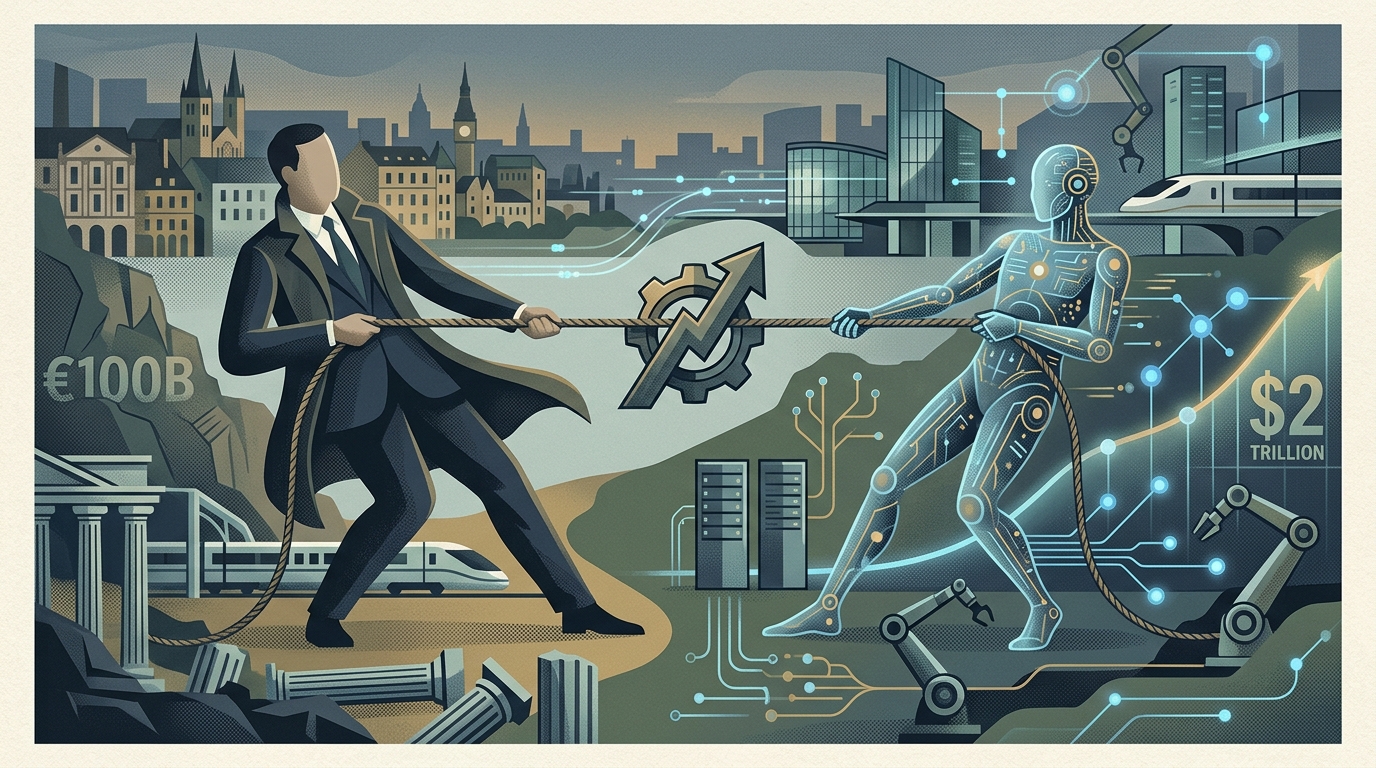

In the history of governance, the transition from voluntary corporate responsibility to enforceable law is often marked by friction. Just as the automotive industry resisted seat belt mandates in 1966 despite rising fatalities, today’s artificial intelligence sector finds itself at a crossroads between the promise of self-regulation and the necessity of democratic oversight. As we observe the rapid ascent of autonomous agents and trillion-dollar valuations, the divergence between American and European regulatory philosophies has become the primary strategic challenge for global stability.
The Illusion of Mutual Oversight
The current American approach, characterized by the recent "Oval Office Accord," rests on the premise that AI leaders will "police each other." This strategy of voluntary compliance, while fostering rapid innovation and supporting an "ouroboros" of circular investments within Silicon Valley, faces significant skepticism. Historical precedents suggest that self-regulation often falls short when economic incentives conflict with public safety. Furthermore, the legal framework remains murky; as seen in recent judicial dismissals of antitrust lawsuits against search giants, the courts are increasingly signaling that remedies for the economic disruptions caused by AI must come from the legislature rather than the judiciary.
Technological Sovereignty and the European Framework
In contrast, the European perspective is increasingly defined by the pursuit of technological sovereignty and proactive legislative mandates. The partnership between Nokia and ICEYE to develop sovereign LEO satellite communications exemplifies a move toward state ownership and control over critical infrastructure, ensuring independence from foreign commercial providers. This is mirrored in the regulatory sphere, where the EU’s Digital Markets Act (DMA) and the upcoming 15-year age limit for social media in Greece represent a shift toward firm compliance burdens.
"Nations must control their communications autonomously,"as Rafal Modrzewski of ICEYE noted, highlighting that true sovereignty in the age of AI requires resilient, independent connectivity and clear legal boundaries.
The Challenge of Professional Integration
As AI moves from experimental tools to "agentic" professional assistants capable of managing complex workflows in finance, law, and defense, the stakes of governance increase. While some organizations prioritize "needs-first" technology adoption and human-in-the-loop systems to mitigate risk, others are pushing toward fully autonomous agents. The tension between these approaches—and the global regulatory divide—will determine whether AI serves as a tool for institutional reinforcement or a source of systemic instability. In my analysis, the path forward requires a transition from "expectations" to formal agreements, ensuring that the digital architecture of the future remains accountable to the citizens it serves.