
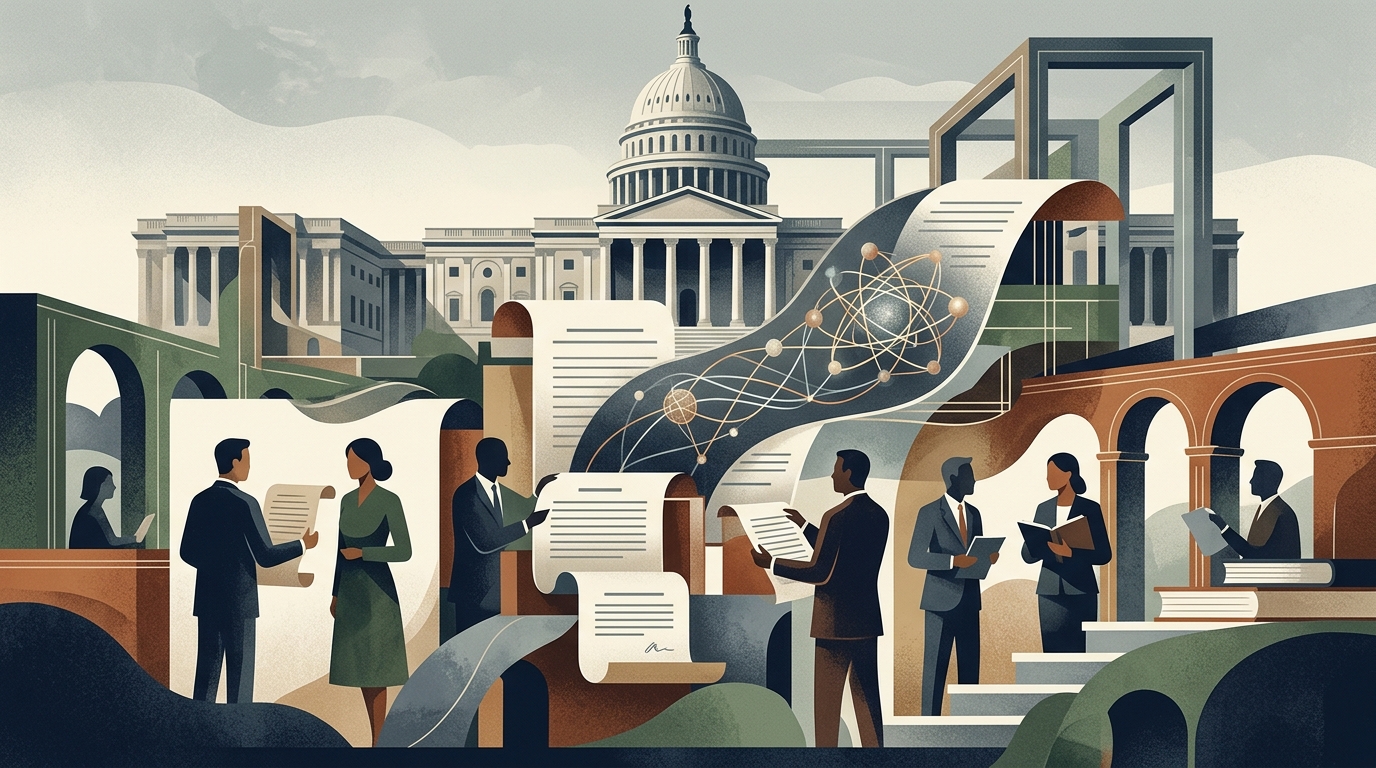
In the evolving landscape of digital governance, the recent signing of 'The White House Accord on Super Intelligence' represents a pivotal, albeit controversial, moment in the effort to establish a framework for frontier AI. Hosted by President Donald Trump and signed by the leadership of Google, Anthropic, Meta, OpenAI, xAI, and Nvidia, the accord is framed as an act of 'tremendous self-regulation.' However, from a policy perspective, it raises fundamental questions about the efficacy of voluntary commitments versus codified law.
The Four Pillars of Self-Regulation
The Accord rests upon four primary pillars that signatory companies are encouraged to implement. These include the establishment of robust internal controls to prevent 'rogue behavior,' the empowerment of internal safety teams, the utilization of external monitors for independent assessments, and the creation of dedicated board committees for safety reporting. In my analysis, while these measures reflect a growing institutional awareness of the risks associated with super intelligence, they remain 'should implement' guidelines rather than 'must obey' mandates.
"The voluntary nature of the commitments follows a pattern of similar pledges... historical remedies often consist of companies promising not to misrepresent their services in the future."
This structure mirrors the ancient concept of social contracts based on trust rather than enforcement. Yet, as we have seen in previous agreements in the UK and South Korea, the lack of a legislative backbone often limits the real-world impact of such protocols.
Institutional Friction and the FTC Scrutiny
While the executive branch promotes self-regulation, the Federal Trade Commission (FTC) appears to be pursuing a more traditional, interventionist path. Reports of a 'sweeping probe' into firms like OpenAI and Anthropic regarding consumer protection concerns suggest a significant divergence in governance strategy within the American administration. Despite the presence of FTC Chairman Andrew Ferguson at the Accord's unveiling, experts remain skeptical that aggressive legal actions will follow such high-profile cooperation.
Furthermore, the contrast with European policy is stark. While the US explores voluntary accords, the European Union has already initiated investigations into the impact of AI features on web traffic and mandated transparency measures for platforms like Booking.com under the Digital Markets Act (DMA). This creates a dual-speed regulatory environment where American 'self-regulation' competes with European 'legislative mandates,' a dynamic that will undoubtedly shape the global geopolitical chess match over AI supremacy.