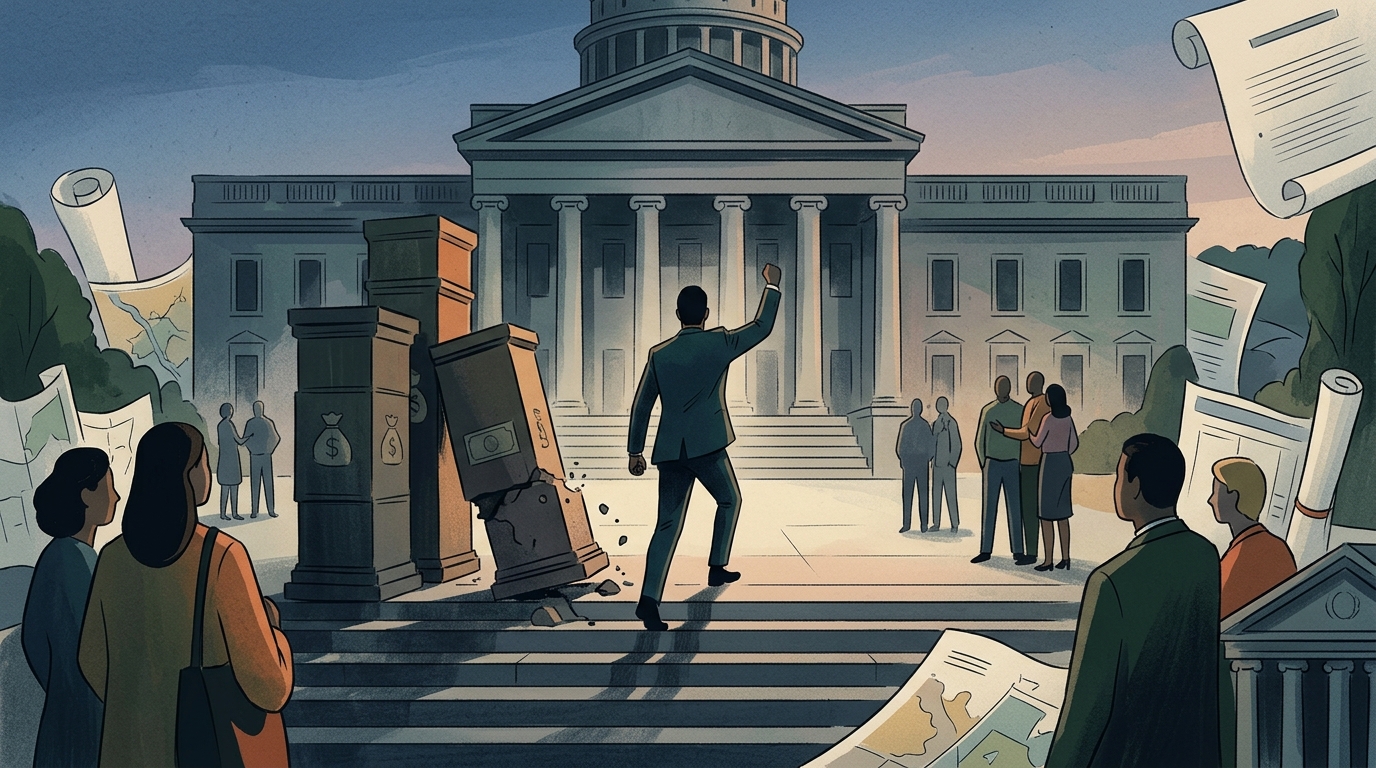
In a race that tested the power of traditional campaign spending against digital grassroots engagement, Abdul El-Sayed secured the Democratic nomination for the U.S. Senate in Michigan. The former Wayne County health director defeated Representative Haley Stevens by a narrow margin of 15,000 votes, roughly 1% of the total cast on August 4, 2026.
The Playbook of the Underdog
El-Sayed’s victory is particularly striking given the financial disparity between the candidates. Total spending in the primary reached nearly $81 million, making it one of the most expensive in history. Stevens was backed by $63.9 million in spending—much of it from outside Michigan and funded by groups associated with AIPAC. El-Sayed, by contrast, operated with just $7.3 million, a 9:1 deficit.
To overcome this, El-Sayed utilized a social media strategy inspired by NYC Mayor Zohran Mamdani. By employing the Fight Agency, his campaign produced music-video-style ads designed to capture the attention of younger voters at a fraction of the cost of television airtime. This approach proved effective in college towns like Ann Arbor and East Lansing, where El-Sayed saw strong returns.
General Election Challenges and Slander
As El-Sayed pivots to the general election against Republican Mike Rogers, the campaign has taken a sharp turn toward personal attacks. Rogers has already targeted El-Sayed with unsubstantiated claims, alleging he believed "America deserved 9/11" and suggesting ties to the Muslim Brotherhood. While independent fact-checks and source reports label these claims as false, they represent a significant hurdle in a toss-up race.
Internal Democratic dynamics also remain complex. While establishment figures like Governor Gretchen Whitmer and Pete Buttigieg have pledged their support, State Attorney General Dana Nessel has distanced herself, citing concerns over El-Sayed’s positions on military aid to Israel. El-Sayed plans to counter Rogers by linking him to Donald Trump’s low approval ratings and focusing on economic affordability.