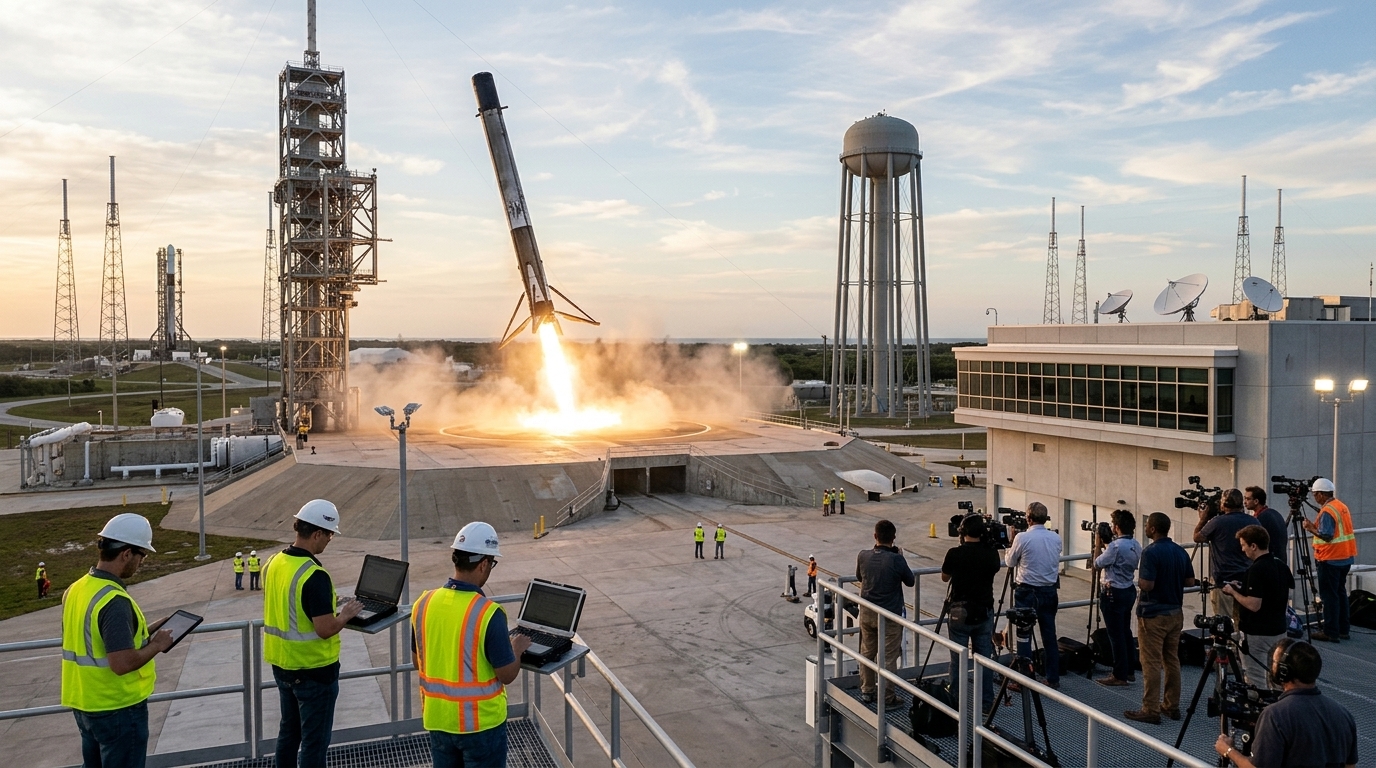
A new national space transportation policy signed by President Donald Trump on Thursday calls for a significant expansion of U.S. space infrastructure. The presidential memorandum replaces a 2013 policy signed by former President Barack Obama, reflecting a launch sector that has grown nearly tenfold in the intervening years.
The Drive Toward 1,000 Annual Launches
The policy mandates that by 2030, U.S. space transportation ranges must be capable of supporting more than 1,000 launches and reentries every year. This projected surge is fueled by both commercial and military demand for satellite communications, overhead surveillance, and orbital data centers. For context, the U.S. saw 176 orbital launch attempts last year, with SpaceX leading the sector via 165 Falcon 9 missions.
Expanding to New Federal Lands and Offshore Rigs
Perhaps the most significant update is the directive for the Department of the Interior to identify federal lands to serve as additional designated launch and reentry sites. This supports findings from a Pentagon study indicating the need for a third heavy-lift launch site to ensure resiliency and overcome capacity limits at Cape Canaveral.
- Investigation of submerged lands and abandoned offshore oil rigs for sea-based operations.
- Requirement for NASA and the military to publish regular, transparent range schedules.
- Development of "responsive launch" capabilities to orbit high-priority payloads within 48 hours.
Air Force Secretary Troy Meink and Space Force General Chance Saltzman have both emphasized the necessity of increasing capacity beyond the current facilities in Florida and California to ensure "geographic resiliency" for national interests.