

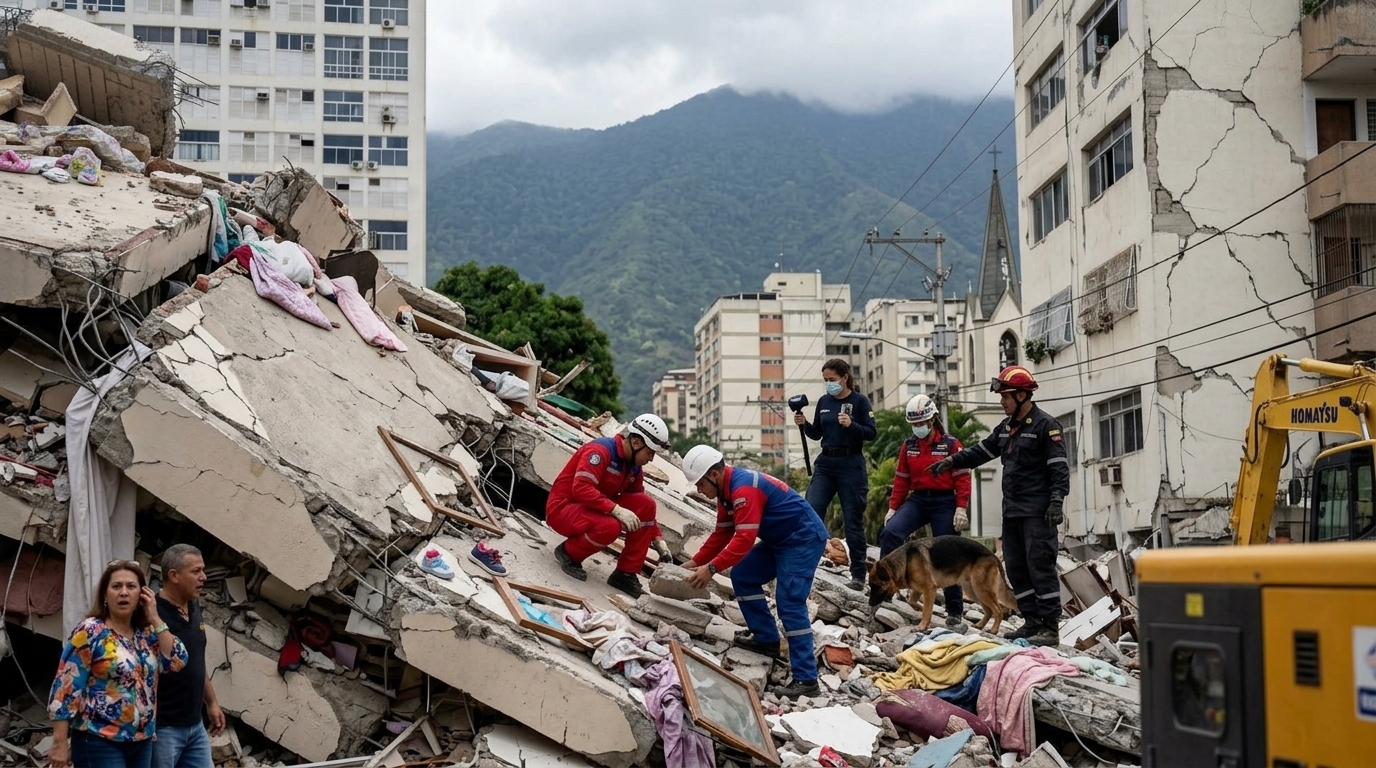
Venezuela is facing one of the worst humanitarian disasters in its modern history. The double earthquake that struck the country last Wednesday, June 24, 2026, has left behind a landscape of utter devastation. According to official statements by National Assembly President Jorge Rodríguez, the confirmed death toll has risen to 1,430, with over 3,200 injured. However, behind these numbers lies a complex reality connecting seismic activity to Caracas's long-standing economic and political isolation.
The Anatomy of a Foretold Disaster
The two seismic shocks, occurring within hours of each other, were centered along the country's northern coastline—a densely populated area already burdened by a lack of infrastructure maintenance. The intensity of the tremors caused the collapse of hundreds of buildings in Caracas and neighboring cities like La Guaira. The lack of seismic building codes in the poor neighborhoods, the infamous 'barrios' clinging to the capital's hillsides, proved fatal.
Rescue workers are operating under extremely adverse conditions. The fuel shortages that have plagued Venezuela for years make the transportation of heavy machinery nearly impossible in many affected areas. Furthermore, the healthcare system, already on the brink of collapse due to sanctions and mismanagement, is unable to cope with the massive influx of casualties, with hospitals lacking basic medicines and medical equipment.
The Geopolitics of Humanitarian Aid
This disaster is not just a natural phenomenon; it is a geopolitical test. The government of Nicolás Maduro finds itself at a critical crossroads. While Russia, China, and Cuba were quick to send aid and specialized rescue teams, accepting Western assistance remains a thorny issue. The United States and the European Union have expressed their condolences, offering humanitarian aid through international organizations, but the deep-seated mistrust between Caracas and Washington hinders direct cooperation.
Jorge Rodríguez, in his statements, emphasized the need for "national unity," but stopped short of clarifying whether the government would allow the creation of a UN-monitored humanitarian corridor. Analysts fear that aid could be used as a tool for political leverage, both by the domestic government and by external players seeking to gain ground in the region.
- Russia has already dispatched two aircraft with medical supplies and Rosatom teams to inspect energy infrastructure.
- China has promised financial assistance for reconstruction, linking it to future oil sector agreements.
- The US demands guarantees that aid will reach citizens directly rather than through state mechanisms.
Social Impact and the Nation's Future
This earthquake may trigger a new wave of migration. With thousands of people losing their homes and access to potable water and food severely limited, pressure on the borders with Colombia and Brazil is expected to spike. The international community is called to act immediately, not only to provide first aid but to ensure stability in a region already under immense pressure.
"We do not only mourn our dead; we mourn our inability to protect the living in a country that has been stripped of the basics," stated a member of Médecins Sans Frontières in Caracas.
In conclusion, the tragedy in Venezuela highlights the need for a new approach to international diplomacy, where human life is placed above ideological differences. Rebuilding the country will require not just cement and steel, but a sincere effort toward political reconciliation and the lifting of the blockades that have held it hostage for a decade.




