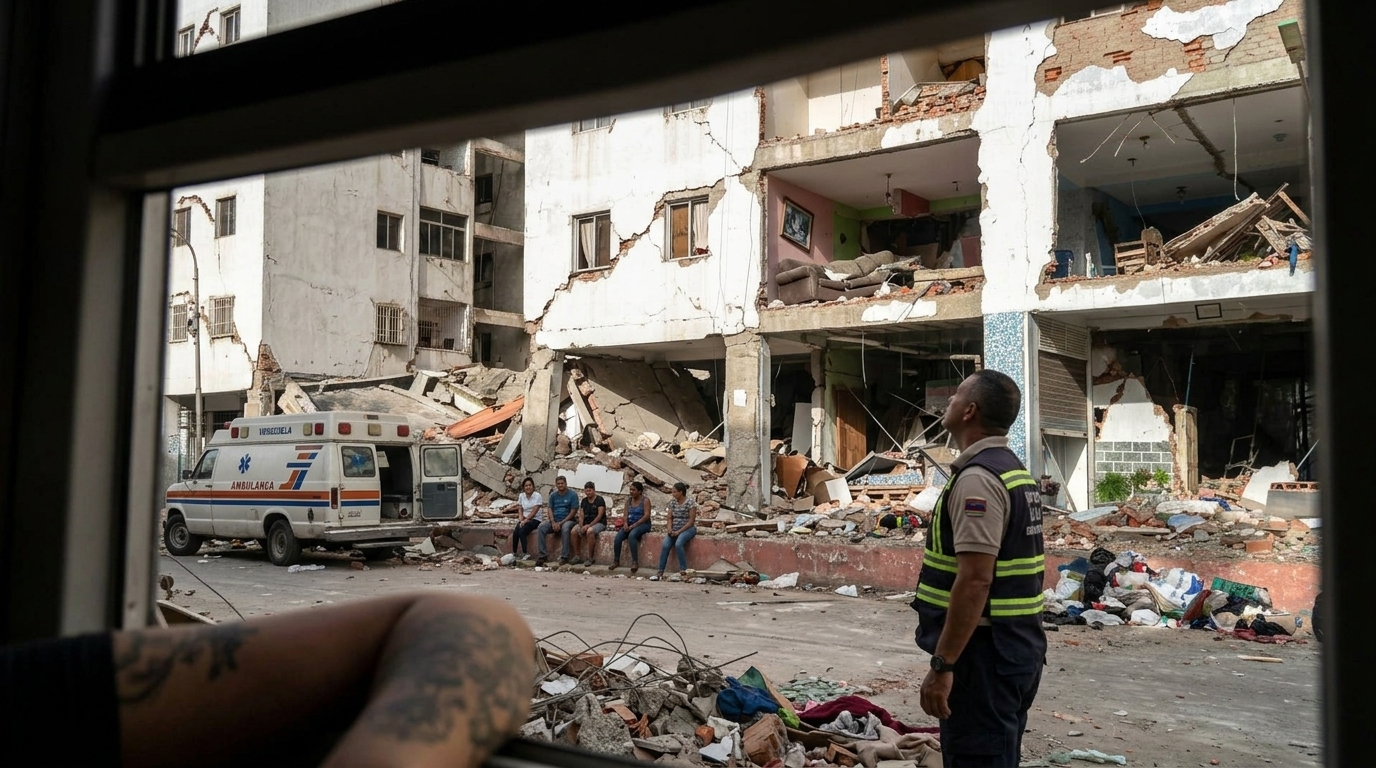
Venezuela is grappling with a fresh, unprecedented crisis as the United Nations (UN) released its first comprehensive damage assessment following the double earthquake that struck the nation last Wednesday, June 24, 2026. According to the report, the cost of the destruction is estimated at a staggering $7 billion, which represents approximately 6% of the country's Gross Domestic Product (GDP). This development comes at a time when Venezuela was attempting to balance between hyperinflation and a sluggish recovery in its oil production.
Anatomy of a Natural and Economic Disaster
The two seismic events, measuring 6.8 and 6.4 on the Richter scale, occurred just hours apart, severely impacting the northern coastal regions and the greater Caracas area. Although the death toll remained relatively low due to effective evacuation protocols, the structural damage to infrastructure is immeasurable. The UN highlights that 60% of the damage affects housing in marginalized areas where constructions did not meet anti-seismic standards, while the remaining 40% is concentrated in critical infrastructure such as bridges, power grids, and water supply systems.
The UN's economic analysis emphasizes that the loss of 6% of GDP within a few hours is one of the most violent economic shocks recorded in Latin America in recent years. For a country that has already lost over 75% of its GDP in the last decade due to political and economic turmoil, this new blow threatens to wipe out any trace of recent stabilization. Supply chains have been severed, as the main highway connecting the port of La Guaira to the capital has suffered significant collapses.
Geopolitical Implications and the International Aid Challenge
This disaster presents the international community with a severe dilemma. Venezuela remains under strict sanctions from the United States and the European Union, which complicates the flow of funds for reconstruction. Nevertheless, the UN Secretary-General has appealed for a "humanitarian exception," asking major powers to allow the channeling of resources exclusively for the reconstruction of affected areas. The government of Nicolás Maduro, for its part, has already requested assistance from Russia and China, which were quick to send rescue teams and medical supplies.
The situation is further complicated by the fact that Venezuela is in a sensitive pre-election period. The management of the crisis and the distribution of international aid are expected to be the focal point of political contention. There are strong fears that humanitarian aid could be politically instrumentalized, while the opposition is calling for the creation of an independent body under UN supervision to manage the $7 billion required for restoration.
The Social Dimension: A New Wave of Migration?
Beyond the numbers, the human tragedy is evident. Thousands of families have been left homeless, while access to potable water and medicine has become extremely difficult in many provinces. Analysts warn that if reconstruction does not begin immediately, the country could face a new wave of migration toward neighboring countries, Colombia and Brazil. The desperation of citizens, combined with the lack of basic services, creates an explosive mix that could destabilize the entire region.
- Collapse of the power grid in 12 states.
- Severe damage to at least 45 hospitals and health centers.
- Suspension of refinery operations for precautionary checks, further reducing revenue.
- Need for immediate funding of $1.5 billion for basic housing needs alone.
As aftershocks continue, Venezuela is called upon to prove whether it can withstand another blow of fate. The international community watches with bated breath, knowing that failure to address this crisis will cost not just in dollars, but in human lives and regional security.