In a move that underscores the North Atlantic Alliance's radical shift toward a permanent state of high readiness, NATO Secretary General Mark Rutte has announced the Alliance's intention to ratify new defense contracts worth billions of dollars during the upcoming Summit in Ankara in July 2026. This announcement, made from Brussels, is not merely a budgetary update but a clear geopolitical statement of power at a time when global security is being tested on multiple fronts.
The Ankara Summit and the Geopolitical Chessboard
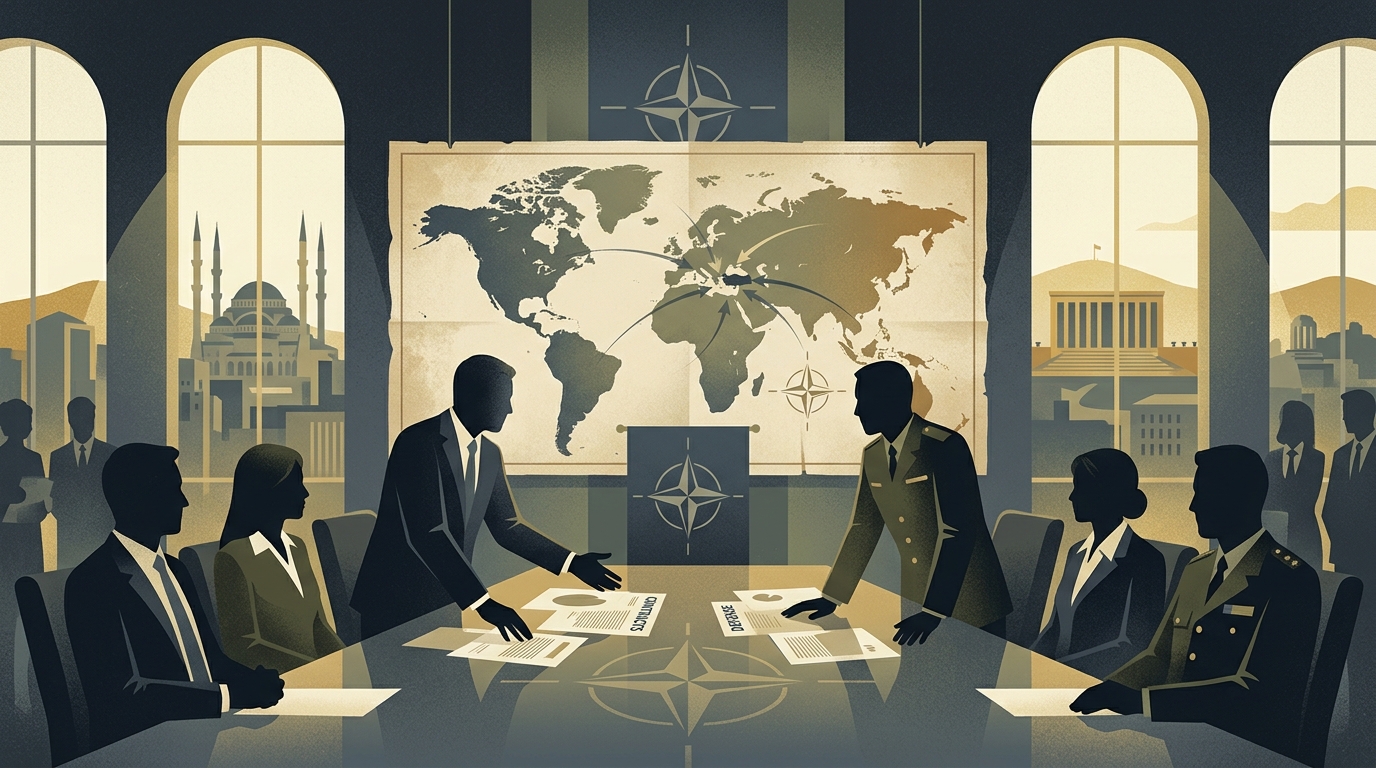
The choice of Ankara as the venue for the Summit is no coincidence. At a time when NATO's Southeastern flank is gaining pivotal importance due to developments in the Middle East and the Black Sea, Turkey is emerging as a central player. Rutte emphasized that the new contracts will focus on replenishing ammunition stocks, strengthening air defense, and, most importantly, accelerating the integration of advanced technologies into the Alliance's weapon systems.
The "Defense Production Action Plan," adopted in previous years, now appears to be bearing fruit. These contracts aim to provide long-term visibility to the defense industry, allowing companies to invest in new production lines without the fear of sudden order cancellations. This "peacetime war economy" represents NATO's new doctrine for deterring any threat.
Artificial Intelligence and Digital Shielding
At the heart of the new contracts lies Artificial Intelligence (AI). According to Alliance sources, a significant portion of the funds will be directed toward autonomous decision-making systems and predictive maintenance. AI is no longer seen as a future tool but an immediate necessity for managing the vast amount of data generated on modern battlefields.
"Deterrence in the 21st century is not just about the number of tanks, but the speed of our algorithms," Rutte pointedly stated.
The new investments will include the development of the "NATO AI Cloud," an infrastructure that will allow member states to share information in real-time with absolute security, neutralizing reaction times to hybrid threats or cyberattacks. Integrating AI into C2 (Command and Control) systems is expected to be the key to maintaining a technological edge over strategic competitors.
The Defense Industry as a Growth Engine
For Europe, these announcements also carry a strong economic dimension. After decades of underinvestment, European defense industries are being called upon to meet a demand reminiscent of the Cold War era. The contracts to be announced in Ankara are expected to boost giants such as Rheinmetall, BAE Systems, and Dassault, as well as emerging tech companies specializing in drones and cybersecurity.
However, the challenge remains standardization. Rutte highlighted that the Alliance can no longer tolerate fragmentation, where different member states use incompatible systems. The new contracts will enforce stricter interoperability standards, ensuring that a missile manufactured in Poland can be fired from a system operating in Greece or Spain.
Challenges and Political Balancing Acts
Despite Rutte's optimism, the road to Ankara is not without obstacles. The funding for these billions comes from national budgets, which is causing friction in some European capitals facing fiscal pressure. The "guns vs. butter" debate is returning to the forefront, with social opposition expressing concerns over cutting social spending in favor of armaments.
Furthermore, Turkey's geopolitical position remains a thorny issue. While the Summit in Ankara symbolizes unity, the diverging strategic priorities of some members regarding Ankara will require delicate diplomatic maneuvers. Mark Rutte, known for his consensus-building skills, will need all his experience to ensure that the July Summit goes down in history as the moment NATO definitively fortified itself for the future.