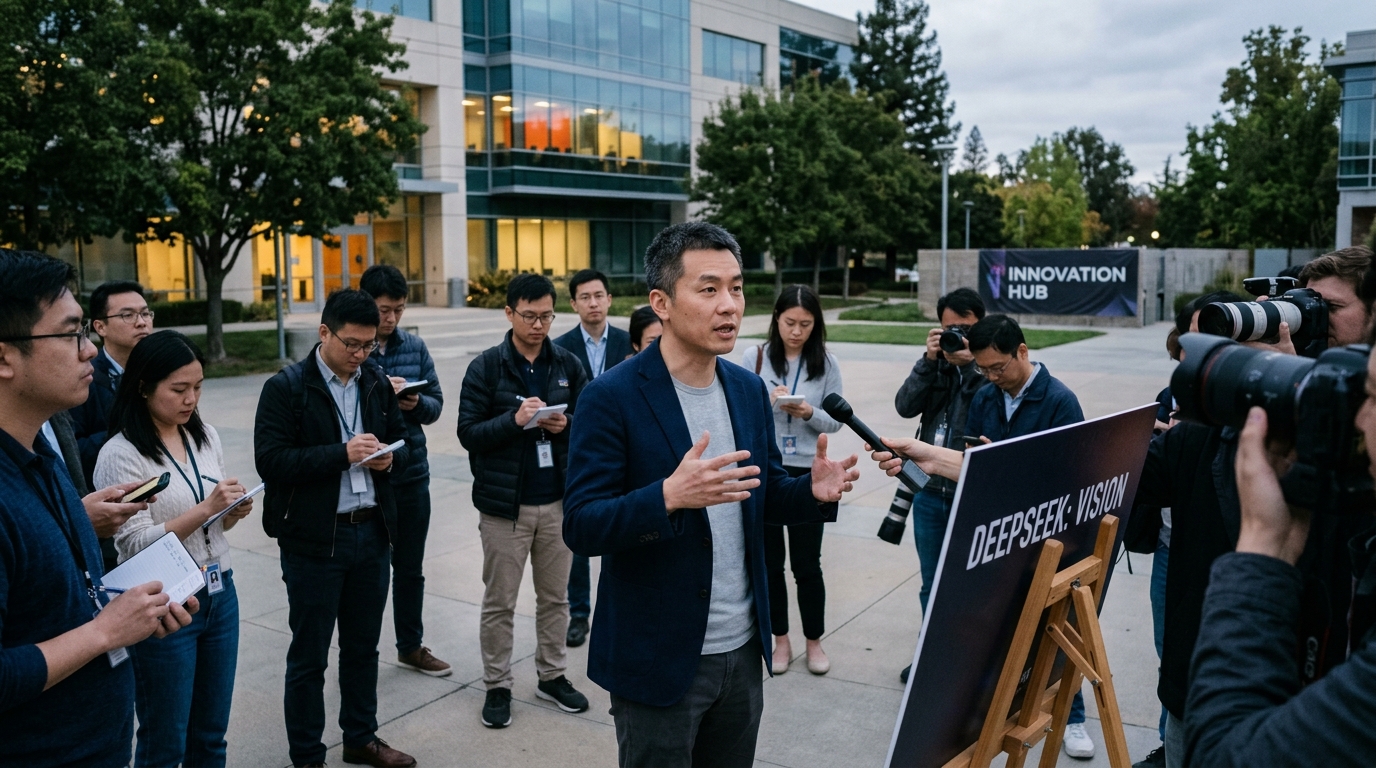
In a move that underscores the burgeoning confidence of the Chinese artificial intelligence ecosystem, DeepSeek—the startup that sent shockwaves through Silicon Valley earlier this year with its hyper-efficient models—has announced plans to double its workforce. This decision is more than a routine corporate expansion; it is a strategic declaration of intent at a time when the technological Cold War between Washington and Beijing is reaching a fever pitch.
From Efficiency to Scale
DeepSeek rose to global prominence not because of its size, but because of its ability to deliver GPT-4 class performance at a fraction of the cost and compute power used by American titans. Until recently, the company operated with a lean, elite squad of approximately 150 to 200 individuals, primarily top-tier researchers and engineers. The decision to double headcount across all departments—ranging from R&D to marketing and international operations—suggests that DeepSeek is preparing for a long-term siege of the global AI market.
The company's strategy has been built on the Mixture-of-Experts (MoE) architecture and innovative training methodologies that bypassed the need for the tens of thousands of NVIDIA H100 chips currently restricted by US export controls. By doubling its staff, DeepSeek aims to translate its technical edge into commercial dominance, developing enterprise-grade solutions and fortifying the open-source ecosystem that has made it a favorite among the global developer community.
The Talent War in Beijing
Doubling the staff at a high-stakes AI firm is no simple feat. The competition for AI talent within China is cutthroat, with incumbents like Baidu, Alibaba, and ByteDance offering astronomical salaries to lure the brightest minds. However, DeepSeek possesses a unique advantage: the prestige of being the "disruptor" that managed to temporarily humble Silicon Valley's giants. This cultural capital is a powerful magnet for patriotic and ambitious engineers who see DeepSeek as the vanguard of Chinese innovation.
- Recruiting researchers specialized in model reasoning and logic.
- Expanding infrastructure teams to optimize performance on domestic Chinese silicon (e.g., Huawei Ascend).
- Building out global outreach and support for AI-as-a-Service deployments.
"We aren't just hiring bodies; we are hiring the architects of a new computational reality where intelligence isn't measured by GPU count, but by algorithmic elegance," a company insider noted.
Geopolitical Implications and the 'Silicon Ceiling'
This expansion comes at a critical juncture. The US is reportedly considering further restrictions on China's access to cloud computing services utilizing advanced chips. DeepSeek, by investing heavily in human capital, is essentially attempting to "offset" hardware scarcity with a surplus of brainpower. If Chinese engineers can continue to achieve greater algorithmic efficiency, the impact of US sanctions could be significantly blunted.
Furthermore, DeepSeek’s growth poses a challenge to Western norms regarding "Open Science." While OpenAI and Google have become increasingly secretive, DeepSeek has maintained a policy of publishing its weights and methodologies, gaining massive goodwill. Doubling its workforce allows the company to maintain this rapid release cycle, potentially making it the de facto center of gravity for the global open-source AI movement.
Conclusion: A New Era of Competition
DeepSeek is no longer just a successful experiment; it is an institutional player preparing for its next leap. The doubling of its workforce is a direct answer to critics who questioned whether the startup could scale its initial success. For the global market, this signals that the race for AI supremacy is no longer a mono-polar sprint, but a multi-polar endurance test where ingenuity may ultimately triumph over brute force.