In the geopolitical landscape of 2026, global dominance is no longer measured solely by military hardware or foreign exchange reserves, but by computational power and algorithmic efficiency. Recent reporting from Semafor, coupled with the staggering breakthroughs of firms like DeepSeek, Baidu, and Huawei, reveals a fundamental shift: Chinese AI companies are no longer merely playing catch-up; they are aggressively scaling to challenge the very foundations of Silicon Valley's supremacy.
The Strategy of Forced Efficiency
For years, Washington operated under the assumption that cutting off China's access to high-end Nvidia chips would effectively stall its AI ambitions. However, history often shows that scarcity is the mother of invention. Faced with hardware constraints, Chinese firms pivoted toward radical software optimization. DeepSeek became the catalyst for this realization, demonstrating that models trained at a fraction of the cost of American counterparts could achieve parity, or even superiority, in key benchmarks.
This 'frugal innovation' has become the new mantra in Beijing. Instead of trying to outspend OpenAI or Google on raw compute, Chinese giants are investing in sophisticated architectures like Mixture-of-Experts (MoE) and techniques that allow models to run efficiently on domestic silicon, such as Huawei's Ascend series. The result is an aggressive scaling strategy fueled by ingenuity rather than infinite capital burn.
State Capitalism and AI Ecosystems
Unlike the Silicon Valley model, where innovation is primarily driven by venture capital and market forces, the Chinese approach is deeply integrated into national policy. The Chinese state doesn't just provide subsidies; it builds the foundation. From 'National Computing Hubs' to facilitating access to massive public-sector datasets, China is constructing an ecosystem where AI is treated not just as a product, but as a strategic utility.
- Vertical Integration: Firms like Huawei now develop the entire stack—from silicon and frameworks (MindSpore) to the models themselves—insulating them from foreign supply chain shocks.
- Application Focus: While the US leads in general-purpose LLMs, China is rapidly scaling AI in industrial manufacturing, autonomous logistics, and smart infrastructure.
- Global South Expansion: Chinese AI is expanding aggressively across emerging markets, offering affordable, high-performance solutions to nations often overlooked by Western tech giants.
The Geopolitics of Compute
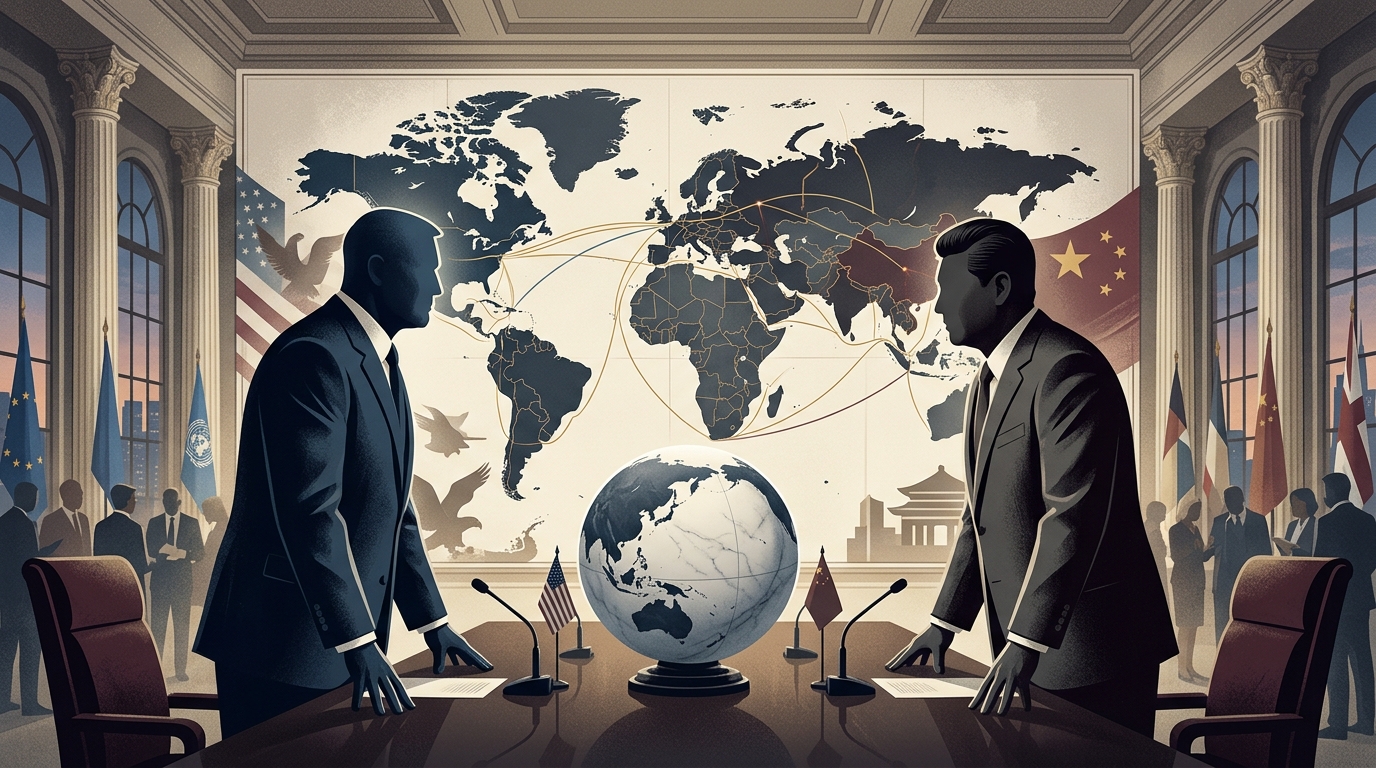
The aggressive scaling of Chinese AI firms has sent shockwaves through Washington. The US response is expected to be even more stringent, with potential new bans on investment and research collaboration. However, there is a looming risk: the creation of a 'Silicon Curtain' might eventually isolate the West from breakthroughs occurring in the East. If China continues to innovate around sanctions, the US may find its export controls increasingly irrelevant.
"China is no longer playing the US game. It has built its own field, with its own rules, and the speed at which it is scaling is unprecedented in technological history," notes a Beijing-based geopolitical analyst.
In conclusion, the aggressive expansion of Chinese AI firms is more than a business maneuver; it is a bid for civilizational leadership. As we move into the latter half of 2026, the technological balance of power remains in flux, with China proving that innovation can thrive even under the most restrictive conditions.